Ben Slay – författare
Visar alla böcker från författaren Ben Slay. Handla med fri frakt och snabb leverans.
12 produkter
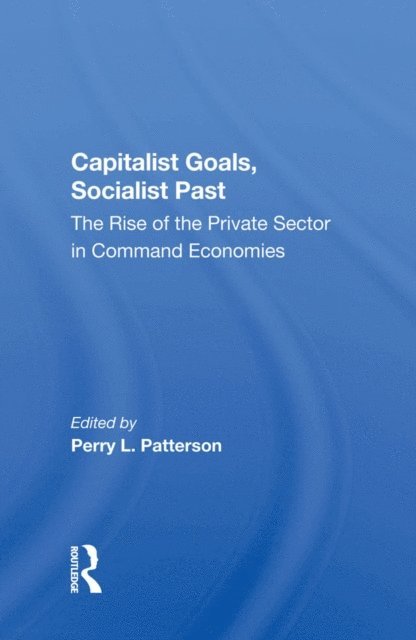
Capitalist Goals, Socialist Past
The Rise Of The Private Sector In Command Economies
Av Perry L Patterson, Ben Slay
Inbunden, 2019
2581 kr
Lägg i varukorg
An examination of the rise of the private sector in command economies.
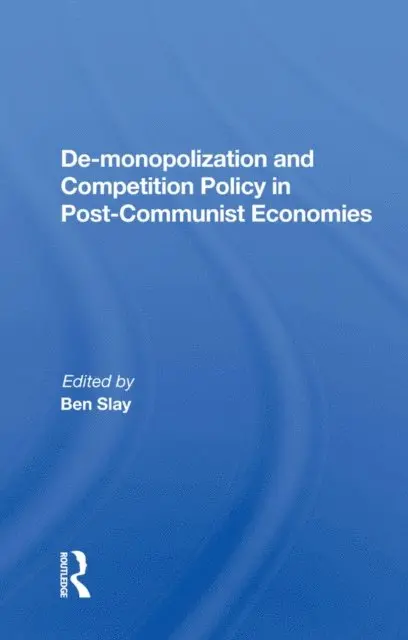
De-monopolization and Competition Policy in Post-Communist Economies
Av Ben Slay
Inbunden, 2019
762 kr
Lägg i varukorg
Even in developed capitalist economies, markets function poorly without regulation by competitive forces. The countries that once were part of the Eastern bloc are introducing market forces into industries created according to the monopolistic logic of central planning, so that competition policy …
Capitalist Goals, Socialist Past
The Rise Of The Private Sector In Command Economies
Av Perry L Patterson, Ben Slay
Häftad, 2020
710 kr
Lägg i varukorg
This book aims to acquaint the reader with both the shared features and the diversity of the private and cooperative experience in the nations of the Communist bloc of Europe. It contributes to understanding of the difficulties standing in the way of a private-sector future in command economies.
De-monopolization and Competition Policy in Post-Communist Economies
Av Ben Slay
Häftad, 2020
370 kr
Lägg i varukorg
This book considers the extent of the post-Communist monopoly problem as well as progress in de-monopolization, providing a complete, comparative picture of the development of competition policy in a broad cross section of formerly socialist countries.
Capitalist Goals, Socialist Past
The Rise Of The Private Sector In Command Economies
Av Ben Slay, Perry L Patterson
E-bok, 2019
838 kr
Lägg i varukorg
An examination of the rise of the private sector in command economies.
De-monopolization and Competition Policy in Post-Communist Economies
Av Ben Slay
E-bok, 2019
433 kr
Lägg i varukorg
Even in developed capitalist economies, markets function poorly without regulation by competitive forces. The countries that once were part of the Eastern bloc are introducing market forces into industries created according to the monopolistic logic of central planning, so that competition policy …
Capitalist Goals, Socialist Past
The Rise Of The Private Sector In Command Economies
Av Ben Slay, Perry L Patterson
E-bok, 2019
820 kr
Lägg i varukorg
An examination of the rise of the private sector in command economies.
De-monopolization and Competition Policy in Post-Communist Economies
Av Ben Slay
E-bok, 2019
433 kr
Lägg i varukorg
Even in developed capitalist economies, markets function poorly without regulation by competitive forces. The countries that once were part of the Eastern bloc are introducing market forces into industries created according to the monopolistic logic of central planning, so that competition policy …
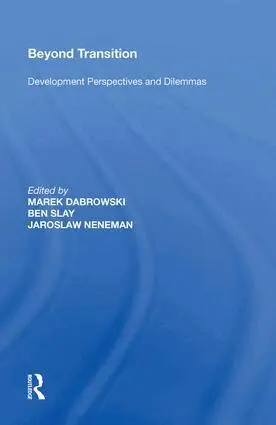
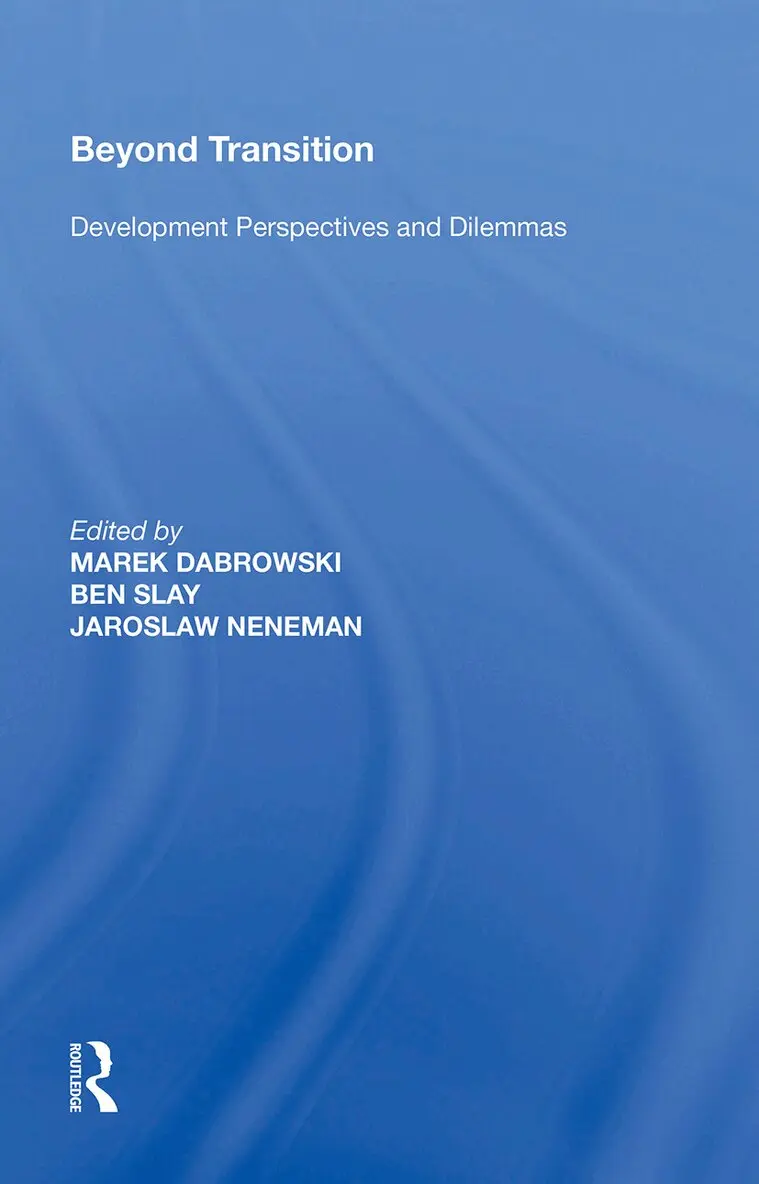
Beyond Transition
Development Perspectives and Dilemmas
Av Ben Slay, Marek Dabrowski m. fl.
Inbunden, 2017
2590 kr
Lägg i varukorg
The post-communist Central European and Baltic economies are now approaching the end of their transitions to well-functioning market systems. In some respects, the approaching EU accession and conclusion of the transition marks the end of a fascinating period in economic history. Beyond Transition …
Beyond Transition
Development Perspectives and Dilemmas
Av Ben Slay, Marek Dabrowski m. fl.
Häftad, 2022
548 kr
Lägg i varukorg
The post-communist Central European and Baltic economies are now approaching the end of their transitions to well-functioning market systems. In some respects, the approaching EU accession and conclusion of the transition marks the end of a fascinating period in economic history. Beyond Transition …
Beyond Transition
Development Perspectives and Dilemmas
Av Jaroslaw Neneman, Marek Dabrowski m. fl.
E-bok, 2017
622 kr
Lägg i varukorg
The post-communist Central European and Baltic economies are now approaching the end of their transitions to well-functioning market systems. In some respects, the approaching EU accession and conclusion of the transition marks the end of a fascinating period in economic history. Beyond Transition …
Beyond Transition
Development Perspectives and Dilemmas
Av Jaroslaw Neneman, Marek Dabrowski m. fl.
E-bok, 2017
642 kr
Lägg i varukorg
The post-communist Central European and Baltic economies are now approaching the end of their transitions to well-functioning market systems. In some respects, the approaching EU accession and conclusion of the transition marks the end of a fascinating period in economic history. Beyond Transition …