480 kr
Skickas inom 10-15 vardagar
480 kr
Skickas inom 10-15 vardagar
423 kr
Skickas inom 5-8 vardagar
305 kr
Läs direkt efter köp
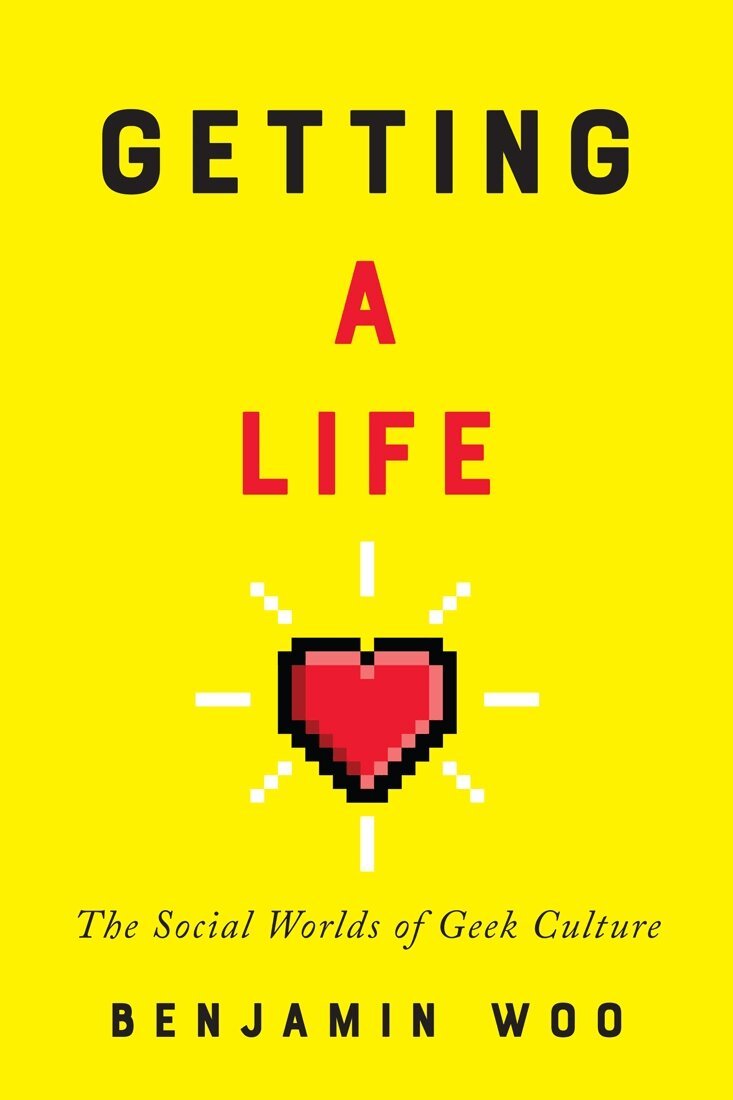
Comic book superheroes, fantasy kingdoms, and futuristic starships have become inescapable features of today''s pop-culture landscape, and the people we used to deride as "nerds" or "geeks" have ridden their popularity and visibility to mainstream recognition. It seems it''s finally hip to be square. Yet these conventionalized representations of geek culture typically ignore the real people who have invested time and resources to make it what it is.Getting a Life recentres our understanding of geek culture on the everyday lives of its participants, drawing on fieldwork in comic book shops, game stores, and conventions, including in-depth interviews with ordinary members of the overlapping communities of fans and enthusiasts. Benjamin Woo shows how geek culture is a set of interconnected social practices that are associated with popular media. He argues that typical depictions of mass-mediated entertainment as something that isolates and pacifies its audiences are flawed because they do not account for the conversations, relationships, communities, and identities that are created by engaging with the products of mass culture.Getting a Life combines engaging interview material with lucid interpretation and a clear, interdisciplinary framework. The volume is both an accessible introduction to this contemporary subculture and an exploration of the ethical possibilities of a life lived with media.
305 kr
Läs direkt efter köp
Comic book superheroes, fantasy kingdoms, and futuristic starships have become inescapable features of today''s pop-culture landscape, and the people we used to deride as "nerds" or "geeks" have ridden their popularity and visibility to mainstream recognition. It seems it''s finally hip to be square. Yet these conventionalized representations of geek culture typically ignore the real people who have invested time and resources to make it what it is.Getting a Life recentres our understanding of geek culture on the everyday lives of its participants, drawing on fieldwork in comic book shops, game stores, and conventions, including in-depth interviews with ordinary members of the overlapping communities of fans and enthusiasts. Benjamin Woo shows how geek culture is a set of interconnected social practices that are associated with popular media. He argues that typical depictions of mass-mediated entertainment as something that isolates and pacifies its audiences are flawed because they do not account for the conversations, relationships, communities, and identities that are created by engaging with the products of mass culture.Getting a Life combines engaging interview material with lucid interpretation and a clear, interdisciplinary framework. The volume is both an accessible introduction to this contemporary subculture and an exploration of the ethical possibilities of a life lived with media.
555 kr
Läs direkt efter köp
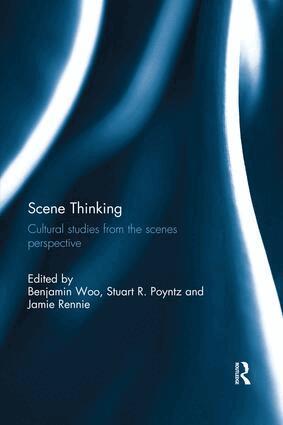
How is cultural activity shaped by the places where it unfolds? One answer has been found in the ‘scenes perspective’, a development within popular music studies that explains change and transformation within musical practices in terms of the social and institutional histories of scenes. Scene Thinking: Cultural Studies from the Scenes Perspective takes up this framework – and the mode of analysis that goes with it – as an important contribution to cultural analysis and social research more generally.
In a series of focused case studies – ranging across practices like drag kinging, Bangladeshi underground music, urban arts interventions and sites like single performance venues, urban neighbourhoods in various states of gentrification, and virtual networks of game consoles in countless living rooms – the authors demonstrate how ‘scene thinking’ can enrich cultural studies inquiry. As a humanistic, empirically oriented alternative to network-based social ontologies, thinking in terms of scenes sensitizes researchers to complex, fluid processes that are nonetheless anchored and made meaningful at the level of lived experience. This book was originally published as a special issue of Cultural Studies.
576 kr
Läs direkt efter köp
How is cultural activity shaped by the places where it unfolds? One answer has been found in the ‘scenes perspective’, a development within popular music studies that explains change and transformation within musical practices in terms of the social and institutional histories of scenes. Scene Thinking: Cultural Studies from the Scenes Perspective takes up this framework – and the mode of analysis that goes with it – as an important contribution to cultural analysis and social research more generally.
In a series of focused case studies – ranging across practices like drag kinging, Bangladeshi underground music, urban arts interventions and sites like single performance venues, urban neighbourhoods in various states of gentrification, and virtual networks of game consoles in countless living rooms – the authors demonstrate how ‘scene thinking’ can enrich cultural studies inquiry. As a humanistic, empirically oriented alternative to network-based social ontologies, thinking in terms of scenes sensitizes researchers to complex, fluid processes that are nonetheless anchored and made meaningful at the level of lived experience. This book was originally published as a special issue of Cultural Studies.
974 kr
Läs direkt efter köp
703 kr
Skickas inom 10-15 vardagar
1 541 kr
Skickas inom 10-15 vardagar
1 414 kr
Skickas inom 5-8 vardagar
439 kr
Skickas inom 5-8 vardagar
351 kr
Kommande
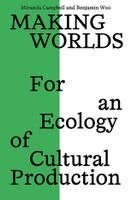
So many modes of culture that are essential to artistic communities are also missed when research and policy focus primarily on economic success stories in the so-called creative industries. But what about the non-commercial, the non-profits, the volunteers, the temporary spaces and groups? And what about the glorious failures? Making Worlds and the book series it initiates, Cultural Production and Everyday Life, corrects these oversights by spotlighting the small-scale cultural production of amateurs, hobbyists, autodidacts, and various countercultural scenes.
Miranda Campbell and Benjamin Woo advocate for an ecological view of the grassroots forces that sustain and develop cultural and artistic activity. The authors ground this book in examples from their own involvement in and research with cultural communities such as comics creators, game players, music scenes, zine-makers, artist co-operatives, and fan cultures. Serving as a response to some of the early twenty-first century's gig-economy boosterism, this is also a book that seeks to document how culture is not only consumed but produced in everyday practices.
Broadening the field of cultural studies and understandings of what constitutes culture, Making Worlds recognizes and celebrates the work of the chronically unsupported, underfunded, and the precariously situated in spaces at risk of eviction or gentrification.