Bernard Taverne – författare
3 069 kr
Läs direkt efter köp
3 312 kr
Läs direkt efter köp
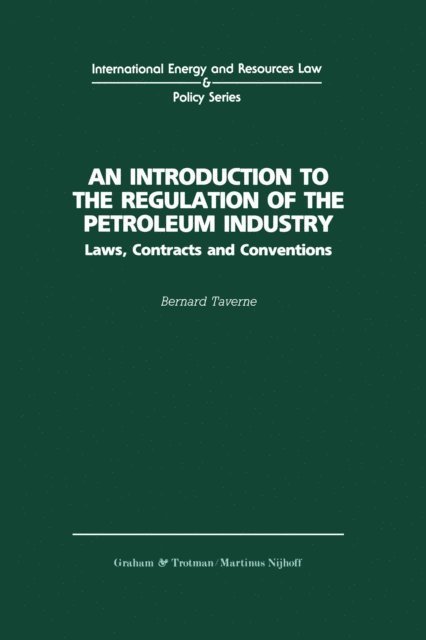
Bernard Taverne graduated in Dutch Law at Leiden University and in Mining Engineering at the Delft University of Technology. In 1961 he entered employment with the Royal Dutch/Shell Group and fulfilled technical assignments in Brunei and Nigeria. In 1973 he returned to Shell''s Central Office in The Hague and worked in the Concessions Division until his retirement in 1991. After his retirement from Shell, he was appointed a member of the Mining Council, the official advisory body to the Netherlands Government in mining and petroleum matters. In 1981 he was appointed part-time Professor of International Petroleum Law and Government Petroleum Policies at Delft University of Technology.
2 596 kr
Läs direkt efter köp
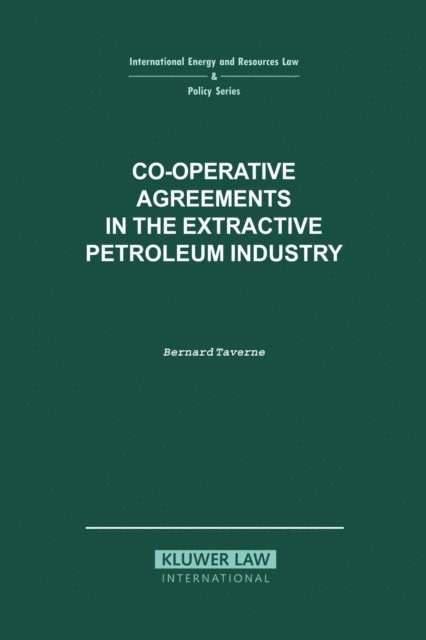
In this work, a distinction is made between two forms of cooperation in the exploration and exploitation of petroleum:
• proportional cooperation between oil companies who jointly own an exclusive petroleum right, either an exclusive licence or a risk contract; and• non-proportional cooperation between state enterprises and oil companies who enter into production-sharing agreements or other type of risk contracts.The book explains the reasons for cooperation and the strategies followed to minimise non-market-related risks. It provides detailed analysis of customary joint venture agreements and of special provisions in these agreements such as non-consent options and sole risk options. The work further covers compulsory cooperation in the form of either state participation or unitisation agreements. A separate chapter is devoted to production-sharing agreements.
This book is intended for geologists and petroleum engineers in charge of extractive ventures and for international lawyers, consultants and other professionals who are in charge of designing, negotiating and promoting any type of cooperative agreement.
The author has drawn on 34 years'' experience of the legal, economic and technical aspects of the international petroleum industry, most recently as senior concessions lawyer with Shell Internationale Petroleum Maatschappij in The Hague, The Netherlands, and as part- time professor at the Delft University of Technology.
3 411 kr
Skickas inom 5-8 vardagar
3 012 kr
Läs direkt efter köp
The grave concern of governments for the negative impact on the world climate caused by the release into the atmosphere of CO2 resulting from human activity, and under human control, such as the burning and combustion of oil products from the refinery, of natural gas and coal (the fossil fuels) made it possible for the international community to agree to and establish a global climate agreement, viz. The Paris Agreement of 1915. In order to meet the objectives of this Agreement, governments will try (among other measures) to curb the consumption of fossil fuels. This will not be easy since, in particular in less advanced economies, fossil fuels are for the coming decades indispensable. In more advanced economies, there are alternatives available, but as long as a possible switching to nuclear fission energy meets with public opposition, even the more advanced economies will remain dependent on fossil fuels for the coming decades.
In its deeply informed discussion of the involvement of industry and governments with the production and use of petroleum, the prodigious scope of the coverage encompasses the following and much more:
technical and environmental aspects of the production of oil and natural gas;
position and function of petroleum and natural gas in the economy;
government policies and attitudes towards fossil fuels, particularly with respect to climate change;
national and international regulation of onshore or offshore petroleum operations;
how oil and natural gas markets work;
old and new forms and manifestations of political risk;
distinction between licence-based and contract-based petroleum legislation;
production sharing agreements; and
petroleum taxation.
The author draws on laws, contracts, government policy documents, trade journals, and statistical data available from international organizations and institutes and international oil companies. Underlying much of the review and discussion are governmental concerns with the prospects for economic alternatives and control of CO2 emissions. The often conflicting policy options open to governments and the consequences, if any, for both oil and natural gas and the petroleum industry are reviewed and discussed. All statistics and projections regarding reserves, production and consumption of oil and natural gas have been updated.
Because so much continues to happen in the realm covered by this book, all who depend on its previous editions will need this updated and significantly rewritten edition. An indispensable resource for petroleum policymakers at every level, this book is of special importance and interest to petroleum venture managers, as well as for lawyers, independent consultants, and other professionals who are required to give advice with respect to the economic, regulatory, and cooperative aspects of petroleum operations.
3 012 kr
Läs direkt efter köp
The grave concern of governments for the negative impact on the world climate caused by the release into the atmosphere of CO2 resulting from human activity, and under human control, such as the burning and combustion of oil products from the refinery, of natural gas and coal (the fossil fuels) made it possible for the international community to agree to and establish a global climate agreement, viz. The Paris Agreement of 1915. In order to meet the objectives of this Agreement, governments will try (among other measures) to curb the consumption of fossil fuels. This will not be easy since, in particular in less advanced economies, fossil fuels are for the coming decades indispensable. In more advanced economies, there are alternatives available, but as long as a possible switching to nuclear fission energy meets with public opposition, even the more advanced economies will remain dependent on fossil fuels for the coming decades.
In its deeply informed discussion of the involvement of industry and governments with the production and use of petroleum, the prodigious scope of the coverage encompasses the following and much more:
technical and environmental aspects of the production of oil and natural gas;
position and function of petroleum and natural gas in the economy;
government policies and attitudes towards fossil fuels, particularly with respect to climate change;
national and international regulation of onshore or offshore petroleum operations;
how oil and natural gas markets work;
old and new forms and manifestations of political risk;
distinction between licence-based and contract-based petroleum legislation;
production sharing agreements; and
petroleum taxation.
The author draws on laws, contracts, government policy documents, trade journals, and statistical data available from international organizations and institutes and international oil companies. Underlying much of the review and discussion are governmental concerns with the prospects for economic alternatives and control of CO2 emissions. The often conflicting policy options open to governments and the consequences, if any, for both oil and natural gas and the petroleum industry are reviewed and discussed. All statistics and projections regarding reserves, production and consumption of oil and natural gas have been updated.
Because so much continues to happen in the realm covered by this book, all who depend on its previous editions will need this updated and significantly rewritten edition. An indispensable resource for petroleum policymakers at every level, this book is of special importance and interest to petroleum venture managers, as well as for lawyers, independent consultants, and other professionals who are required to give advice with respect to the economic, regulatory, and cooperative aspects of petroleum operations.
3 542 kr
Tillfälligt slut