Bernard Valeur – författare
Visar alla böcker från författaren Bernard Valeur. Handla med fri frakt och snabb leverans.
7 produkter
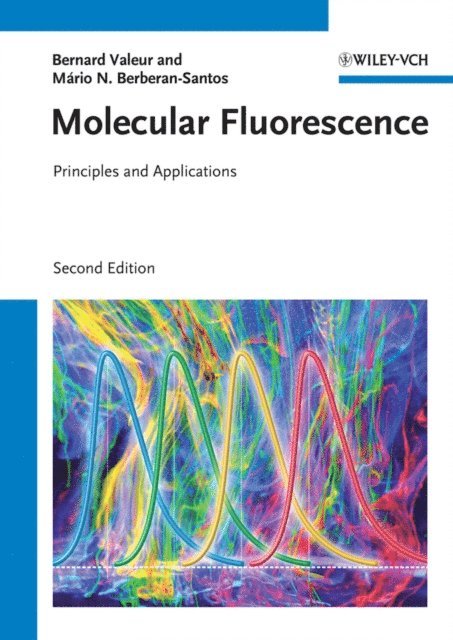
Molecular Fluorescence
Principles and Applications
Av M rio Nuno Berberan-Santos, Bernard Valeur
E-bok, 2013
1472 kr
Lägg i varukorg
Molecular Fluorescence This second edition of the well-established bestseller is completely updated and revised with approximately 30 % additional material, including two new chapters on applications, which has seen the most significant developments. The comprehensive overview written at an …
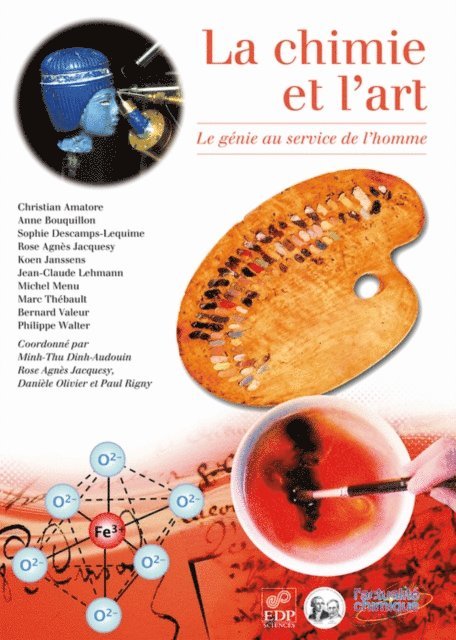
La chimie et l'art
Le génie au service de l''homme
Av Philippe Walter, Bernard Valeur m. fl.
E-bok, 2021
733 kr
Lägg i varukorg
No detailed description available for "La chimie et l''art".
Molecular Fluorescence
Principles and Applications
Av Bernard Valeur, Mário Nuno Berberan-Santos
Häftad, 2013
1340 kr
Lägg i varukorg
Molecular Fluorescence This second edition of the well-established bestseller is completely updated and revised with approximately 30 % additional material, including two new chapters on applications, which has seen the most significant developments. The comprehensive overview written at an …
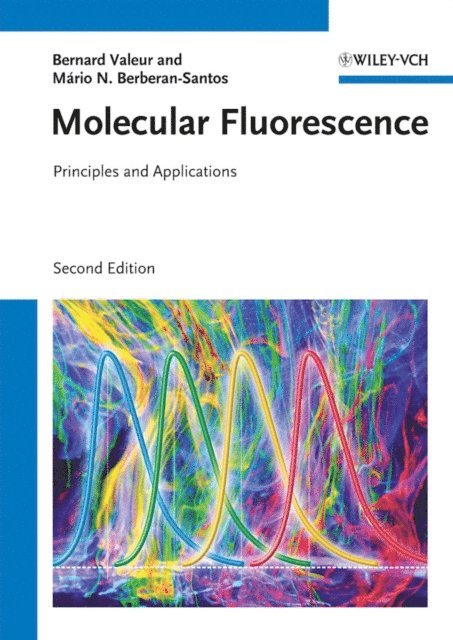
Molecular Fluorescence
Principles and Applications
Av M rio Nuno Berberan-Santos, Bernard Valeur
E-bok, 2013
1516 kr
Lägg i varukorg
Molecular Fluorescence This second edition of the well-established bestseller is completely updated and revised with approximately 30 % additional material, including two new chapters on applications, which has seen the most significant developments. The comprehensive overview written at an …
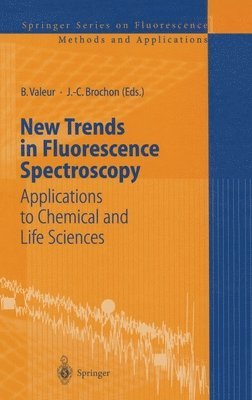
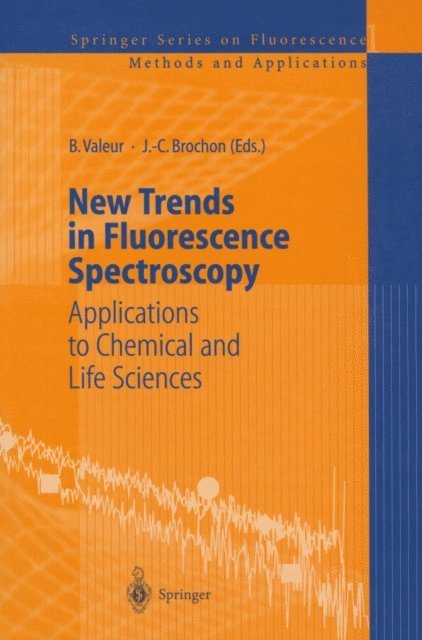
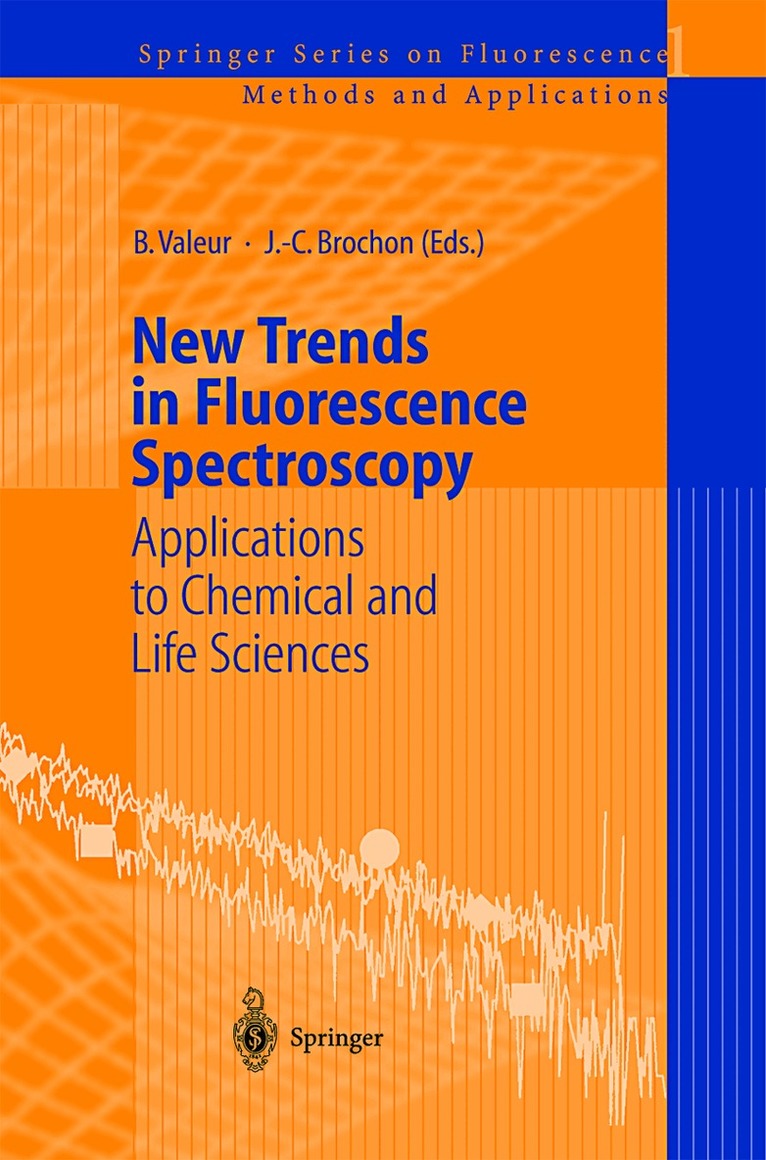
New Trends in Fluorescence Spectroscopy
Applications to Chemical and Life Sciences
Av Bernard Valeur, Jean-Claude Brochon m. fl.
Inbunden, 2001
879 kr
Lägg i varukorg
This first volume in the new Springer Series on Fluorescence brings together fundamental and applied research from this highly interdisciplinary field ranging from chemistry and physics to biology and medicine. Special attention is given to supramolecular systems, sensor applications, confocal …
New Trends in Fluorescence Spectroscopy
Applications to Chemical and Life Sciences
Av Jean-Claude Brochon, Bernard Valeur
E-bok, 2012
734 kr
Lägg i varukorg
Fluorescence is more and more widely used as a tool of investigation, analysis, control and diagnosis in many fields relevant to physical, chemical, biological and medical sciences. New technologies con tinuously emerge thanks to the progress in the design of light sources (e.g. laser diodes), …
New Trends in Fluorescence Spectroscopy
Applications to Chemical and Life Sciences
Av Bernard Valeur, Jean-Claude Brochon
Häftad, 2012
552 kr
Lägg i varukorg
Fluorescence is more and more widely used as a tool of investigation, analysis, control and diagnosis in many fields relevant to physical, chemical, biological and medical sciences. New technologies con tinuously emerge thanks to the progress in the design of light sources (e.g. laser diodes), …