Bertram Lang – författare
Visar alla böcker från författaren Bertram Lang. Handla med fri frakt och snabb leverans.
3 produkter
3 produkter
Inbunden, Engelska, 2025
999 kr
Skickas
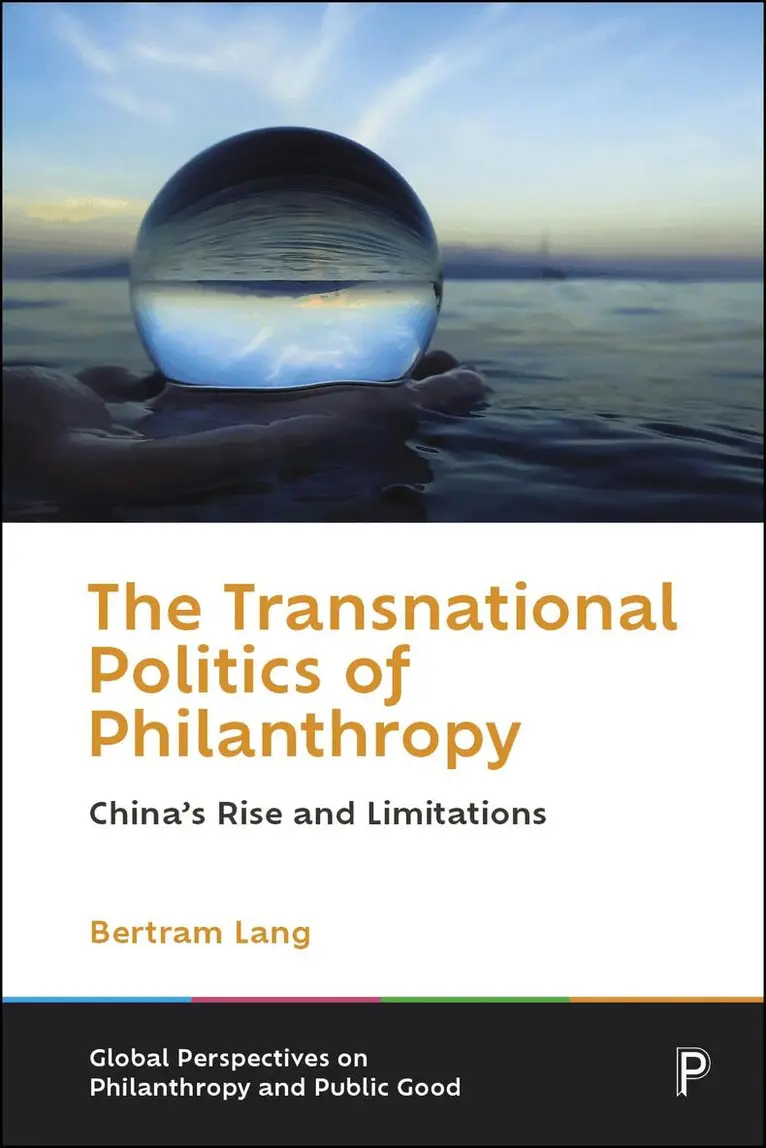
How does philanthropy function and gain legitimacy within an authoritarian system – and what does this mean for the global philanthropic landscape? Drawing on rich empirical data and a mixed-methods approach, this book reveals how transnational dynamics have shaped the rise of Chinese philanthropy in an authoritarian context – and how, in turn, it is increasingly influencing the future of global philanthropy. Combining insights from fieldwork in China and text mining of philanthropy-related news reports and online fundraising data, the book provides a fresh picture of China’s dynamic philanthropy landscape. It ranges from the Tencent Foundation’s promotion of an ebullient internet philanthropy and the strategic ‘charitisation’ of grassroots NGOs to traditional party-state foundations working to professionalise their operations in an increasingly competitive fight for resources. It crucially links these organisation-level strategies to broader political developments in the context of China’s evolving Belt and Road initiative and its engagement with developing countries as well as the UN system.This timely and original contribution is vital reading for scholars interested in the political dimensions of global civil society and China's expanding role in shaping it.
E-bok
PDF, Engelska, 201337 kr
Läs direkt efter köp
Literature Review from the year 2012 in the subject Politics - Region: Far East, grade: 1,0, University of Freiburg (Seminar fur Wissenschaftliche Politik), course: Hauptseminar Democracy and Development: A Comparative Asian Perspective, language: English, abstract: The question whether China will or will not follow a path of democratic reforms in the near future has been repeatedly asked by many scholars over the last years, even decades. Since the beginning of China's economic reforms and development, modernisation theorists have always been in the front-line when it came down to predicting the country's soon-to-come political liberalisation. However, after decades of contradictory results of quantitative studies on the alleged causal relationship between economic development and democracy, there is growing consent to Seymour Martin Lipset s statement that [w]hether democracy succeeds or fails continues to depend significantly on the choices, behaviors, and decisions of political leaders and groups (Lipset 1994: 18). Completely in line with what the German political scientist Wolfgang Muno describes as the need for qualitative analyses of [ ] important actors, concepts and strategies (Muno 2001: 50) in the debate about democracy and development, Rey-Ching Lu s recently published book Chinese democracy and elite thinking focuses upon the ideas and convictions of a few members of the mainland s elite, from which he draws conclusions about China s political development in the next couple of years. The underlying assumption is that, contrary to many Western theorists beliefs, it is neither the middle class nor the economic liberalisation in itself that will spark democracy from the bottom , but rather the changing attitudes of the more and more globalised social elite that will eventually lead to a top-down process of political reform and liberalisation. This book review focuses on the most important aspects of Lu s methodological approach and line of argument. After a presentation of his methodological proceeding, the main findings and conclusions of Lu s study will be described and discussed. Then, a critical assessment of the author s arguments will be made, also considering other scholars views on the issues of China s possible democratization and the role of its elites in this process.
Häftad, Tyska, 2013
725 kr
Skickas inom 3-6 vardagar