
Bettina KAmmerling-Meibauer – författare
774 kr
Läs direkt efter köp
What should children and students read? This volume explores challenging picturebooks as learning materials in early childhood education, primary and secondary school, and even universities. It addresses a wide range of thematic, cognitive, and aesthetic challenges and educational affordances of picturebooks in various languages and from different countries.
Written by leading and emerging scholars in the field of picturebook studies and literacy research, the book discusses the impact of challenging picturebooks in a comprehensive manner and combines theoretical considerations, picturebook analyses, and empirical studies with children and students. It introduces stimulating picturebooks from all continents and how they are used or may be used in educational settings and contexts. The chapters touch on subjects like reading promotion, second-language acquisition, art education, interdisciplinary learning, empathy development, minority issues, and intercultural competence. Moreover, they consider relevant aspects of the educational environments, such as the inclusion of picturebooks in the curriculum, the significance of school libraries, and the impact of publishers.
Exploring Challenging Picturebooks in Education sheds new light on the multiple dimensions relevant to investigating the impact of picturebooks on learning processes and the development of multimodal literacy competencies. It thus makes a significant contribution to the growing area of picturebook research and will be key reading for educators, researchers, and post-graduate students in the field of literacy studies, children’s literature, and education research.
774 kr
Läs direkt efter köp
What should children and students read? This volume explores challenging picturebooks as learning materials in early childhood education, primary and secondary school, and even universities. It addresses a wide range of thematic, cognitive, and aesthetic challenges and educational affordances of picturebooks in various languages and from different countries.
Written by leading and emerging scholars in the field of picturebook studies and literacy research, the book discusses the impact of challenging picturebooks in a comprehensive manner and combines theoretical considerations, picturebook analyses, and empirical studies with children and students. It introduces stimulating picturebooks from all continents and how they are used or may be used in educational settings and contexts. The chapters touch on subjects like reading promotion, second-language acquisition, art education, interdisciplinary learning, empathy development, minority issues, and intercultural competence. Moreover, they consider relevant aspects of the educational environments, such as the inclusion of picturebooks in the curriculum, the significance of school libraries, and the impact of publishers.
Exploring Challenging Picturebooks in Education sheds new light on the multiple dimensions relevant to investigating the impact of picturebooks on learning processes and the development of multimodal literacy competencies. It thus makes a significant contribution to the growing area of picturebook research and will be key reading for educators, researchers, and post-graduate students in the field of literacy studies, children’s literature, and education research.
890 kr
Läs direkt efter köp
Focusing on the art and literary form of manga, this volume examines the intercultural exchanges that have shaped manga during the twentieth century and how manga’s culturalization is related to its globalization. Through contributions from leading scholars in the fields of comics and Japanese culture, it describes "manga culture" in two ways: as a fundamentally hybrid culture comprised of both subcultures and transcultures, and as an aesthetic culture which has eluded modernist notions of art, originality, and authorship. The latter is demonstrated in a special focus on the best-selling manga franchise, NARUTO.
1 025 kr
Läs direkt efter köp
This volume discusses the aesthetic and cognitive challenges of modern picturebooks from different countries, such as Denmark, France, Germany, Norway, Spain, Sweden, United Kingdom, and USA. The overarching issue concerns the mutual relationship between representation and narration by means of the picturebooks’ multimodal character. Moreover, this volume includes the main lines of debate and approaches to picturebooks by international leading researchers in the field. Topics covered are the impact of paratexts and interpictorial allusions, the relationship between artists’ books, crossover picturebooks, and picturebooks for adults, the narrative defiance of wordless picturebooks, the representation of emotions in images and text, and the depiction of hybrid characters in picturebooks. The enlargement of the picturebook corpus beyond an Anglo-American picturebook canon opens up new horizons and highlights the diverging styles and genre shifts in modern picturebooks. This tendency also demonstrates the influence of specific authors and illustrators on the appreciation of the picturebook genre, as in the case of Astrid Lindgren’s picturebooks and the picturebooks created by renowned illustrators, such as Anthony Browne, Wolf Erlbruch, Stian Hole, and Bruno Munari. This book will be the definite contribution to contemporary picturebook research for many years to come.
986 kr
Läs direkt efter köp
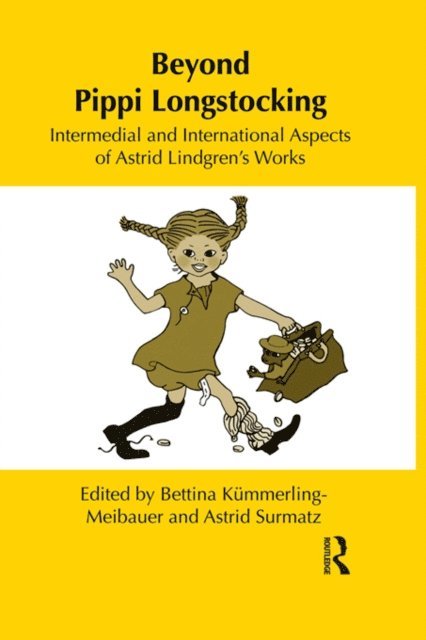
Astrid Lindgren, author of the famed Pippi Longstocking novels, is perhaps one of the most significant children''s authors of the last half of the twentieth century. In this collection contributors consider films, music, and picturebooks relating to Lindgren, in addition to the author''s reception internationally. Touching on everything from the Astrid Lindgren theme park at Vimmerby, Sweden to the hidden folk songs in Lindgren''s works to the use of nostalgia in film adaptations of Lindgren''s novels, this collection offers an important international and intermedial portrait of Lindgren research today.
960 kr
Läs direkt efter köp
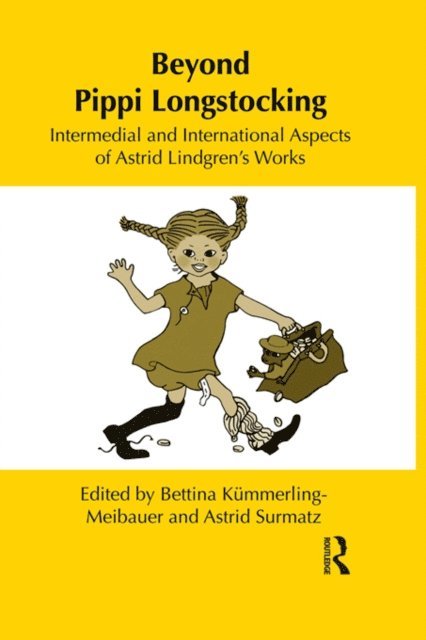
Astrid Lindgren, author of the famed Pippi Longstocking novels, is perhaps one of the most significant children''s authors of the last half of the twentieth century. In this collection contributors consider films, music, and picturebooks relating to Lindgren, in addition to the author''s reception internationally. Touching on everything from the Astrid Lindgren theme park at Vimmerby, Sweden to the hidden folk songs in Lindgren''s works to the use of nostalgia in film adaptations of Lindgren''s novels, this collection offers an important international and intermedial portrait of Lindgren research today.
1 141 kr
Läs direkt efter köp
In this new collection, children’s literature scholars from twelve different countries contribute to the ongoing debate on the importance of picturebook research, focusing on aesthetic and cognitive aspects of picture books. Contributors take interdisciplinary approaches that integrate different disciplines such as literary studies, art history, linguistics, narratology, cognitive psychology, sociology, memory studies, and picture theory. Topics discussed include intervisuality, twist endings, autobiographical narration, and metaliterary awareness in picturebooks. The essays also examine the narrative challenges of first-person narratives, ellipsis, and frame-breaking in order to consider the importance of mindscape as a new paradigm in picturebook research. Tying picturebook studies to studies in childhood, multimodality, and literacy, this anthology is a representative of the different opportunities for research in this emerging field.
896 kr
Läs direkt efter köp
This volume focuses on the (de)canonization processes in children’s literature, considering the construction and cultural-historical changes of canons in different children’s literatures. Chapters by international experts in the field explore a wide range of different children’s literatures from Great Britain, Germany, Scandinavia, the Low Countries, Eastern and Central Europe, as well as from Non-European countries such as Australia, Israel, and the United States. Situating the inquiry within larger literary and cultural studies conversations about canonicity, the contributors assess representative authors and works that have encountered changing fates in the course of canon history. Particular emphasis is given to sociological canon theories, which have so far been under-represented in canon research in children’s literature. The volume therefore relates historical changes in the canon of children’s literature not only to historical changes in concepts of childhood but to more encompassing political, social, economic, cultural, and ideological shifts. This volume’s comparative approach takes cognizance of the fact that, if canon formation is an important cultural factor in nation-building processes, a comparative study is essential to assessing transnational processes in canon formation. This book thus renders evident the structural similarities between patterns and strategies of canon formation emerging in different children’s literatures.
928 kr
Läs direkt efter köp
This volume focuses on the (de)canonization processes in children’s literature, considering the construction and cultural-historical changes of canons in different children’s literatures. Chapters by international experts in the field explore a wide range of different children’s literatures from Great Britain, Germany, Scandinavia, the Low Countries, Eastern and Central Europe, as well as from Non-European countries such as Australia, Israel, and the United States. Situating the inquiry within larger literary and cultural studies conversations about canonicity, the contributors assess representative authors and works that have encountered changing fates in the course of canon history. Particular emphasis is given to sociological canon theories, which have so far been under-represented in canon research in children’s literature. The volume therefore relates historical changes in the canon of children’s literature not only to historical changes in concepts of childhood but to more encompassing political, social, economic, cultural, and ideological shifts. This volume’s comparative approach takes cognizance of the fact that, if canon formation is an important cultural factor in nation-building processes, a comparative study is essential to assessing transnational processes in canon formation. This book thus renders evident the structural similarities between patterns and strategies of canon formation emerging in different children’s literatures.
933 kr
Läs direkt efter köp
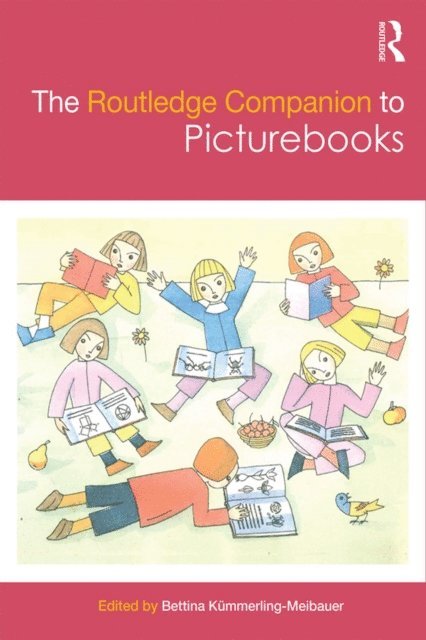
Containing forty-eight chapters, The Routledge Companion to Picturebooks is the ultimate guide to picturebooks. It contains a detailed introduction, surveying the history and development of the field and emphasizing the international and cultural diversity of picturebooks. Divided into five key parts, this volume covers:
Concepts and topics – from hybridity and ideology to metafiction and emotions;
Genres – from baby books through to picturebooks for adults;
Interfaces – their relations to other forms such as comics and visual media;
Domains and theoretical approaches, including developmental psychology and cognitive studies;
Adaptations.
With ground-breaking contributions from leading and emerging scholars alike, this comprehensive volume is one of the first to focus solely on picturebook research. Its interdisciplinary approach makes it key for both scholars and students of literature, as well as education and media.
967 kr
Läs direkt efter köp
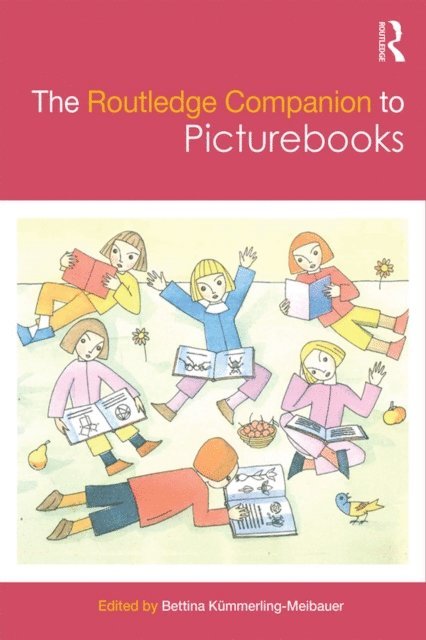
Containing forty-eight chapters, The Routledge Companion to Picturebooks is the ultimate guide to picturebooks. It contains a detailed introduction, surveying the history and development of the field and emphasizing the international and cultural diversity of picturebooks. Divided into five key parts, this volume covers:
Concepts and topics – from hybridity and ideology to metafiction and emotions;
Genres – from baby books through to picturebooks for adults;
Interfaces – their relations to other forms such as comics and visual media;
Domains and theoretical approaches, including developmental psychology and cognitive studies;
Adaptations.
With ground-breaking contributions from leading and emerging scholars alike, this comprehensive volume is one of the first to focus solely on picturebook research. Its interdisciplinary approach makes it key for both scholars and students of literature, as well as education and media.
768 kr
Läs direkt efter köp
Picturebooks, understood as a series of meaningful text-picture relations, are increasingly acknowledged as an autonomous sub-genre of children’s literature. Being highly complex aesthetic products, their use is deeply embedded in specific situations of joint attention between a caregiver and a child. This volume focuses on the question of what children may learn from looking at picturebooks, whether printed in a book format, created in a digital format, or self-produced by educationalists and researchers.Interest in the relationship between cognitive processes and children’s literature is growing rapidly, and in this book, theoretical frameworks such as cognitive linguistics, cognitive narratology, cognitive poetics, and cognitive psychology, have been applied to the analysis of children’s literature. Chapters gather empirical research from the fields of literary studies, linguistics and cognitive psychology together for the first time to build a cohesive understanding of how picturebooks assist learning and development.International contributions explore:
language acquisition
the child’s cognitive development
emotional development
literary acquisition ("literary literacy")
visual literacy.
Divided into three parts considering symbol-based learning, co-constructed learning, and learning language skills, this cross-disciplinary volume will appeal to researchers, students and professionals engaged in children’s literature and literacy studies, as well as those from the fields of cognitive and developmental psychology, linguistics, and education.
741 kr
Läs direkt efter köp
Picturebooks, understood as a series of meaningful text-picture relations, are increasingly acknowledged as an autonomous sub-genre of children’s literature. Being highly complex aesthetic products, their use is deeply embedded in specific situations of joint attention between a caregiver and a child. This volume focuses on the question of what children may learn from looking at picturebooks, whether printed in a book format, created in a digital format, or self-produced by educationalists and researchers.Interest in the relationship between cognitive processes and children’s literature is growing rapidly, and in this book, theoretical frameworks such as cognitive linguistics, cognitive narratology, cognitive poetics, and cognitive psychology, have been applied to the analysis of children’s literature. Chapters gather empirical research from the fields of literary studies, linguistics and cognitive psychology together for the first time to build a cohesive understanding of how picturebooks assist learning and development.International contributions explore:
language acquisition
the child’s cognitive development
emotional development
literary acquisition ("literary literacy")
visual literacy.
Divided into three parts considering symbol-based learning, co-constructed learning, and learning language skills, this cross-disciplinary volume will appeal to researchers, students and professionals engaged in children’s literature and literacy studies, as well as those from the fields of cognitive and developmental psychology, linguistics, and education.
752 kr
Läs direkt efter köp
As fast-evolving technologies transform everyday communication and literacy practices, many young children find themselves immersed in multiple digital media from birth. Such rapid technological change has consequences for the development of early literacy, and the ways in which parents and educators are able to equip today’s young citizens for a digital future.
This seminal Handbook fulfils an urgent need to consider how digital technologies are impacting the lives and learning of young children; and how childhood experiences of using digital resources can serve as the foundation for present and future development. Considering children aged 0–8 years, chapters explore the diversity of young children’s literacy skills, practices and expertise across digital tools, technologies and media, in varied contexts, settings and countries.
The Handbook explores six significant areas:
Part I presents an overview of research into young children’s digital literacy practices, touching on a range of theoretical, methodological and ethical approaches. Part II considers young children’s reading, writing and meaning-making when using digital media at home and in the wider community. Part III offers an overview of key challenges for early childhood education presented by digital literacy, and discusses political positioning and curricula. Part IV focuses on the multimodal and multi-sensory textual landscape of contemporary literary practices, and how children learn to read and write with and across media. Part V considers how digital technologies both influence and are influenced by children’s online and offline social relationships. Part VI draws together themes from across the Handbook, to propose an agenda for future research into digital literacies in early childhood.
A timely resource identifying and exploring pedagogies designed to bolster young children’s digital and multimodal literacy practices, this key text will be of interest to early childhood educators, researchers and policy-makers.
725 kr
Läs direkt efter köp
As fast-evolving technologies transform everyday communication and literacy practices, many young children find themselves immersed in multiple digital media from birth. Such rapid technological change has consequences for the development of early literacy, and the ways in which parents and educators are able to equip today’s young citizens for a digital future.
This seminal Handbook fulfils an urgent need to consider how digital technologies are impacting the lives and learning of young children; and how childhood experiences of using digital resources can serve as the foundation for present and future development. Considering children aged 0–8 years, chapters explore the diversity of young children’s literacy skills, practices and expertise across digital tools, technologies and media, in varied contexts, settings and countries.
The Handbook explores six significant areas:
Part I presents an overview of research into young children’s digital literacy practices, touching on a range of theoretical, methodological and ethical approaches. Part II considers young children’s reading, writing and meaning-making when using digital media at home and in the wider community. Part III offers an overview of key challenges for early childhood education presented by digital literacy, and discusses political positioning and curricula. Part IV focuses on the multimodal and multi-sensory textual landscape of contemporary literary practices, and how children learn to read and write with and across media. Part V considers how digital technologies both influence and are influenced by children’s online and offline social relationships. Part VI draws together themes from across the Handbook, to propose an agenda for future research into digital literacies in early childhood.
A timely resource identifying and exploring pedagogies designed to bolster young children’s digital and multimodal literacy practices, this key text will be of interest to early childhood educators, researchers and policy-makers.