
Betty Rizzo – författare
Visar alla böcker från författaren Betty Rizzo. Handla med fri frakt och snabb leverans.
3 produkter
3 produkter
Inbunden, Engelska, 2003
2 023 kr
Skickas inom 7-10 vardagar
This work is intended for scholars and students of Fanny Burney and of literature of the later 18th century, for students of women's writing and for social historians of the period.
E-bok
PDF, Engelska, 20032 278 kr
Läs direkt efter köp
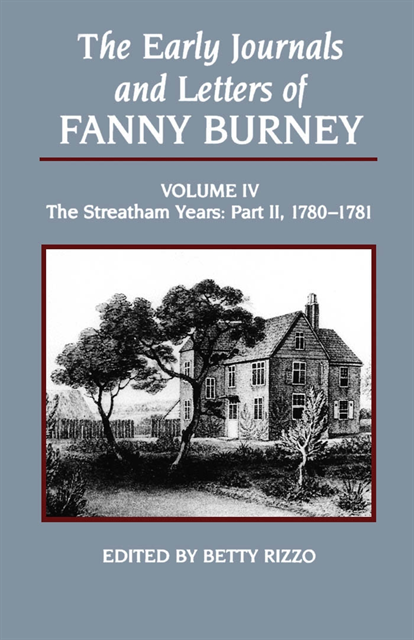
Volume IV of The Early Journals and Letters of Fanny Burney, covering the years 1780-1781, will be of particular interest to students of Burney as it marks the young author''s introduction into the world following the astonishing success of her novel Evelina (1778) and includes her visits to Streatham and her encounters with Hester and Henry Thrale and Dr Johnson. It was an exciting period in her life, which she managed to enjoy despite struggling to repeat her first success while avoiding the often unwelcome attention it brought. But it was also a difficult period in her family life as she dealt with jealous interference by her stepmother, the courtship of her sister Susan by a man she considered untrustworthy, and the misbehaviour of her brothers. Burney''s enthusiasm makes the most of her experiences and she describes characters and scenes with all the genius displayed in her novels. Her descriptions contain the four great attributes that distinguish her novels: brilliant handling of detail, total and full recall of conversations characteristic of the speaker, sensibility and empathy for others, and great relish for the ridiculous wherever it occurred.
Häftad, Engelska, 2008
545 kr
Skickas inom 5-8 vardagar
Companions Without Vows is the first detailed study of the companionate relationship among women in eighteenth-century England—a type of relationship so prevalent that it was nearly institutionalized. Drawing extensively upon primary documents and fictional narratives, Betty Rizzo describes the socioeconomic conditions that forced women to take on or to become companions and examines a number of actual companionate relationships.Several factors fostered such relationships. Husbands and wives of the period lived largely separate social lives, yet decorum prohibited genteel women from attending engagements unaccompanied. Also, women of position insisted on having social consultants and confidantes. Filling this need were the many well-born young women without sufficient funds to live independently. Because family money and property were concentrated in the hands of eldest sons, these women frequently had to seek the protection of female benefactors for whom they performed unpaid, nonmenial tasks, such as providing a hand at cards or simply offering pleasant company.The companionate relationship between women could assume many forms, Rizzo notes. It was often analogous to marriage, with one partner dominant and the other subservient, while some women experimented in establishing partnerships that were truly egalitarian. Rizzo explores these various types of relationships both in real life and in fiction, noting that much of the period's discourse about women's relationships can be seen as a tacit commentary on marriage.Provocative and engagingly written, this authoritative work casts new light on women's attempts to deal with a patriarchal power structure and offers new insight into eighteenth-century social history.