Biancamaria Fontana – författare
Visar alla böcker från författaren Biancamaria Fontana. Handla med fri frakt och snabb leverans.
11 produkter
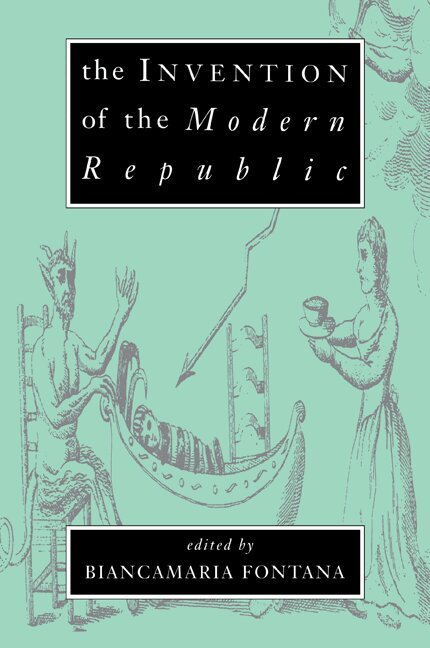
The Invention of the Modern Republic
Häftad, 2007
813 kr
Lägg i varukorg
Why are republics the most common form of political organization, and the one most readily associated with modern democracy, when until the late eighteenth-century it was generally believed that republics could function only in small urban territories with considerable ethical and political …
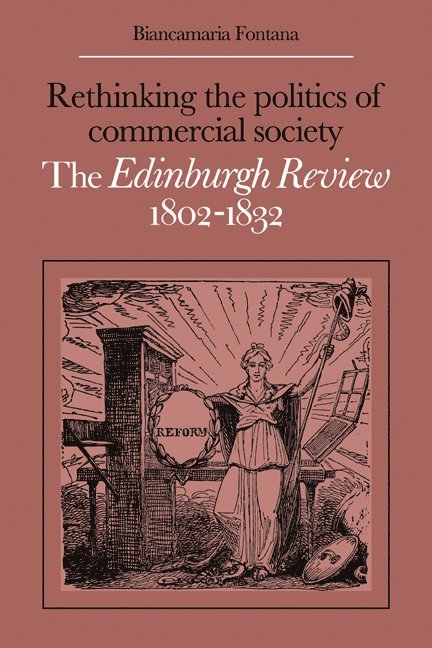
Rethinking the Politics of Commercial Society
The Edinburgh Review 1802-1832
Häftad, 2008
699 kr
Lägg i varukorg
This book explores the sources of modern British liberalism through a study of the Edinburgh Review, the most influential and controversial early nineteenth-century British periodical. Founded by a group of young Scottish intellectuals in 1802, the Review served as a principal channel through which …
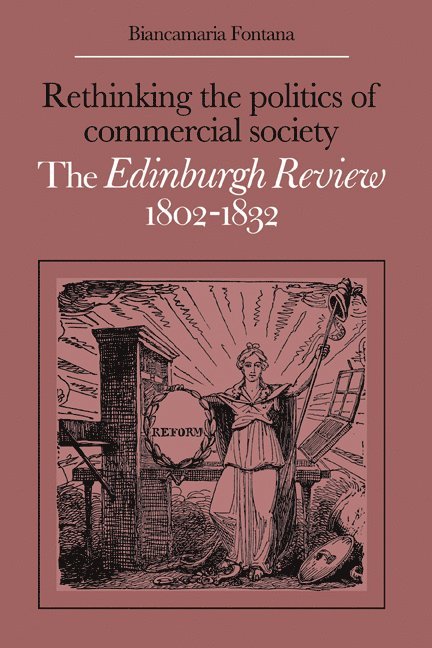
Rethinking the Politics of Commercial Society
The Edinburgh Review 1802-1832
Inbunden, 1985
1295 kr
Lägg i varukorg
This book explores the sources of modern British liberalism through a study of the Edinburgh Review, the most influential and controversial early nineteenth-century British periodical. Founded by a group of young Scottish intellectuals in 1802, the Review served as a principal channel through which …
Constant: Political Writings
Av Benjamin Constant, Biancamaria Fontana m. fl.
Häftad, 1988
601 kr
Lägg i varukorg
This 1988 book is an English translation of the major political works of Benjamin Constant, one of the most important of modern French political theorists and writers. A Swiss protestant by birth, Constant was a prominent figure in French political life in the aftermath of the revolution of 1789, …
The Invention of the Modern Republic
Inbunden, 1994
1628 kr
Lägg i varukorg
Why are republics the most common form of political organization, and the one most readily associated with modern democracy, when until the late eighteenth-century it was generally believed that republics could function only in small urban territories with considerable ethical and political …
Montaigne's Politics
Authority and Governance in the Essais
Inbunden, 2008
1092 kr
Lägg i varukorg
Michel de Montaigne (1533-92) is principally known today as a literary figure--the inventor of the modern essay and the pioneer of autobiographical self-exploration who retired from politics in midlife to write his private, philosophical, and apolitical Essais. But, as Biancamaria Fontana argues in …
Germaine de Staël
A Political Portrait
Inbunden, 2016
409 kr
Lägg i varukorg
Germaine de Stael (1766-1817) is perhaps best known today as a novelist, literary critic, and outspoken and independent thinker. Yet she was also a prominent figure in politics during the French Revolution. Biancamaria Fontana sheds new light on this often overlooked aspect of Stael's life and …
Montaigne's Politics
Authority and Governance in the Essais
E-bok, 2010
902 kr
Lägg i varukorg
Michel de Montaigne (1533-92) is principally known today as a literary figure--the inventor of the modern essay and the pioneer of autobiographical self-exploration who retired from politics in midlife to write his private, philosophical, and apolitical Essais . But, as Biancamaria Fontana argues …
Germaine de Stael
A Political Portrait
E-bok, 2016
514 kr
Lägg i varukorg
The first in-depth look at Staël''s political life and writings Germaine de Staël (1766–1817) is perhaps best known today as a novelist, literary critic, and outspoken and independent thinker. Yet she was also a prominent figure in politics during the French Revolution. Biancamaria Fontana sheds …
Desk Revolutionaries
The Men of the French Directory, 1795–9
Inbunden, 2026
280 kr
Lägg i varukorg
The French Directory is often dismissed as an uninspiring interlude between revolutionary fervour and Napoleonic legend, yet its story is far richer than its reputation suggests. This book shifts the focus from the regime to the remarkable men who shaped it – a cohort of jurists, engineers and …
"Un voile sur la liberté"
La Révolution française, du libéralisme à la Terreur
Av Biancamaria Fontana, Bernard Manin
E-bok, 2025
281 kr
Lägg i varukorg
Comment la Révolution française a-t-elle pu déraper du libéralisme vers la Terreur ? De la proclamation de la Déclaration des droits de l’homme et du citoyen à la répression violente mise en œuvre par le Comité de salut public ? Pour le comprendre, Bernard Manin offre dans ce livre inédit une …