Bibhuti Dutta Singh – författare
1 718 kr
Läs direkt efter köp
The history of nuclear physics as a discipline distinct from atomic physics starts with the discovery of radioactivity by Henri Becquerel in 1896, while investigating phosphorescence in uraniumsalts. The discovery of the electron by J. J. Thomson a year later was an indication that the atom had internal structure. At the turn of the 20th century the accepted model of the atom was J. J. Thomson’s plum pudding model in which the atom was a large positively charged ball with small negatively charged electrons embedded inside of it. By the turn of the century physicists had also discovered three types of radiation emanating from atoms, which they named alpha, beta, and gamma radiation. Experiments in 1911 by Lise Meitner and Otto Hahn, and by James Chadwick in 1914 discovered that the beta decay spectrum was continuous rather than discrete. It is found extremely necessary to bring out the present book in a more useful and enlarged form to serve the basic purpose of the students.
11 551 kr
Läs direkt efter köp
Biodilution is also a process that occurs to all trophic levels in an aquatic environment; it is the opposite of biomagnification, thus a pollutant gets smaller in concentration as it progresses up a food web. Lipid, (lipophilic) or fat soluble substances cannot be diluted, broken down, or excreted in urine, a water-based medium, and so accumulate in fatty tissues of an organism if the organism lacks enzymes to degrade them. When eaten by another organism, fats are absorbed in the gut, carrying the substance, which then accumulates in the fats of the predator. Since at each level of the food chain there is a lot of energy loss, a predator must consume many prey, including all of their lipophilic substances. In a review of a large number of studies, Suedeletal. (1994) concluded that although biomagnification is probably more limited in occurrence than previously thought, there is good evidence that DDT, DDE, PCBs, toxaphene, and the organic forms of mercury and arsenic do biomagnify in nature. For other contaminants, bioconcentration and bioaccumulation account for their high concentrations in organism tissues. More recently, Gray (2002) reached a similar substances remaining in the organisms and not being diluted to non-threatening concentrations. The success of top predatory-bird recovery (bald eagles, peregrine falcons) in North America following the ban on DDT use in agriculture is testament to the importance of biomagnification. The present publication has been designed to approach this subject in a simple and lucid style. The method of presentation is very clear and lucid, which can be easily followed by the students.
3 506 kr
Läs direkt efter köp
3 578 kr
Läs direkt efter köp
6 533 kr
Läs direkt efter köp
5 439 kr
Läs direkt efter köp
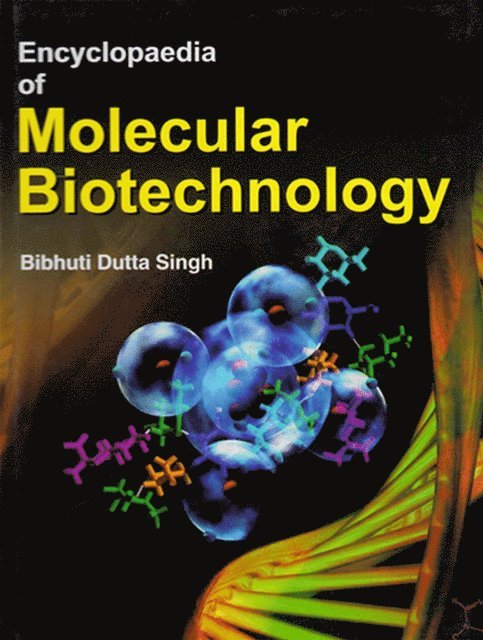
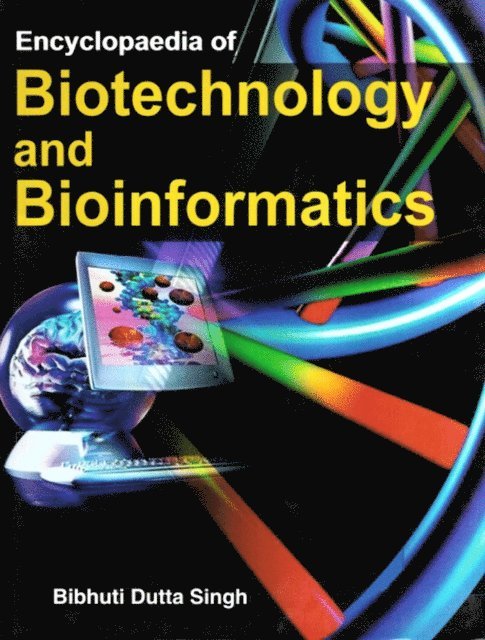
Molecular biotechnology is an exciting revolutionary scientific discipline that is based on the ability of a researcher to transfer specific units of genetic information from one organism to another. The objective of recombinant DNA technology is often to produce a use full product or a commercial process. in early 1970, traditional biotechnology was not well known as a scientific discipline. Research in this area was carried out in chemical engineering departments. The term "biotechnology" was created in 1919 by a Hungarian engineer, Karl Ereky. According to Ereky, "biotechnology involves all works carried out with the aid of living things." More formally, biotechnology may be defined as "the application of scientific and engineering principles to the processing of material by biological agents to provide goods and services." in 1961 , a Swedish microbiologist Cad Gordon Haden redefined biotechnology as "the industrial production of goods and services by processing using biological organisms, and it is firmly ground on expertise in microbiology, biochemistry and chemical engineering." However the nature of biotechnology was changed forever by the development of recombinant DNA technology. With these techniques, the optimization of any biotechnological process was achieved more directly. it is hoped that his book will not only meet the requirements of students but will also be useful as a guide to the academic professionals.
5 439 kr
Läs direkt efter köp
Molecular biotechnology is an exciting revolutionary scientific discipline that is based on the ability of a researcher to transfer specific units of genetic information from one organism to another. The objective of recombinant DNA technology is often to produce a use full product or a commercial process. in early 1970, traditional biotechnology was not well known as a scientific discipline. Research in this area was carried out in chemical engineering departments. The term "biotechnology" was created in 1919 by a Hungarian engineer, Karl Ereky. According to Ereky, "biotechnology involves all works carried out with the aid of living things." More formally, biotechnology may be defined as "the application of scientific and engineering principles to the processing of material by biological agents to provide goods and services." in 1961 , a Swedish microbiologist Cad Gordon Haden redefined biotechnology as "the industrial production of goods and services by processing using biological organisms, and it is firmly ground on expertise in microbiology, biochemistry and chemical engineering." However the nature of biotechnology was changed forever by the development of recombinant DNA technology. With these techniques, the optimization of any biotechnological process was achieved more directly. it is hoped that his book will not only meet the requirements of students but will also be useful as a guide to the academic professionals.
5 686 kr
Läs direkt efter köp
5 686 kr
Läs direkt efter köp
1 861 kr
Läs direkt efter köp
Mycology (from the Greek meaning “fungus”) is the branch of biology concerned with the study of fungi, including their genetic andbiochemical properties, their taxonomy and their use to humans as a source for tinder, medicinals (e.g., penicillin), food (e.g., beer, wine, cheese, edible mushrooms) and entheogens, as well as their dangers, such as poisoning or infection. From mycology arose the field of phytopathology, the study of plant diseases, and the two disciplines remain closely related because the vast majority of “plant” pathogens are fungi. A biologist who studies mycology is called a mycologist. Historically, mycology was a branch of botany because, although fungi are evolutionarily more closely related to animals than to plants, this was not recognized until a few decades ago. This book has been intended as a manual for students of this subject.
1 861 kr
Läs direkt efter köp
Plant morphology or phytomorphology is the study of the physical form and external structure of plants. This is usually considered distinct from plant anatomy, which is the study of the internal structure of plants, especially at the microscopic level. Plant morphology is useful in the identification of plants. Plant morphology “represents a study of the development, form, and structure of plants, and, by implication, an attempt to interpret these on the basis of similarity of plan and origin.” There are four major areas of investigation in plant morphology, and each overlaps with another field of the biological sciences. First of all, morphology is comparative, meaning that the morphologist examines structures in many different plants of the same or different species, then draws comparisons and formulates ideas about similarities. When structures in different species are believed to exist and develop as a result of common, inherited genetic pathways, those structures are termed homologous. All chapter has been well arranged, describing cell related aspects of the subject to make an indispensable book for the students who are interested in Botanical Sciences.
4 294 kr
Läs direkt efter köp
Plants are the backbone of life on Earth. Today, however, plant communities around the world are under threat. Scientists estimate that at least 100,000 plants are threatened with extinction—that’s more than one-third the total known species of plants on the planet! The main threats to plants today are habitat destruction, invasive species, and over- collection. The loss of a plant species can have devastating effects on ecosystems as a whole, as other species lose their sources of food and shelter. Additionally, plants play a crucial role in stabilising soils and help prevent erosion. The tools of contemporary biotechnology, such as molecular biology and tissue culture etc. are being increasingly applied to assist the conservation of plant diversity. This book introduces the reader to biotechnological techniques which are currently used to conserve endangered plant species, genetic resources, horticultural and crop plant germplasm etc. It is believed that the book will act as a useful reference to students, researchers and professionals across a range of agricultural sciences, life science and other allied fields. Contents: Applications in Agriculture Biotechnology; Vegetables and Fruits in the Fertile Crescent; Soil Moisture and Water Saturation; Principles in Organic Farming; An Introduction to Restoration Genetics; Agricultural Microbes; Biotechnology for the 21st Century: New Horizons; Major Breeding Objectives.