Billie Jeanne Brownlee – författare
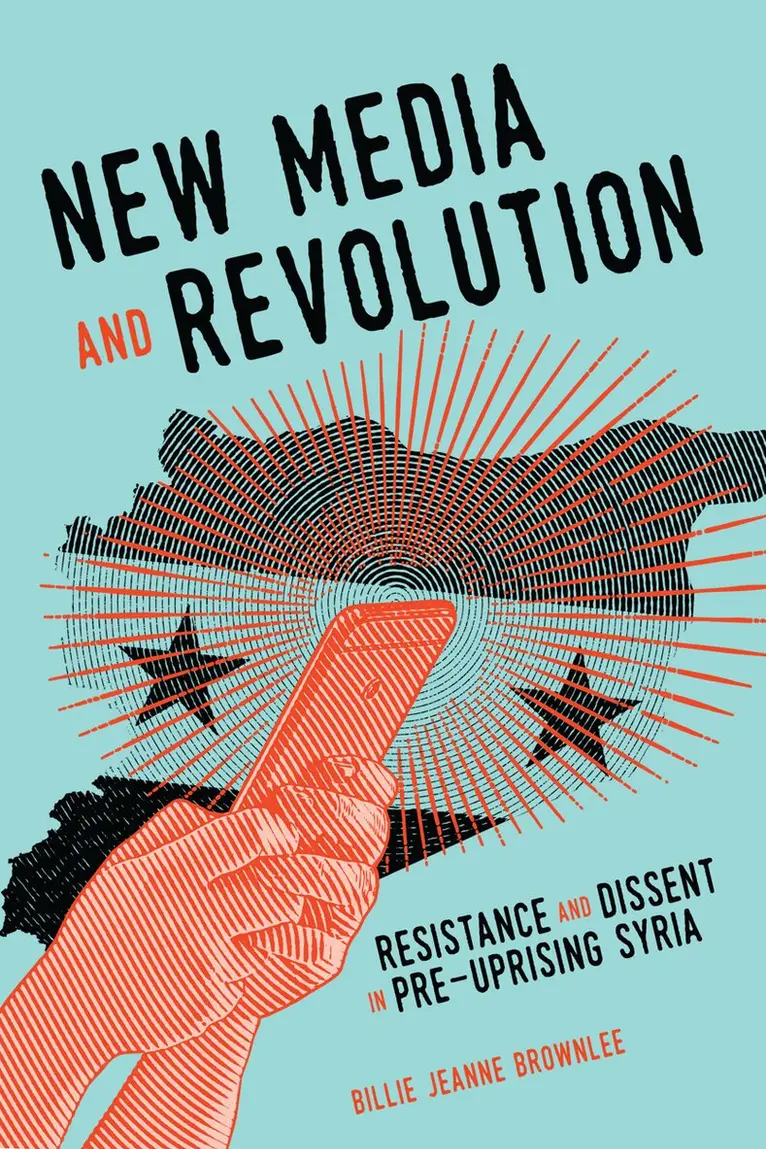
New Media and Revolution
Resistance and Dissent in Pre-uprising Syria
434 kr
Skickas inom 10-15 vardagar
361 kr
Läs direkt efter köp
The Arab Spring did not arise out of nowhere. It was the physical manifestation of more than a decade of new media diffusion, use, and experimentation that empowered ordinary people during their everyday lives. In this book, Billie Jeanne Brownlee offers a refreshing insight into the way new media can facilitate a culture of resistance and dissent in authoritarian states.Investigating the root causes of the Syrian uprising of 2011, New Media and Revolution shows how acts of online resistance prepared the ground for better-organised street mobilisation. The book interprets the uprising not as the start of Syria''s social mobilisation but as a shift from online to offline contestation, and from localised and hidden practices of digital dissent to tangible mass street protests. Brownlee goes beyond the common dichotomy that frames new media as either a deus ex machina or a means of expression to demonstrate that, in Syria, media was a nontraditional institution that enabled resistance to digitally manifest and gestate below, within, and parallel to formal institutions of power. To refute the idea that the population of Syria was largely apathetic and apolitical prior to the uprising, Brownlee explains that social media and technology created camouflaged geographies and spaces where individuals could protest without being detected.Challenging the myth of authoritarian stability, New Media and Revolution uncovers the dynamics of grassroots resistance blossoming under the radar of ordinary politics.
361 kr
Läs direkt efter köp
The Arab Spring did not arise out of nowhere. It was the physical manifestation of more than a decade of new media diffusion, use, and experimentation that empowered ordinary people during their everyday lives. In this book, Billie Jeanne Brownlee offers a refreshing insight into the way new media can facilitate a culture of resistance and dissent in authoritarian states.Investigating the root causes of the Syrian uprising of 2011, New Media and Revolution shows how acts of online resistance prepared the ground for better-organised street mobilisation. The book interprets the uprising not as the start of Syria''s social mobilisation but as a shift from online to offline contestation, and from localised and hidden practices of digital dissent to tangible mass street protests. Brownlee goes beyond the common dichotomy that frames new media as either a deus ex machina or a means of expression to demonstrate that, in Syria, media was a nontraditional institution that enabled resistance to digitally manifest and gestate below, within, and parallel to formal institutions of power. To refute the idea that the population of Syria was largely apathetic and apolitical prior to the uprising, Brownlee explains that social media and technology created camouflaged geographies and spaces where individuals could protest without being detected.Challenging the myth of authoritarian stability, New Media and Revolution uncovers the dynamics of grassroots resistance blossoming under the radar of ordinary politics.
States Without People
Revolt and Defeat in the Middle East
428 kr
Skickas inom 5-8 vardagar
415 kr
Läs direkt efter köp
The horizon of emancipatory politics is in ruins, scarred by defeats and ongoing conflicts. Under the auspices of technocapitalist elites and their political allies, a reactionary turn tightens its grip on the world. Civil wars and regional conflicts are surging. The Middle East has become the regional laboratory for a global reconfiguration of power.
States Without People explores how revolts that preceded the outbreak of war have fostered a right-wing political culture. In a nuanced discussion of the defeat of popular revolts and the rise of mythological politics, hypermilitarism, and ethnosupremacism, Billie Jeanne Brownlee and Maziyar Ghiabi take readers into the phenomenological depths of citizen politics in Israel, Lebanon, Syria, Iraq, Iran, and Egypt, across the Arabian Peninsula, and beyond. The book highlights three pivotal moments: the outbreak and defeat of popular revolts, the ensuing civil wars, and the complex displacement that has forced millions from their homes.
States Without People advances a paradigm shift in state–citizen relations from the vantage point of the Middle East. In the state without people, there is no ideological space for a heterogeneous or self-contradictory citizenry – only for partisans, whose interests overlap with the state’s, and for enemies.
415 kr
Läs direkt efter köp
The horizon of emancipatory politics is in ruins, scarred by defeats and ongoing conflicts. Under the auspices of technocapitalist elites and their political allies, a reactionary turn tightens its grip on the world. Civil wars and regional conflicts are surging. The Middle East has become the regional laboratory for a global reconfiguration of power.
States Without People explores how revolts that preceded the outbreak of war have fostered a right-wing political culture. In a nuanced discussion of the defeat of popular revolts and the rise of mythological politics, hypermilitarism, and ethnosupremacism, Billie Jeanne Brownlee and Maziyar Ghiabi take readers into the phenomenological depths of citizen politics in Israel, Lebanon, Syria, Iraq, Iran, and Egypt, across the Arabian Peninsula, and beyond. The book highlights three pivotal moments: the outbreak and defeat of popular revolts, the ensuing civil wars, and the complex displacement that has forced millions from their homes.
States Without People advances a paradigm shift in state–citizen relations from the vantage point of the Middle East. In the state without people, there is no ideological space for a heterogeneous or self-contradictory citizenry – only for partisans, whose interests overlap with the state’s, and for enemies.