
Birgit Bortoluzzi – författare
Visar alla böcker från författaren . Handla med fri frakt och snabb leverans.
9 produkter
9 produkter
E-bok
Tyska, 2025122 kr
Läs direkt efter köp
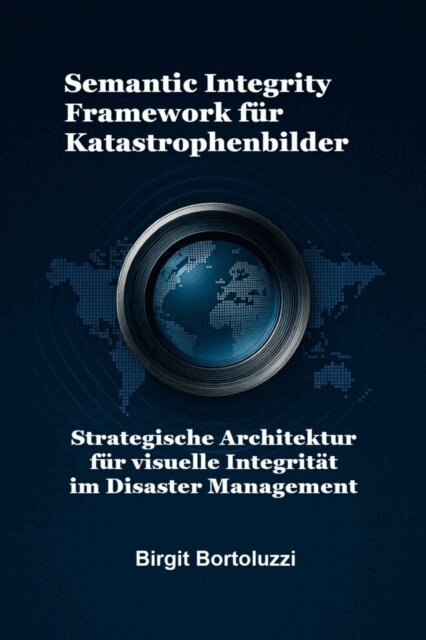
Visuelle Integrität in Krisenzeiten – Strategien für den Umgang mit KI-generierten BildernIn Katastrophenlagen zählt jede Sekunde und jedes Bild. KI-generierte Darstellungen können Wahrnehmung verzerren, Kommunikation destabilisieren und operative Entscheidungen weltweit beeinflussen. Dieses Buch präsentiert das Semantic Integrity Framework für Katastrophenbilder: ein strategisch entwickeltes Steuerungssystem zur Bewertung, Kontextualisierung und Absicherung synthetischer Bildinhalte.Das Framework vereint semantische Präzision, visuelle Rückverfolgbarkeit und operative Entscheidungslogik. Es ist modular aufgebaut, visuell wie sprachlich adaptierbar und weltweit einsetzbar. Zentrale Steuerungselemente wie semantische Schwellenwertdefinitionen, rollenbasierte Steuerungslogiken und kommunikationsrelevante Wirkungseinschätzungen ermöglichen eine belastbare Integration in bestehende Strukturen.Mehr als eine technische Lösung, bietet das Framework eine strategische Infrastruktur für visuelle Steuerung in einem fragmentierten, hochriskanten Informationsumfeld. Es unterstützt nachvollziehbare, kontextbezogene Entscheidungen in Echtzeit und stärkt Vertrauen und Koordination in volatilen Einsatzlandschaften. Trainingsformate, Stakeholder-Einbindung und Mustererkennung für semantische Eskalationen erweitern das Framework und stärken seine globale Anschlussfähigkeit. Es schafft die Grundlage für zukünftige Rollenmodelle, visuelle Governance und resilienten Umgang mit synthetischen Medien.Das Werk richtet sich an Behörden, Einsatzkräfte, Medien, Plattformen, Organisationen und Einzelpersonen, die in kritischen Momenten Verantwortung tragen. Es bietet belastbare Werkzeuge zur Stärkung visueller Resilienz und zur strategischen Steuerung von Bildinhalten in komplexen Krisenkontexten.Ein Buch für alle, die visuelle Verantwortung neu denken und globale Krisenresilienz aktiv mitgestalten wollen.
E-bok
Italienska, 2025122 kr
Läs direkt efter köp
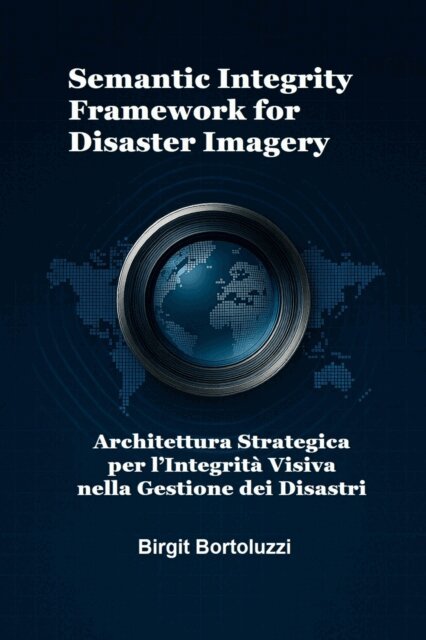
Integrità visiva nei tempi di crisi – Strategie per la gestione delle immagini generate dall''IAIn situazioni di catastrofe ogni secondo e ogni immagine contano. Le rappresentazioni generate dall''IA possono distorcere la percezione, destabilizzare la comunicazione e influenzare le decisioni operative a livello globale. Questo libro presenta il Semantic Integrity Framework per le immagini di catastrofi: un sistema di controllo strategicamente sviluppato per la valutazione, contestualizzazione e messa in sicurezza dei contenuti visivi sintetici.Il framework unisce precisione semantica, tracciabilità visiva e logica decisionale operativa. Ha una struttura modulare, è adattabile sia visivamente che linguisticamente ed è applicabile a livello globale. Elementi centrali di controllo come la definizione di soglie semantiche, logiche di controllo basate sui ruoli e valutazioni dell''impatto comunicativo consentono un''integrazione solida nelle strutture esistenti.Più che una soluzione tecnica, il framework offre un''infrastruttura strategica per la gestione visiva in un contesto informativo frammentato e ad alto rischio. Supporta decisioni comprensibili e contestualizzate in tempo reale e rafforza fiducia e coordinamento in scenari operativi volatili. Formati di formazione, coinvolgimento degli stakeholder e riconoscimento di schemi di escalation semantica ampliano il framework e ne rafforzano la capacità di connessione globale. Costituisce la base per futuri modelli di ruolo, governance visiva e gestione resiliente dei media sintetici.L''opera si rivolge ad autorità, forze operative, media, piattaforme, organizzazioni e singoli individui che assumono responsabilità in momenti critici. Offre strumenti affidabili per rafforzare la resilienza visiva e per la gestione strategica dei contenuti visivi in contesti di crisi complessi.Un libro per tutti coloro che vogliono ripensare la responsabilità visiva e contribuire attivamente alla resilienza globale nelle crisi.
E-bok
Engelska, 2025111 kr
Läs direkt efter köp
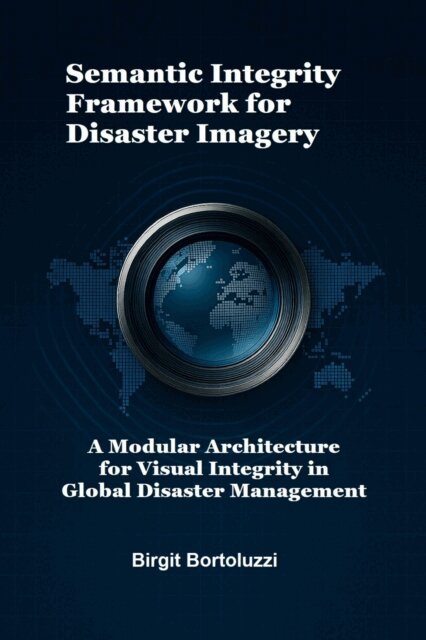
Visual Integrity in Times of Crisis - Strategies for Dealing with AI-Generated ImagesIn disaster situations, every second and every image counts. AI-generated representations can distort perception, destabilize communication, and influence operational decisions on a global scale. This book presents the Semantic Integrity Framework for Disaster Imagery: a strategically developed control system for the evaluation, contextualization, and safeguarding of synthetic visual content. The framework combines semantic precision, visual traceability, and operational decision logic. It is modular in structure, adaptable both visually and linguistically, and deployable worldwide. Core control elements such as semantic threshold definitions, role-based governance logics, and communication-relevant impact assessments enable robust integration into existing structures. More than a technical solution, the framework offers a strategic infrastructure for visual governance in a fragmented, high-risk information environment. It supports traceable, context-aware decisions in real time and strengthens trust and coordination in volatile operational landscapes. Training formats, stakeholder engagement, and pattern recognition for semantic escalation expand the framework and enhance its global interoperability. It lays the foundation for future role models, visual governance, and resilient handling of synthetic media. This work is aimed at authorities, emergency responders, media, platforms, organizations, and individuals who bear responsibility in critical moments. It provides reliable tools for strengthening visual resilience and for the strategic management of visual content in complex crisis contexts. A book for all who seek to rethink visual responsibility and actively shape global crisis resilience.
72 kr
Läs direkt efter köp
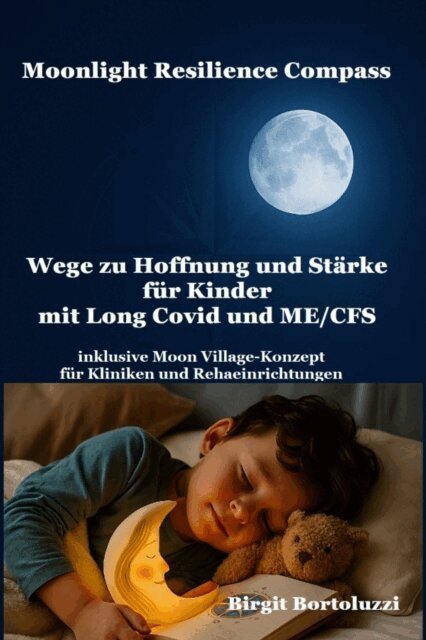
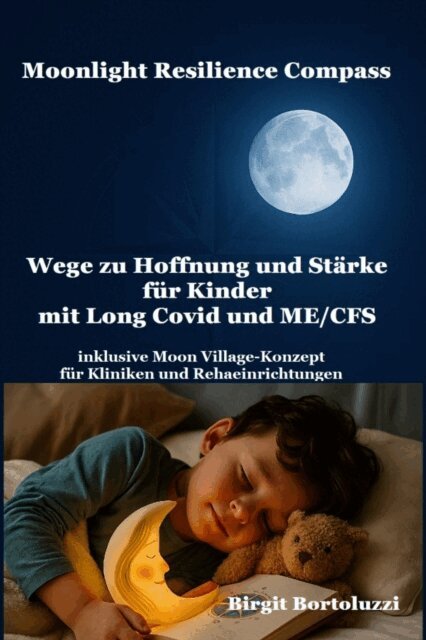
Der Moonlight Resilience Compass ist ein Wegweiser aus Licht, Hoffnung und Stärke – für Kinder mit Long Covid und ME/CFS und weitere chronische Erkrankungen, die sich in einer Welt bewegen, in der vieles unsichtbar bleibt. Ein Kompass zeigt nicht, wie schnell man gehen soll, sondern wo man steht und welche Richtung möglich ist. Genau das brauchen Kinder, deren Kräfte schwanken und deren Alltag von Unsicherheit geprägt ist: Orientierung – ohne Druck.Warum der Mond und warum ein Kompass?Weil Long Covid und ME/CFS keine linearen Verläufe kennen. Kinder erleben zyklische Zustände: Erschöpfung, Rückzug, Hoffnung, Kraft. Der Kompass hilft, diese Phasen zu erkennen und ihnen Bedeutung zu geben. Er zeigt, dass Rückzug kein Stillstand ist, sondern Teil eines größeren Rhythmus. Er baut Brücken – zwischen Kindern und Erwachsenen, zwischen Unsichtbarkeit und Sichtbarkeit, zwischen Belastung und Selbstwirksamkeit und er ist ein universelles Symbol, das global anschlussfähig ist.Der Moonlight Resilience Compass übersetzt innere Zustände in Symbole, die jeder verstehen kann. Szenarien, Module und visuelle Marker helfen, Fatigue, Reizüberflutung und kognitive Schwankungen sichtbar zu machen. Die Mondgöttin begleitet als semantische Figur durch diese Zyklen – nicht als Fantasiegestalt, sondern als Resonanzkörper für das Unsagbare.Das Buch enthält auch einen Konzeptvorschlag für Kliniken und Rehaeinrichtungen: das Moon Village. Mit mobilen Trennwänden, dimmbarem Licht, Symbolkarten und Ritualobjekten entstehen Schutzräume, die Rückzug legitimieren und therapeutische Begleitung im Rhythmus der Kinder ermöglichen. Raumbeispiele, Checklisten und Übungsskripte zeigen, wie Fürsorge neu gedacht werden kann – systemisch anschlussfähig und emotional sicher. Darüber hinaus bietet der Kompass praxisnahe Szenarien und Module, die Schulen, Familien und Kliniken sofort anwenden können, um Orientierung und Sicherheit im Alltag zu schaffen.
89 kr
Läs direkt efter köp
Der Moonlight Resilience Compass ist ein Wegweiser aus Licht, Hoffnung und Stärke für Kinder mit Long Covid, ME/CFS und weitere chronische Erkrankungen in einer Welt, in der vieles unsichtbar bleibt. Ein Kompass zeigt nicht, wie schnell man gehen soll, sondern wo man steht und welche Richtung möglich ist. Genau das brauchen Kinder mit schwankenden Kräften und unsicherem Alltag: Orientierung, ohne Druck. Warum der Mond und warum ein Kompass? Weil Long Covid und ME/CFS nicht linear verlaufen. Kinder erleben Zyklen: Erschöpfung, Rückzug, Hoffnung, Kraft. Der Kompass hilft, diese Phasen zu erkennen und zu benennen. Rückzug ist kein Stillstand, sondern Teil eines größeren Rhythmus. Er baut Brücken zwischen Kindern und Erwachsenen, Unsichtbarkeit und Sichtbarkeit, Belastung und Selbstwirksamkeit und nutzt universelle Symbolik. Der Moonlight Resilience Compass übersetzt innere Zustände in Symbole, die jeder versteht. Szenarien, Module und visuelle Marker machen Fatigue, Reizüberflutung und kognitive Schwankungen sichtbar. Die Mondgöttin begleitet als semantische Figur durch diese Zyklen – nicht als Fantasie, sondern als Resonanzkörper für das Unsagbare. Mit Symbolkarten, Übergangsritualen und kindgerechten Verankerungsformeln entstehen Schutzräume, die Rückzug legitimieren und Begleitung im Rhythmus der Kinder ermöglichen. Alle Module sind weltweit anschlussfähig und auch relevant für das Katastrophen- und Notfallmanagement. Sie ermöglichen kindgerechte Kommunikation in Krisen, strukturieren Belastungszyklen und stärken Selbstwirksamkeit. Raumbeispiele, Checklisten und Übungsskripte zeigen Fürsorge neu gedacht. Der Kompass bietet praxisnahe Szenarien und Module für Schulen, Familien und Kliniken, um Orientierung und Sicherheit im Alltag zu schaffen. Das Buch enthält auch einen umfangreichen Konzeptvorschlag für Kliniken und Rehaeinrichtungen zum Aufbau eines Moon Village, welchen Schulen, Familien und Katastrophenschutz gleichermaßen nutzen können im Alltag wie in Krisen.

E-bok
Engelska, 202589 kr
Läs direkt efter köp
The Moonlight Resilience Compass is a guide of light, hope, and strength for children with Long Covid, ME/CFS, and other chronic illnesses - in a world where much remains invisible. A compass does not show how fast one should move, but where one stands and which direction is possible. This is exactly what children with fluctuating strength and uncertain daily lives need. Why the moon and why a compass? Because these illnesses do not follow a linear course; they unfold in cycles: exhaustion, withdrawal, hope, strength. The compass helps to recognize and name these phases. It builds bridges between strain and self efficacy, invisibility and visibility, and between children and adults. Cyclical intelligence means understanding these fluctuations not as a deficit but as a valuable resource. It makes individual states systemically compatible and opens new pathways for resilience and participation. The Moonlight Resilience Compass translates inner states into symbols, transition rituals, and child friendly anchoring formulas that everyone can understand. In this way, new protective spaces emerge that legitimize withdrawal and enable guidance in the rhythm of the children. Scenarios, modules, and visual markers make fatigue, sensory overload, and cognitive fluctuations visible. The moon goddess accompanies these cycles as a semantic figure not as a fantasy character, but as a resonance body for what cannot be spoken. All modules are globally applicable and important for disaster and emergency management, as they structure cycles of strain, enable crisis communication, and strengthen self efficacy. Spatial examples, scenarios, and practice scripts present care in a new way, because we must succeed in meeting one of the greatest social, health, and educational challenges of our time. The book also contains a comprehensive concept proposal for the creation of a Moon Village, which can provide orientation and safety both in everyday life and in times of crisis.
E-bok
Engelska, 2026311 kr
Läs direkt efter köp
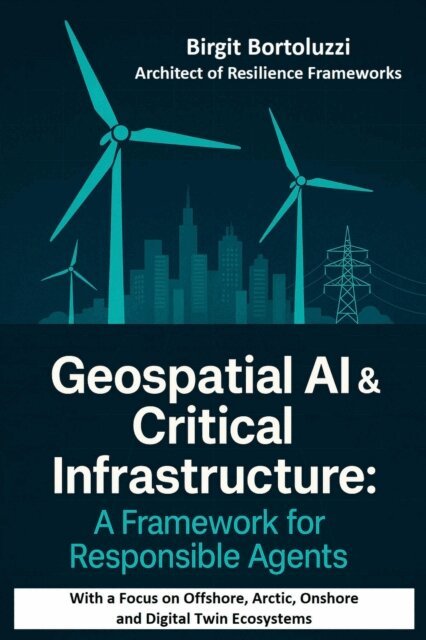
We live in a time in which global crises no longer occur sequentially, but overlap, reinforce one another and challenge our systems in constantly shifting constellations. In the midst of this dynamic, a new need for orientation is emerging - not through simple answers, but through architectures that make complexity visible, keep uncertainty navigable and distribute responsibility. This framework proposes such an architecture. It unites epistemic, semantic and resilient integrity and shows how knowledge emerges, how it is shared and how it can be used responsibly. Geospatial AI & Critical Infrastructure describes not merely a technical field, but a space in which spatial intelligence, operational systems and societal responsibility are inseparably intertwined. A particular focus of this work also lies on offshore systems, Arctic operational environments and the responsible use of digital twins. The framework shows how AI agents can become reliable partners in sensitive domains - not through maximal automation, but through transparent, robust and self reflective models. It reveals how many blind spots exist today and why epistemic integrity must become the foundation of modern world models, from BIM to digital twins to shadow pattern to EO supported systems. At the same time, it introduces a new profession: Epistemic Engineering - the design of knowledge architectures that understand their own limits. With the Epistemic Maturity Model and the Epistemic Integrity Layer, structures emerge that make stability, transparency and resilience measurable. Many additional solution concepts, modules, geo AI scenario training, guidelines and much more await you in this framework. And with the Geo Resilience Compass, this architecture gains an instrument that provides orientation where uncertainty dominates. This work unfolds its strength not in individual chapters, but in the interplay of all its components. I warmly invite you to join me on this exciting and necessary journey.
E-bok
Engelska, 2026200 kr
Läs direkt efter köp
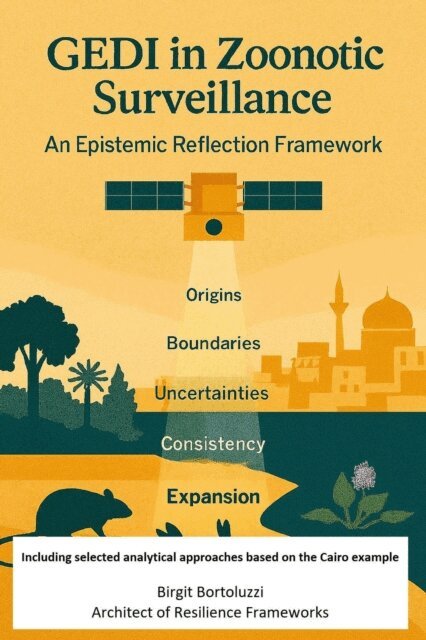
Governance Bridge between Earth Observation and One Health - Zoonoses do not arise randomly but at interfaces: between species, landscapes, ecological and human movements and between visible and invisible processes. Many of these interfaces are small, fleeting and complex, raising the question of how global remote sensing systems can detect ecological changes that may create new points of contact. GEDI provides a structural view of vegetation and landscape, yet only as a small part of a larger observational space. If zoonoses emerge at edges or along animal movements, it becomes essential to consider how far a large scale sensor can make such processes visible and where invisibilities arise that matter for risk assessments. This framework therefore asks how a global structural measurement system can be integrated into a biosurveillance oriented governance model that depends on fine scale, dynamic, functional processes. It focuses on the conditions under which GEDI shows something, where it shows nothing and how this visibility might relate to zoonotic emergence. This raises questions about how sensor logics, data gaps, and uncertainties interact and how governance systems might make these interactions transparent and epistemically safe. To make this more tangible, a Cairo scenario with several analytical layers translates the framework's considerations into a concrete context and shows how global measurement systems and local dynamics intersect. The goal is also to ask the right questions and open up crucial perspectives. The work combines conceptual, analytical and governance components to make ecological structures more interpretable for Zoonoses and One Health, highlights potentials visible through GEDI, proposes structural indicators and examines sensor blind spots. Core elements include the Evidence Integrity Module, the Scale Governance Submodule, a 90 factor set and the GEDI Ecological Structure Baseline, illustrated through urban One Health indicators.
E-bok
Engelska, 2026277 kr
Läs direkt efter köp
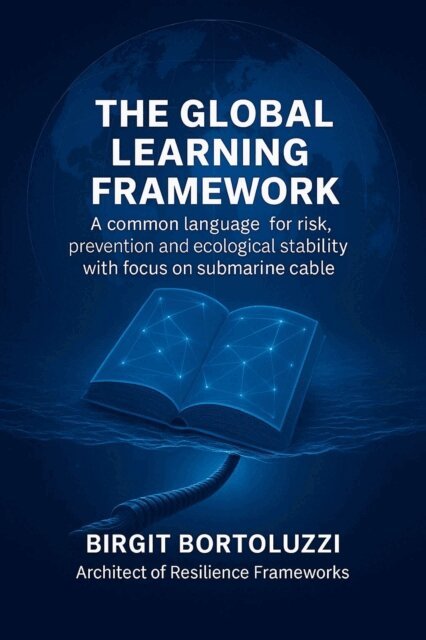
As the world grows more complex, understanding becomes a collective rather than an individual act. Systems do not react sequentially but simultaneously; developments overlap; and decisions emerge within a field of diverse signals and perspectives. Stability in such a world is no longer a static condition but a question of how we perceive, connect, interpret, and act when signals are fragmented and time windows are narrow. The Global Learning Framework (GLF) begins precisely here: as a universal meta architecture that does not simplify complexity but makes it intelligible. It translates six foundational concepts - visibility, structure, dynamics, interfaces, instability and capacity to act - into a circular mode of shared learning. Within this rhythm, the four pillars SEE, CONNECT, INTERPRET and ACT function not as linear steps but as recurring movements of collective sense making. The GLF does not replace existing methods; it provides a shared language that aligns heterogeneous data, perspectives and decision logics within an integrated risk and learning architecture. The GeoResilience Compass extends this by adding a spatial dynamic dimension, showing where instabilities may emerge, how they propagate, and which interventions could be systemically effective. Subsea cables illustrate this interplay: they combine technical precision, ecological sensitivity, maritime reality and institutional responsibility within a single system whose risks become visible only when multiple signals are considered together. The Subsea Edition demonstrates how the GLF can operate in a highly dynamic, ambiguous and internationally shared environment - while remaining equally relevant to epidemiology, urban resilience, energy systems, ecosystems, critical infrastructures and governance. In a time when global risks are increasingly intertwined and stability depends on anticipatory design rather than reaction, the GLF offers a way to see, connect, interpret, act and learn together.