Biswajit Chatterjee – författare
Visar alla böcker från författaren Biswajit Chatterjee. Handla med fri frakt och snabb leverans.
5 produkter
5 produkter
Inbunden, Engelska, 2019
1 092 kr
Skickas inom 10-15 vardagar
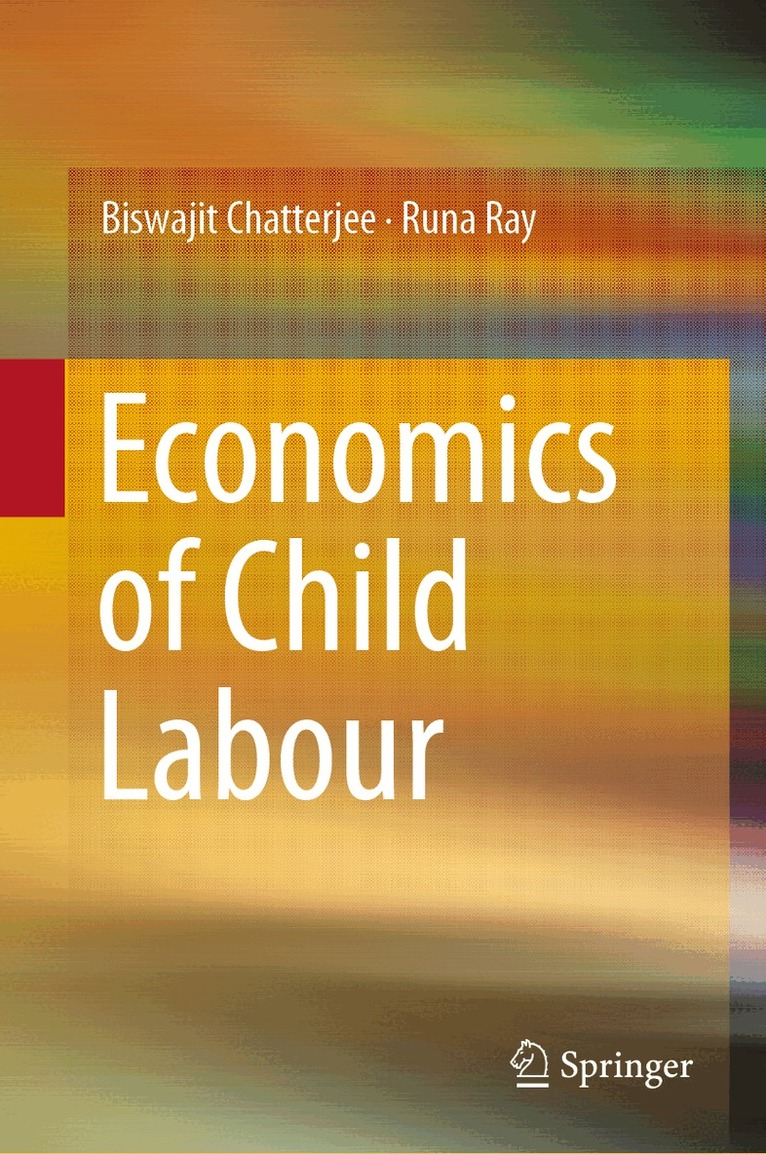
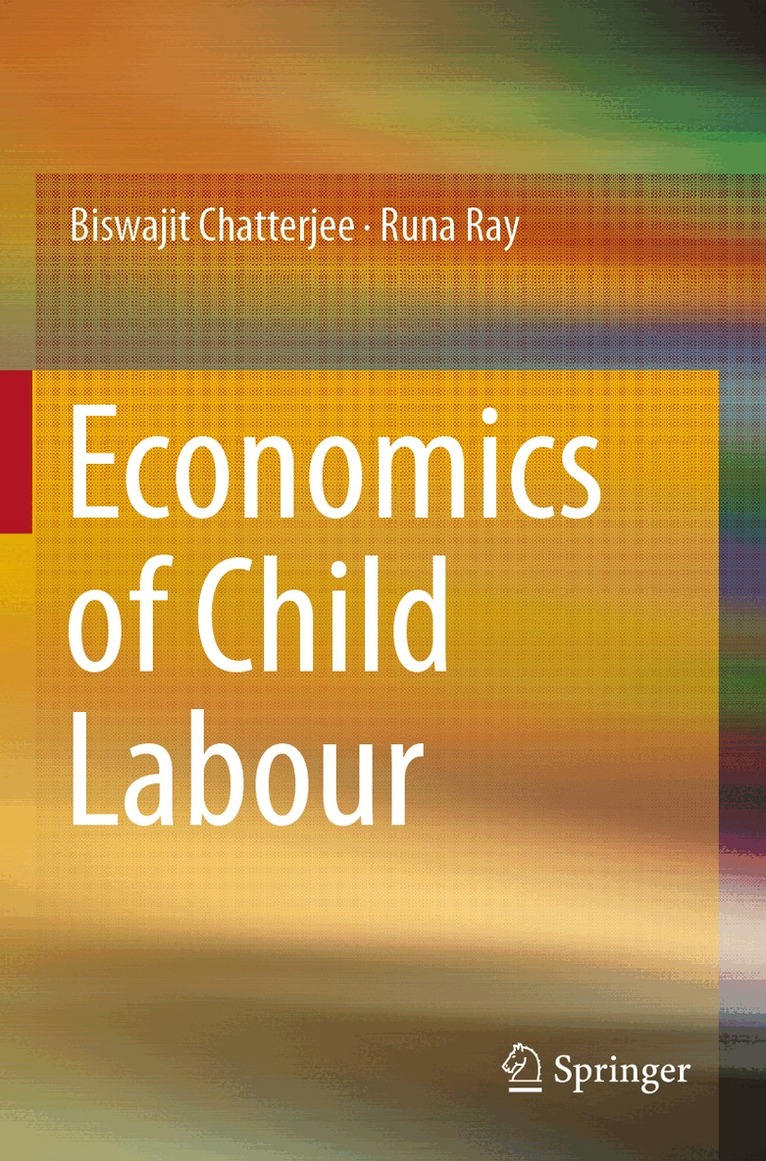
This book examines the effectiveness of trade and non-trade policies to combat the menace of child labour. Although it has decreased on the global scale in recent years, child labour still remains high, particularly in the developing countries. Keeping in mind the estimated extent of child labour in different regions around the globe, the book offers a detailed critical review of both theoretical and empirical literature on the topic as well as the policies to reduce the incidence of child labour. It also develops a general equilibrium model to demonstrate the possible effects of growth-promoting, non-trade policies, as opposed to direct trade policies, on child labour employment mitigation. The book argues that of the non-trade policies, the introduction of compulsory education appears to be an effective instrument for curtailing the child labour problem when families receive targeted subsidies for sending their children to school. It also shows that appropriately designed and targeted education subsidies can reduce the incidence of child labour and that social protection measures, such as subsidies on school enrolment, also tend to have a positive impact. The book not only opens up research topics for academicians but is also a valuable resource for policy makers.
E-bok
Engelska, 20191 387 kr
Läs direkt efter köp
This book examines the effectiveness of trade and non-trade policies to combat the menace of child labour. Although it has decreased on the global scale in recent years, child labour still remains high, particularly in the developing countries. Keeping in mind the estimated extent of child labour in different regions around the globe, the book offers a detailed critical review of both theoretical and empirical literature on the topic as well as the policies to reduce the incidence of child labour. It also develops a general equilibrium model to demonstrate the possible effects of growth-promoting, non-trade policies, as opposed to direct trade policies, on child labour employment mitigation. The book argues that of the non-trade policies, the introduction of compulsory education appears to be an effective instrument for curtailing the child labour problem when families receive targeted subsidies for sending their children to school. It also shows that appropriately designed and targeted education subsidies can reduce the incidence of child labour and that social protection measures, such as subsidies on school enrolment, also tend to have a positive impact. The book not only opens up research topics for academicians but is also a valuable resource for policy makers.
Häftad, Engelska, 2020
1 092 kr
Skickas inom 10-15 vardagar
This book examines the effectiveness of trade and non-trade policies to combat the menace of child labour. Although it has decreased on the global scale in recent years, child labour still remains high, particularly in the developing countries. Keeping in mind the estimated extent of child labour in different regions around the globe, the book offers a detailed critical review of both theoretical and empirical literature on the topic as well as the policies to reduce the incidence of child labour. It also develops a general equilibrium model to demonstrate the possible effects of growth-promoting, non-trade policies, as opposed to direct trade policies, on child labour employment mitigation. The book argues that of the non-trade policies, the introduction of compulsory education appears to be an effective instrument for curtailing the child labour problem when families receive targeted subsidies for sending their children to school. It also shows that appropriately designed and targeted education subsidies can reduce the incidence of child labour and that social protection measures, such as subsidies on school enrolment, also tend to have a positive impact. The book not only opens up research topics for academicians but is also a valuable resource for policy makers.
Inbunden, Engelska, 2026
1 899 kr
Skickas inom 5-8 vardagar
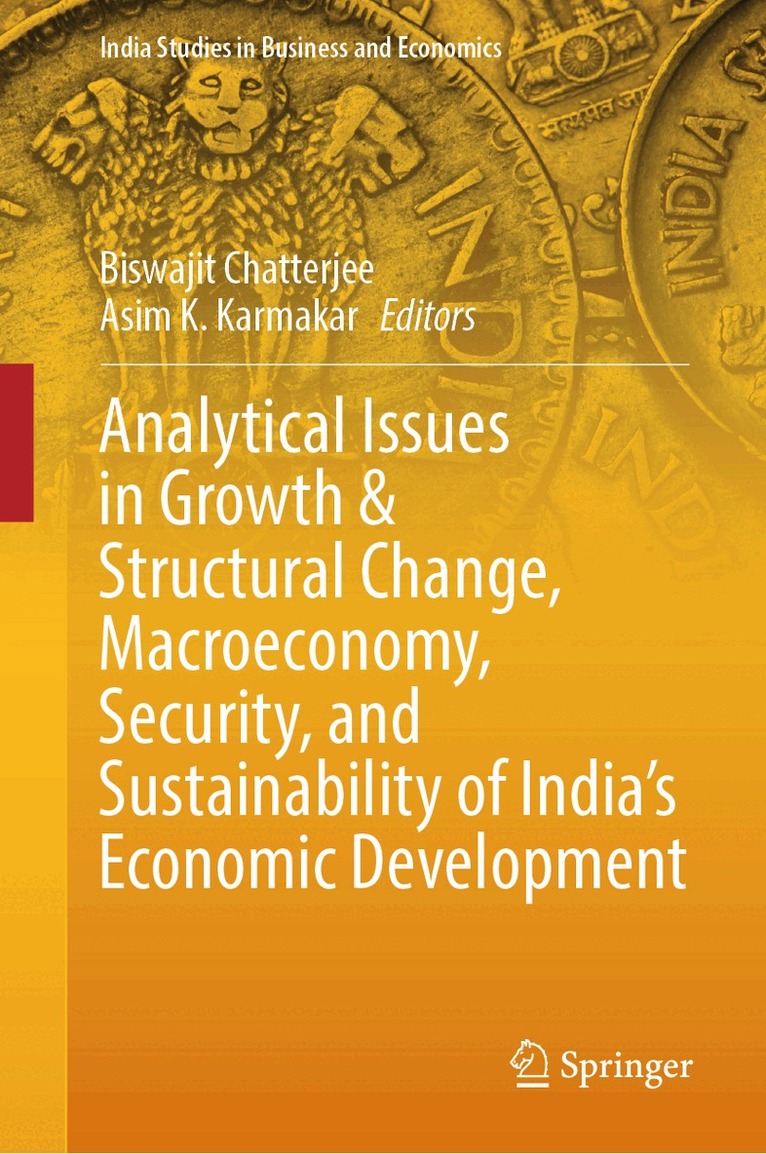
This book is a collection of essays written to reflect analytical understanding of contemporary Indian economy in the backdrop of approaching deadline of 2030 Agenda for Sustainable Development. Dedicated to the memory of late Professor Dhiresh Chandra Bhattacharya, a legendary teacher, an author of a pioneering Indian textbook on the economy of divided India, and the second President of the Bangiya Arthaniti Prishad (Bengal Economic Association), this volume uses modern methodologies of economics and econometrics to reflect on prime issues facing the Indian economy. The theoretical and empirical research on some aspect of India’s economic development, have been analyzed by eminent scholars, with a focus on growth and structural change, reforms and macroeconomy, food and nutritional security, and sustainable development. The book examines the inclusive growth paradigm in India in the context of rising inequality in income and wealth distribution, and the tenets of longterm behavior of the economy in the context of GDP growth. It highlights the need of GDP growth to be juxtaposed against the imperatives of distributional challenges that the economy has been facing even after 75 years. The book is useful for the students and researchers of economics, in India and abroad, and points to the required policy initiatives to be undertaken by policy planners.
E-bok
Engelska, 20262 351 kr
Läs direkt efter köp
This book is a collection of essays written to reflect analytical understanding of contemporary Indian economy in the backdrop of approaching deadline of 2030 Agenda for Sustainable Development. Dedicated to the memory of late Professor Dhiresh Chandra Bhattacharya, a legendary teacher, an author of a pioneering Indian textbook on the economy of divided India, and the second President of the Bangiya Arthaniti Prishad (Bengal Economic Association), this volume uses modern methodologies of economics and econometrics to reflect on prime issues facing the Indian economy. The theoretical and empirical research on some aspect of India's economic development, have been analyzed by eminent scholars, with a focus on growth and structural change, reforms and macroeconomy, food and nutritional security, and sustainable development. The book examines the inclusive growth paradigm in India in the context of rising inequality in income and wealth distribution, and the tenets of longterm behavior of the economy in the context of GDP growth. It highlights the need of GDP growth to be juxtaposed against the imperatives of distributional challenges that the economy has been facing even after 75 years. The book is useful for the students and researchers of economics, in India and abroad, and points to the required policy initiatives to be undertaken by policy planners.