Bjorn Erik Rasch – författare
Visar alla böcker från författaren Bjorn Erik Rasch. Handla med fri frakt och snabb leverans.
7 produkter
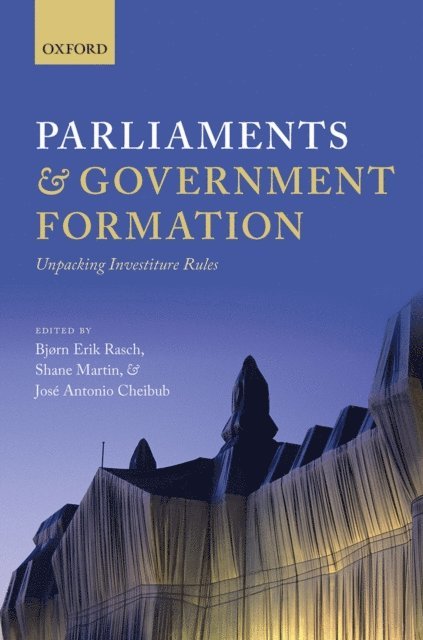
Parliaments and Government Formation
Unpacking Investiture Rules
Av Jose Antonio Cheibub, Shane Martin m. fl.
E-bok, 2015
1430 kr
Lägg i varukorg
Parliaments and Government Formation explores the role of national legislatures in shaping government formation in parliamentary regimes. Under parliamentarism, the government comes from, and remains responsible to, the national parliament. Yet, although legislatures and the politics of government …
Role of Governments in Legislative Agenda Setting
Av Bjorn Erik Rasch, George Tsebelis
Inbunden, 2010
2516 kr
Lägg i varukorg
Setting the agenda for parliament is the most significant institutional weapon for governments to shape policy outcomes, because governments with significant agenda setting powers, like France or the UK, are able to produce the outcomes they prefer, while governments that lack agenda setting …
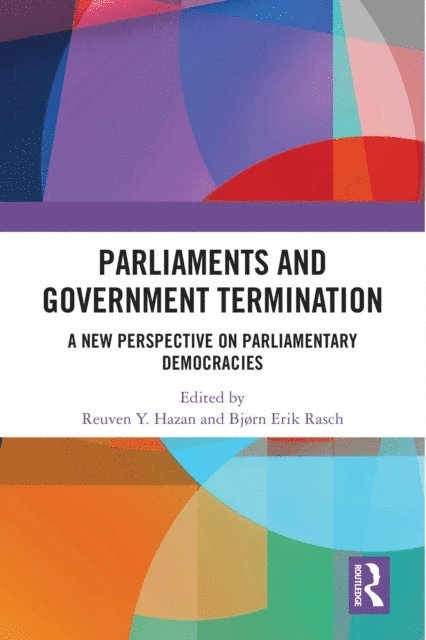
Parliaments and Government Termination
A New Perspective on Parliamentary Democracies
Av Bjorn Erik Rasch, Reuven Y. Hazan
E-bok, 2023
762 kr
Lägg i varukorg
This book assesses the larger influences that government termination by parliaments has on executive–legislative relations, claiming that the way in which the governments may be challenged or dismissed has far greater impact than previously understood. The core feature of a parliamentary system is …
Parliaments and Government Termination
A New Perspective on Parliamentary Democracies
Av Bjorn Erik Rasch, Reuven Y. Hazan
E-bok, 2023
762 kr
Lägg i varukorg
This book assesses the larger influences that government termination by parliaments has on executive–legislative relations, claiming that the way in which the governments may be challenged or dismissed has far greater impact than previously understood. The core feature of a parliamentary system is …
Role of Governments in Legislative Agenda Setting
Av George Tsebelis, Bjorn Erik Rasch
E-bok, 2013
883 kr
Lägg i varukorg
Setting the agenda for parliament is the most significant institutional weapon for governments to shape policy outcomes, because governments with significant agenda setting powers, like France or the UK, are able to produce the outcomes they prefer, while governments that lack agenda setting …
Role of Governments in Legislative Agenda Setting
Av George Tsebelis, Bjorn Erik Rasch
E-bok, 2013
883 kr
Lägg i varukorg
Setting the agenda for parliament is the most significant institutional weapon for governments to shape policy outcomes, because governments with significant agenda setting powers, like France or the UK, are able to produce the outcomes they prefer, while governments that lack agenda setting …
Role of Governments in Legislative Agenda Setting
Av Bjorn Erik Rasch, George Tsebelis
Häftad, 2015
752 kr
Lägg i varukorg
Setting the agenda for parliament is the most significant institutional weapon for governments to shape policy outcomes, because governments with significant agenda setting powers, like France or the UK, are able to produce the outcomes they prefer, while governments that lack agenda setting …