
Bo StrA¥th – författare
702 kr
Läs direkt efter köp
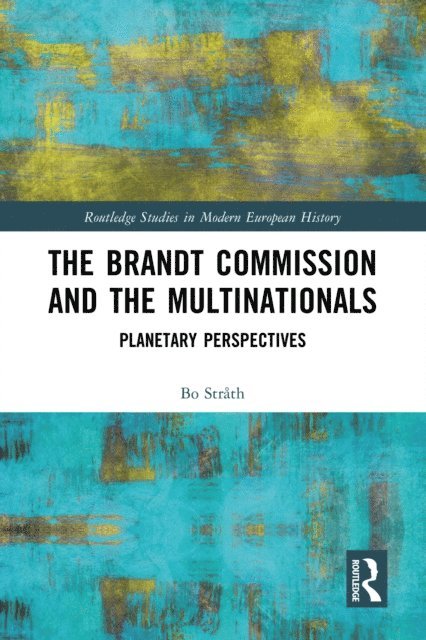
Set against the backdrop of dramatic world order transformations across the 1970s and 1980s, this book examines the competing planetary perspectives of the Brandt Commission and the multinationals, arguing that the missed opportunities of these decades created a path for contemporary political and economic crises.
At the Global South’s request for a New International Economic Order, the Brandt Commission, chaired by Willy Brandt, was appointed in 1977. The commission, with a goal to formulate arguments on how to close the gap between the North and South, developed a planetary perspective grounded in economic redistribution, ecological considerations, and disarmament. The multinationals, at that time, a new kind of business corporation, repressed Brandt’s vision by seeking freedom from political monitoring. This book discusses the ways that global corporations created facts that changed the world and the preconditions of politics. It moves beyond existing research that considers the competition merely a theoretical clash between Keynesianism and neoliberalism.
Featuring a thorough analysis of the decades’ trends and a new interview with Shridath Ramphal, the Commission’s unofficial vice chair, this is a timely volume for students and researchers of international relations, political science, and contemporary history.
727 kr
Läs direkt efter köp
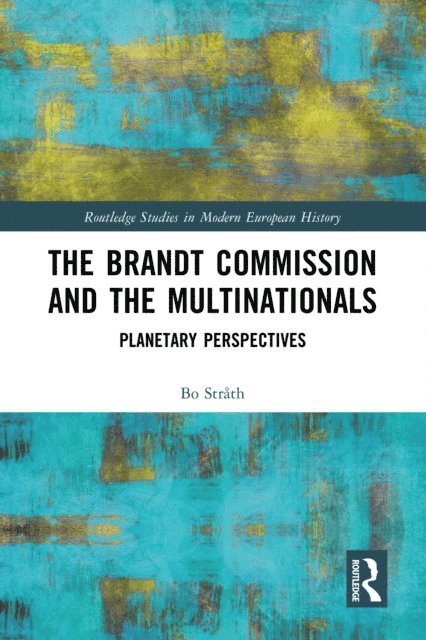
Set against the backdrop of dramatic world order transformations across the 1970s and 1980s, this book examines the competing planetary perspectives of the Brandt Commission and the multinationals, arguing that the missed opportunities of these decades created a path for contemporary political and economic crises.
At the Global South’s request for a New International Economic Order, the Brandt Commission, chaired by Willy Brandt, was appointed in 1977. The commission, with a goal to formulate arguments on how to close the gap between the North and South, developed a planetary perspective grounded in economic redistribution, ecological considerations, and disarmament. The multinationals, at that time, a new kind of business corporation, repressed Brandt’s vision by seeking freedom from political monitoring. This book discusses the ways that global corporations created facts that changed the world and the preconditions of politics. It moves beyond existing research that considers the competition merely a theoretical clash between Keynesianism and neoliberalism.
Featuring a thorough analysis of the decades’ trends and a new interview with Shridath Ramphal, the Commission’s unofficial vice chair, this is a timely volume for students and researchers of international relations, political science, and contemporary history.
390 kr
Läs direkt efter köp
For over a decade, the world has experienced an accelerating erosion of a language that took hundreds of years to emerge. It is a language ordering time and space with words, such as enlightenment, reason, rationality, modernization, and the most recent by-word, globalization. However, it is a language that has been accompanied by colonialism, imperialism, racism, the exploitation of people and nature, an unequal distribution of the world’s resources, pogroms, genocides, and world wars. There has been a gap between assumptions underlying a visionary ambition and the often-brutal practices that have accompanied it. Moreover, it is a language that expresses European values, with the implicit or explicit suggestion that they pertain to the whole world, a civilizing mission from a European centre. Although the established narrative argued that there was continuous progress, it was a conclusion reached through hindsight. The idea of progress had to be repeatedly recreated through new visionary projects that attempted to live up to the high ideals their predecessors failed to achieve.
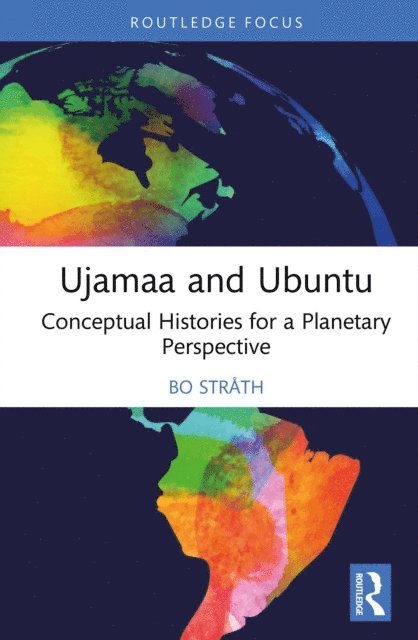
Against the backdrop of this meta-normative point of departure, the book argues that a convincing grand narrative has failed to materialize since the discrediting of globalization. In the search for a new narrative, it argues at a meta-normative level for a reformulation of the term ‘global’ away from its close connection to the globe as an unbounded self-propelling market that exists beyond human influence. ‘Global’ should no longer be reduced to auto-playing market fiction but instead be connected to the planet, Terra, the Earth. With reference to Latour and Chakrabarty, ‘global’ and ‘planetary’ mean cohabitation; life on earth is seen as an infinite symbiotic system, nurtured, and protected, but also destroyed, by human action.
The book argues that a new conceptualization of ‘the global’ and ‘the planet’ requires input from African and Asian language cultures. The book explores in depth the history of the two political African key concepts of ujamaa and ubuntu and argues that they are cases showing how work on a new global/planetary narrative might look. The investigation of the two concepts demonstrate that translations are juxtapositions that point up what is shared and what isn’t between concepts in two or more languages. The point of comparison is not to develop a uniform, global perspective, even if that were possible, but to develop a global understanding of difference and, through that, to begin to look for a common ground. Translations of political key concepts are the source of a growing understanding of difference.
404 kr
Läs direkt efter köp
For over a decade, the world has experienced an accelerating erosion of a language that took hundreds of years to emerge. It is a language ordering time and space with words, such as enlightenment, reason, rationality, modernization, and the most recent by-word, globalization. However, it is a language that has been accompanied by colonialism, imperialism, racism, the exploitation of people and nature, an unequal distribution of the world’s resources, pogroms, genocides, and world wars. There has been a gap between assumptions underlying a visionary ambition and the often-brutal practices that have accompanied it. Moreover, it is a language that expresses European values, with the implicit or explicit suggestion that they pertain to the whole world, a civilizing mission from a European centre. Although the established narrative argued that there was continuous progress, it was a conclusion reached through hindsight. The idea of progress had to be repeatedly recreated through new visionary projects that attempted to live up to the high ideals their predecessors failed to achieve.
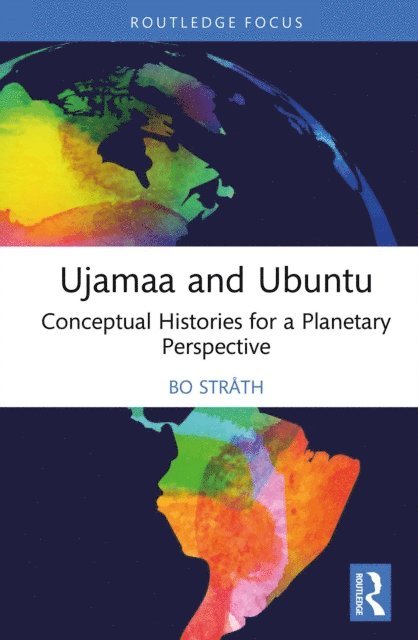
Against the backdrop of this meta-normative point of departure, the book argues that a convincing grand narrative has failed to materialize since the discrediting of globalization. In the search for a new narrative, it argues at a meta-normative level for a reformulation of the term ‘global’ away from its close connection to the globe as an unbounded self-propelling market that exists beyond human influence. ‘Global’ should no longer be reduced to auto-playing market fiction but instead be connected to the planet, Terra, the Earth. With reference to Latour and Chakrabarty, ‘global’ and ‘planetary’ mean cohabitation; life on earth is seen as an infinite symbiotic system, nurtured, and protected, but also destroyed, by human action.
The book argues that a new conceptualization of ‘the global’ and ‘the planet’ requires input from African and Asian language cultures. The book explores in depth the history of the two political African key concepts of ujamaa and ubuntu and argues that they are cases showing how work on a new global/planetary narrative might look. The investigation of the two concepts demonstrate that translations are juxtapositions that point up what is shared and what isn’t between concepts in two or more languages. The point of comparison is not to develop a uniform, global perspective, even if that were possible, but to develop a global understanding of difference and, through that, to begin to look for a common ground. Translations of political key concepts are the source of a growing understanding of difference.
824 kr
Läs direkt efter köp