Bohdan Cherkes - Böcker
Visar alla böcker från författaren Bohdan Cherkes. Handla med fri frakt och snabb leverans.
3 produkter
3 produkter
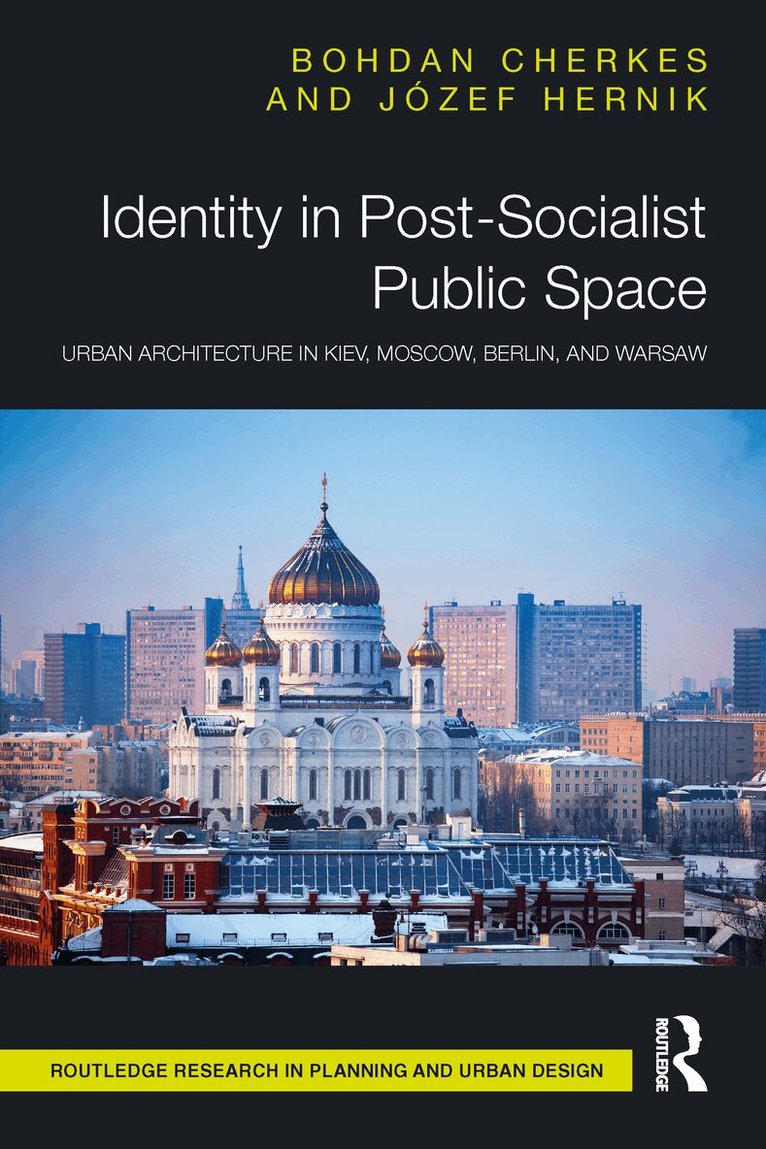
Identity in Post-Socialist Public Space
Urban Architecture in Kiev, Moscow, Berlin, and Warsaw
Inbunden, Engelska, 2021
2 088 kr
Skickas inom 10-15 vardagar
This book is a comparative analysis of the architecture of central public spaces of capital cities in Central and Eastern Europe during the period of their authoritarian and post-authoritarian development. It demonstrates that national identity transformations cause structural changes in urban public spaces, and theorises identity and national identity within urban planning in order to explain the influence of historical, cultural, mental, social as well as ideological and political conditions on the processes of shaping and perceiving the architecture of public space. The book addresses the process of shaping and restructuring historic centres of European capital cities of Kiev, Moscow, Berlin, and Warsaw, which developed under authoritarian regime conditions throughout the 20th century and were characterised by ideological determinism and the influence of state ideology and politics on the architecture of public spaces. The book will be useful for urban planners, architects, land management specialists, art historians, political scientists, and readers interested in the theory and history of cities, the fundamentals of urban planning and architecture, and the planning of cities and public spaces.
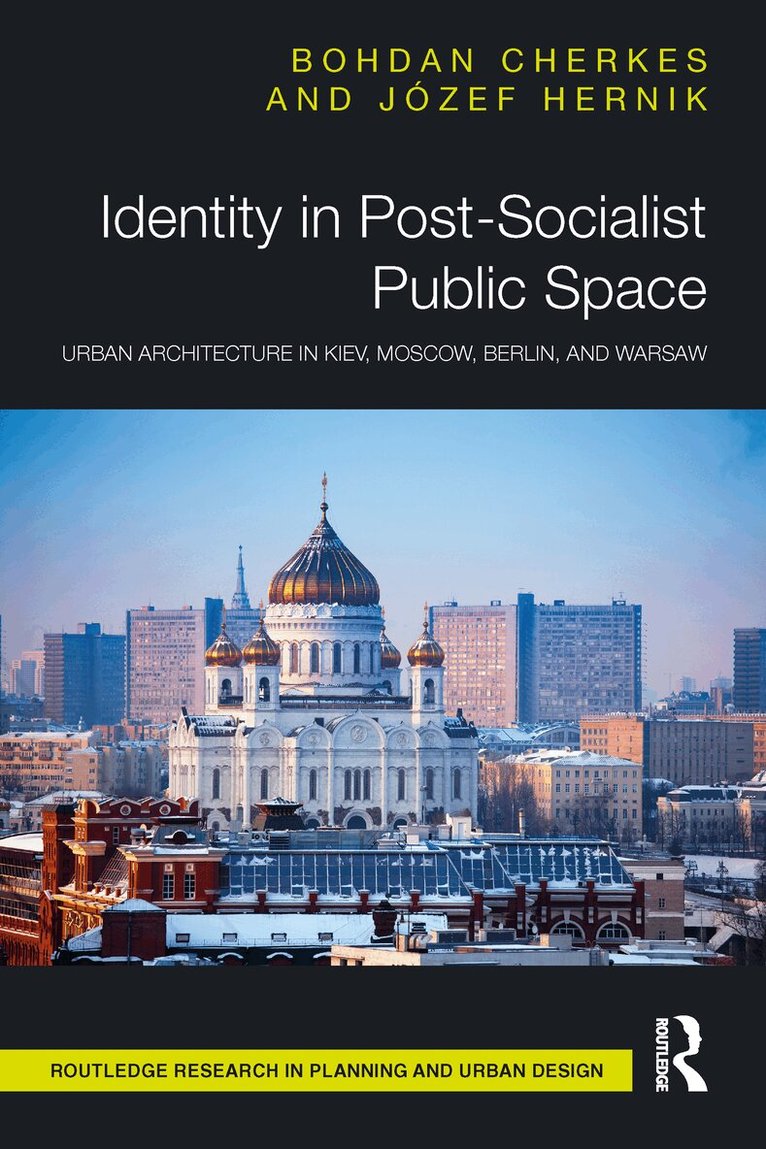
Identity in Post-Socialist Public Space
Urban Architecture in Kiev, Moscow, Berlin, and Warsaw
Häftad, Engelska, 2023
635 kr
Skickas inom 10-15 vardagar
This book is a comparative analysis of the architecture of central public spaces of capital cities in Central and Eastern Europe during the period of their authoritarian and post-authoritarian development. It demonstrates that national identity transformations cause structural changes in urban public spaces, and theorises identity and national identity within urban planning in order to explain the influence of historical, cultural, mental, social as well as ideological and political conditions on the processes of shaping and perceiving the architecture of public space. The book addresses the process of shaping and restructuring historic centres of European capital cities of Kiev, Moscow, Berlin, and Warsaw, which developed under authoritarian regime conditions throughout the 20th century and were characterised by ideological determinism and the influence of state ideology and politics on the architecture of public spaces. The book will be useful for urban planners, architects, land management specialists, art historians, political scientists, and readers interested in the theory and history of cities, the fundamentals of urban planning and architecture, and the planning of cities and public spaces.
Del 187 - Grundlagen / Basics
City in Transition
Urban Dialogues on the Future of Lviv
Häftad, Engelska, 2025
307 kr
Skickas inom 3-6 vardagar
The city of Lviv in western Ukraine has been undergoing a process of transformation for several years aimed at modernising its infrastructure and promoting urban development. The challenges the city faced reached an unprecedented level following Russia’s full scale invasion in February 2022. Lviv quickly became a critical hub for hundreds of thousands of people fleeing the war-torn regions of eastern Ukraine. The city was tasked with mitigating the immediate effects of the war while developing resilient structures to sustain this role in the short, medium, and long term.Even before the war, the city fostered smart dialogue between research and practice in local and international contexts. Through their Academic Cooperation Programme, the Faculties of Architecture at Lviv Polytechnic National University and TU Wien contribute to this continuous dialogue. This book discusses practical and academic proposals for the urban transformation of Lviv, particularly during the ongoing crisis. It thereby offers valuable insights for urbanists, architects, city managers, policy makers, entrepreneurs, and the general public.