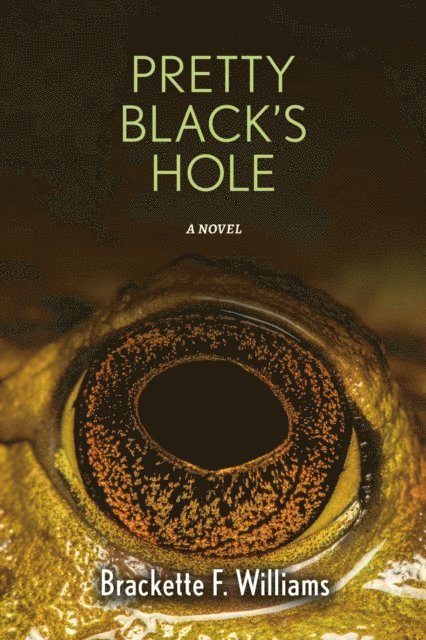
Pretty Black''s Hole, a moral fable about the impact of family history on character development, begins in the Year of the Tadpoles, when Deakie Boy, descended from a long history of deformed family character—loose character folks in his words—has just turned thirteen. He declares himself different from the workers with whom he shares a migrant labor camp in Arizona, known affectionately as the Head. This difference gains him the favor of the Six Graces and their playmate, the Petty God of Irony. Deciding to have a bit of fun, these Supernaturals infuse the boy''s difference with the power to take at will and without regard to consequences for others. These Supernaturals intended to sit back and be amused as Deakie Boy wreaked havoc on mere humans. Instead, They lose control of Their heir, and, in the years following, under many assumed names, he uses that power to take advantage of those who fail to heed the importance of his difference when it is revealed as a frog''s eye in a smiling human face. Many decades and many horrors will pass as the Supernaturals seek the means to regain control of Their heir. In the same year, in the middle of a cotton field, a sixteen-year old girl, known as Pretty Black, finds a hole left over from an agricultural project. To this hole, six feet around, its walls held in place by a tin cylinder, Pretty adds a tin-sheet roof. The hole becomes her home away from the crowded camp. Expecting to enjoy this privacy, soon Pretty collides with Deakie Boy''s difference. Like mangy dogs hunting scraps, men are ever on the prowl, inspiring Deakie Boy and his sidekick, Bubba Joe, to find a hideous use for Pretty''s home. The violence of that night in the Year of the Tadpoles connects back across generations of entangled family histories to reveal moral consequences the Supernaturals did not anticipate. In the following years, with each assumed name, and the character defamations these represent, Deakie Boy''s power becomes a looming threat to the futures of three young couples. Jean Elizabeth and Robert Reed, Altagracía and Joseph Lincoln, and Carrie Anne and William Ellis Porter, led by Jean Elizabeth, work together (sometimes honestly, but more often lying through their teeth) to discover how to prevent the Supernaturals'' gift to Deakie Boy from destroying their futures. To succeed, they must learn why frogs, much adored by Jean Elizabeth, represent the Supernaturals'' purposes, and determine whether the vile scent following Jean Elizabeth is just the smell of the elderly man stalking her or an indicator of the power of a non-human creature. Struggling to understand the connection between the Supernaturals'' game and the making of moral character in family histories, the couples'' investigation repeatedly unearths relatives that one or more of them would prefer to rebury. All of them fear that the knowledge they gain is digging a hole within which their futures will reproduce only the worst characters in their family histories. Making their task more difficult, they engage a private investigator (who is as crooked a dog''s hind leg), and seek assistance from friends (who seldom deserve the label).