Bradin Cormack - Böcker
Visar alla böcker från författaren Bradin Cormack. Handla med fri frakt och snabb leverans.
4 produkter
4 produkter
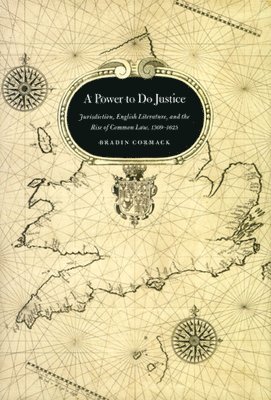
Power to Do Justice
Jurisdiction, English Literature, and the Rise of Common Law
Häftad, Engelska, 2013
321 kr
Skickas inom 7-10 vardagar
English law underwent rapid transformation in the sixteenth century in response to the Reformation and the growing power of the legal profession. In "A Power to Do Justice", Bradin Cormack argues that jurisdictional encounters and crises made visible the law's resemblance to the literary arts, and that Renaissance writers engaged with the concept of jurisdiction to reflect both on the nature of law and on their own imaginative practice. Reassessing the relationship between English literature and law from More to Shakespeare and Webster, Cormack shows that where literary texts attend to jurisdiction, they dramatize how boundaries and limits are the very precondition of law's power.
Power to Do Justice
Jurisdiction, English Literature, and the Rise of Common Law
Inbunden, Engelska, 2008
788 kr
Tillfälligt slut
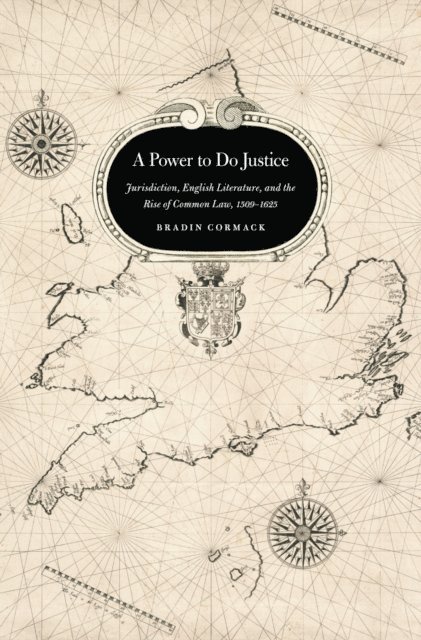
English law underwent a rapid transformation in the sixteenth century, in response to the Reformation and also to heightened litigation and legal professionalization. As the common law became more comprehensive and systematic, the principle of jurisdiction came under particular strain. When the common law engaged with other court systems in England, when it encountered territories such as Ireland and France, or when it confronted the ocean as a juridical space, the law revealed its qualities of ingenuity and improvisation. In other words, as Bradin Cormack argues, jurisdictional crisis made visible the law's resemblance to the literary arts. "A Power to Do Justice" shows how Renaissance writers engaged the practical and conceptual dynamics of jurisdiction, both as a subject for critical investigation and as a frame for articulating literature's sense of itself. Reassessing the relationship between English literature and law from More to Shakespeare, Cormack argues that where literary texts attend to jurisdiction, they dramatize how boundaries and limits are the very precondition of law's power, even as they clarify the forms of intensification that make literary space a reality.Tracking cultural responses to Renaissance jurisdictional thinking and legal centralization, "A Power to Do Justice" makes theoretical, literary-historical, and methodological contributions that set new standards for law, the humanities, and the cultural history of early modern law and literature.
229 kr
Skickas inom 7-10 vardagar
William Shakespeare is inextricably linked with the law. Legal documents make up most of the records we have of his life, and trials, lawsuits, and legal terms permeate his plays. Gathering an extraordinary team of literary and legal scholars, philosophers, and even sitting judges, Shakespeare and the Law demonstrates that Shakespeare’s thinking about legal concepts and legal practice points to a deep and sometimes vexed engagement with the law’s technical workings, its underlying premises, and its social effects.The book’s opening essays offer perspectives on law and literature that emphasize both the continuities and contrasts between the two fields. The second section considers Shakespeare’s awareness of common law thinking and common law practice, while the third inquires into Shakespeare’s general attitudes toward legal systems. The fourth part of the book looks at how law enters into conversation with issues of politics and community, whether in the plays, in Shakespeare’s world, or in our own world. Finally, a colloquy among Supreme Court Justice Stephen Breyer, Judge Richard Posner, Martha C. Nussbaum, and Richard Strier covers everything from the ghost in Hamlet to the nature of judicial discretion.
918 kr
Skickas inom 7-10 vardagar
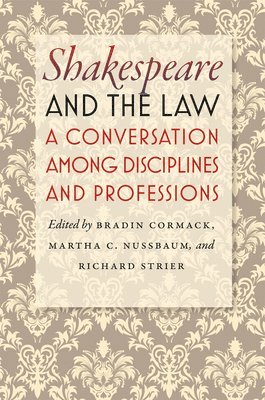
William Shakespeare is inextricably linked with the law. Legal documents make up most of the records we have of his life, and trials, lawsuits, and legal terms permeate his plays. Gathering an extraordinary team of literary and legal scholars and even sitting judges, "Shakespeare and the Law" demonstrates that Shakespeare's thinking about legal concepts points to a deep engagement with the law's technical workings, its underlying premises, and its social effects. "Shakespeare and the Law" opens with three essays on law and literature that emphasize both the continuities and contrasts between the two fields. In its second section, the book considers Shakespeare's awareness of common law thinking and practice through examinations of Measure for Measure and Othella. Building on this question, in the third part a judge and a former solicitor general rule on Shylock's demand for enforcement of his odd contract, and two essays by literary scholars take contrasting views on whether Shakespeare could imagine a functioning legal system. The fourth section looks at how law enters into conversation with issues of politics and community, both in the plays and in our own world.The volume concludes with a freewheeling colloquy among Supreme Court Justice Stephen J. Breyer, Judge Richard A. Posner, Martha C. Nussbaum, and Richard Strier. Celebrating the sometimes fractious intellectual energy produced by scholars and practitioners tackling the question of Shakespeare and the law, this collection is a resource and provocation for further thinking and ongoing discussion.