Bradley M Gottfried – författare
Visar alla böcker från författaren Bradley M Gottfried. Handla med fri frakt och snabb leverans.
12 produkter
12 produkter
Häftad, Engelska, 2022
273 kr
Skickas inom 5-8 vardagar
Inbunden, Engelska, 2022
457 kr
Skickas inom 3-6 vardagar
Inbunden, Engelska, 2008
298 kr
Skickas inom 5-8 vardagar
Häftad, Engelska, 2019
278 kr
Tillfälligt slut
Häftad, Engelska, 2021
227 kr
Skickas inom 3-6 vardagar
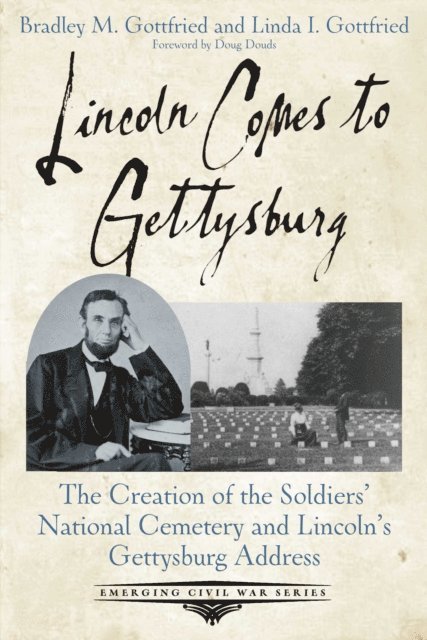
Almost 8,000 dead dotted the fields of Gettysburg after the guns grew silent. The Confederate dead were hastily buried, but what of the Union dead? Several men hatched the idea of a new cemetery to bury and honor the Union soldiers just south of town. Their task was difficult to say the least.First, appropriate land needed to be identified and purchased. After the State of Pennsylvania purchased the 17 acres, a renowned landscape architect designed the layout of the cemetery. All was now ready for the bodies to be interred from their uneasy resting places around the battlefield, placed in coffins, marked with their names and units, and transported to the new cemetery to be permanently reinterred. More than 3,500 men were moved to the Soldiers National Cemetery.As these tasks gained momentum, so too did planning for the cemetery’s consecration or dedication. A committee of agents from each state who had lost men in battle worked out the logistics. Most of the program was easily decided. It would be composed of odes, singing, prayers, and remarks by the most renowned orator in the nation, Edward Everett. The committee argued over whether President Abraham Lincoln should be invited to the ceremony and, if so, his role in the program. The committee, divided by politics, decided on a middle ground, inviting the President to provide “a few appropriate remarks.”To the surprise of many, Lincoln accepted the invitation, for the most part crafted his remarks in the Executive Mansion, and headed to Gettysburg, arriving on the evening of November 18, 1863. The town was filled with thousands expecting to witness the “event of the century.” Lincoln completed his remarks and, the following day, mounted a horse to join the procession heading for the cemetery. The program was unremarkable, except for Lincoln’s remarks, whose reception was split along party lines.Lincoln Comes to Gettysburg: The Creation of the Soldiers’ National Cemetery and Lincoln’s Gettysburg Address by Bradley M. Gottfried and Linda I. Gottfried recounts the events surrounding the creation of the Soldiers’ National Cemetery, its dedication, and concentrates on Lincoln’s visit to Gettysburg on November 18- 19, 1863.
Inbunden, Engelska, 2025
293 kr
Kommande
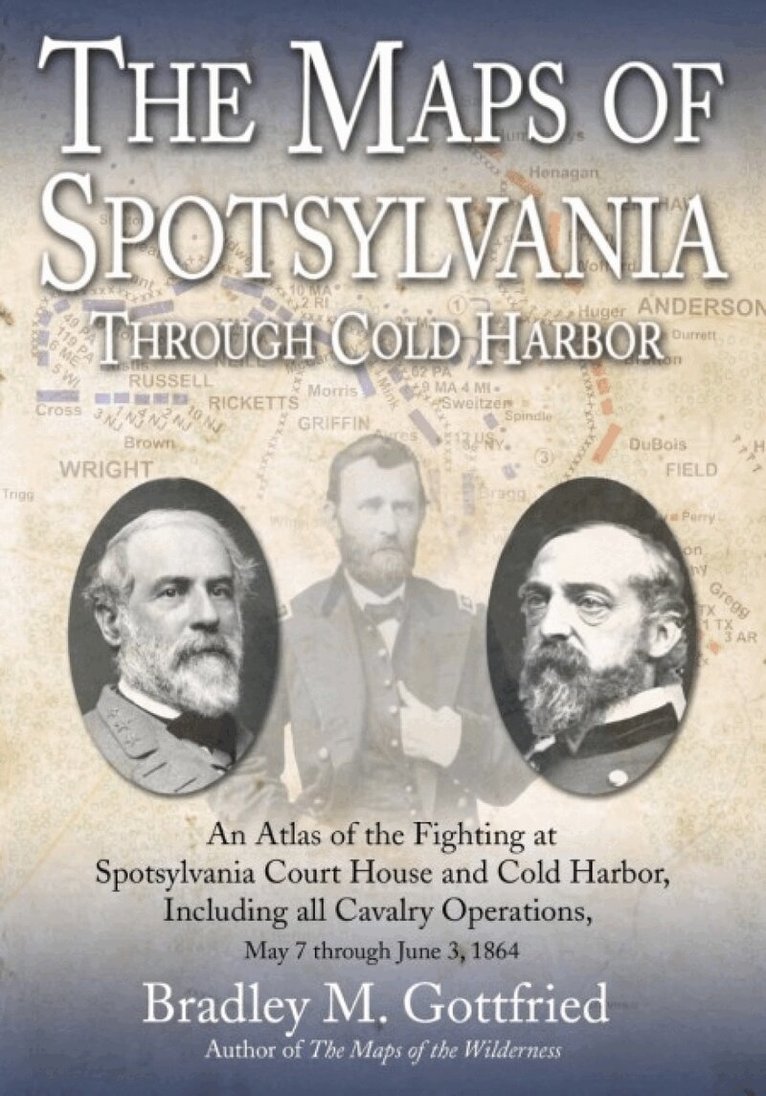
The Maps of Spotsylvania through Cold Harbor continues Bradley M. Gottfried's efforts to study and illustrate the major campaigns of the Civil War's Eastern Theater. This is the eighth book in the ongoing Savas Beatie Military Atlas Series.After three years of bloody combat with no clear victor in the Virginia theater, President Abraham Lincoln turned to Ulysses S. Grant and promoted him to general-in-chief during the winter of 1863-64\. Grant immediately went to work planning a comprehensive strategy to bring an end to the war. He hungered to remain with the Western armies, but realized his place was in Washington. Unwilling to be stuck in an office, Grant joined George Meade's Army of the Potomac. His presence complicated Meade's ability to direct his army, but Grant promised to stay out of his way and give only strategic directives. This arrangement lasted through the Wilderness Campaign, the first action in what is now referred to as the "Overland Campaign."This book continues the actions of both armies through the completion of the Overland Campaign. After the Wilderness fighting, the Army of the Potomac attempted to swing around the left flank of Gen. Robert E. Lee's Army of Northern Virginia and shoot straight for Richmond. The Confederate capital was never the goal; the move was intended to force Lee out into the open, where the larger and well-stocked Union army could destroy it.The head of Lee's army reached Spotsylvania Court House in time to blunt Meade's march and both sides threw up extensive defensive works. Days and men were wasted on fruitless attacks until Col. Emery Upton designed an audacious strike that temporarily penetrated Lee's works. A much larger offensive through the early dawn fog against the "Mule Shoe" tore the line wide open, destroyed a Confederate division, and triggered an entire day of fighting before Lee was able to stabilize his front.More fighting convinced Grant of the folly of further attempts to crush Lee at Spotsylvania and again he swung around the Confederate left flank. The march ignited almost continuous fighting along the North Anna River, Bethesda Church, and Cold Harbor, where this volume ends. This study also included the many cavalry actions, including those at Spotsylvania Court House, Yellow Tavern, Haw's Tavern, and Matadequin Creek.The Maps of Spotsylvania through Cold Harbor breaks down the entire operation into thirty-five map sets or "action sections" enriched with 134 detailed full-page color maps. These cartographic originals bore down to the regimental and battery level and include the march to and from the battlefields and virtually every significant event in between. At least two, and as many as ten maps accompany each map set. Keyed to each piece of cartography is a full facing page of detailed footnoted text describing the units, personalities, movements, and combat (including quotes from eyewitnesses) depicted on the accompanying map, all of which make the Spotsylvania story come alive.This unique presentation allows readers to easily and quickly find a map and text on any portion of the campaign, from the march to Spotsylvania Court House to Cold Harbor. Serious students of the battle will appreciate the extensive and authoritative endnotes and complete order of battle. Everyone will want to take the book along on trips to these battlefields.Perfect for the easy chair or for stomping the hallowed ground, The Maps of Spotsylvania through Cold Harbor is a seminal work that belongs on the bookshelf of every serious and casual student of the battle.Previous titles in this series include: The Maps of Gettysburg (2007), The Maps of First Bull Run (2009), The Maps of Chickamauga (by David A. Powell and David A Freidrichs), The Maps of Antietam (2012), The Maps of Bristoe Station and Mine Run (2013), the Maps of the Wilderness (2016), and The Maps of the Cavalry in the Gettysburg Campaign (2020).
Inbunden, Engelska, 2024
422 kr
Skickas inom 3-6 vardagar
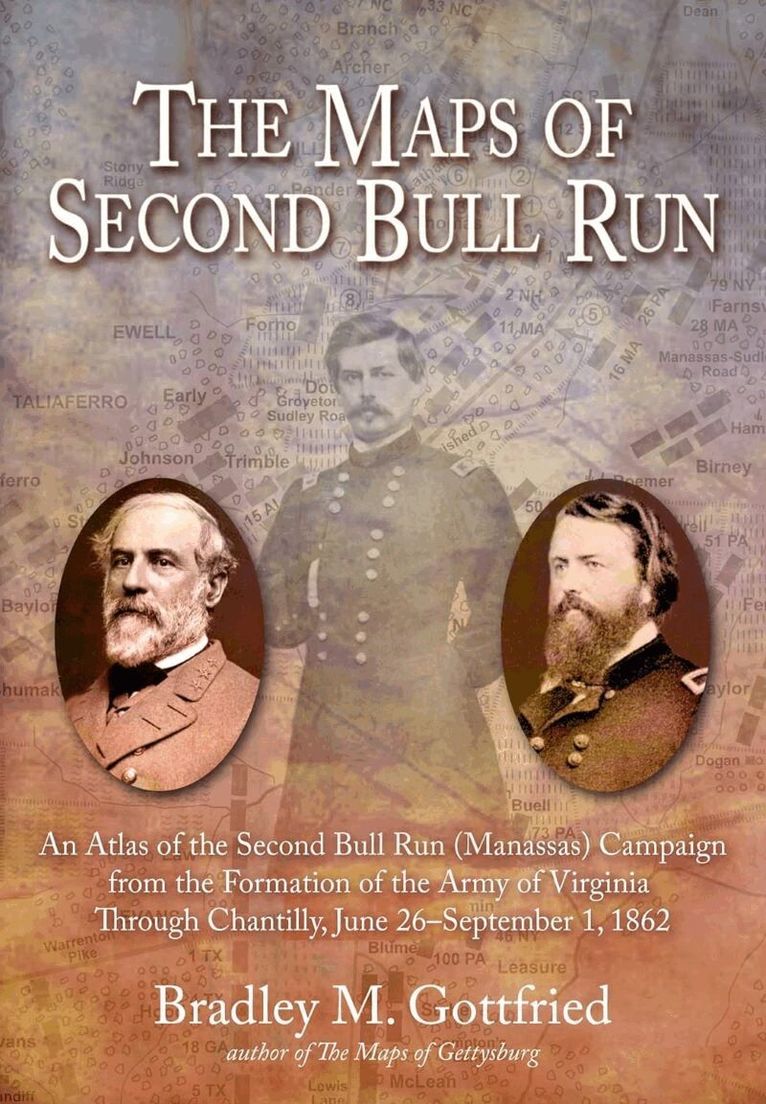
The Maps of Second Bull Run: An Atlas of the Second Bull Run/Manassas Campaign from the Formation of the Army of Virginia Through the Battle of Chantilly, June 26 – September 1, 1862, continues Bradley M. Gottfried’s efforts to study and illustrate the major campaigns of the Civil War’s Eastern Theater. This is his tenth book in the ongoing Savas Beatie Military Atlas Series.President Abraham Lincoln’s frustration with George B. McClellan’s inability to defeat Robert E. Lee’s Army of Northern Virginia and capture Richmond dramatically increased after the unsuccessful Seven Days’ Battles. The president combined three small armies into the new Army of Virginia and placed it under Maj. Gen. John Pope, who had overseen several successes in the Western Theater.Pope’s growing aggressiveness, combined with McClellan’s passive posture on the Peninsula, forced Lee to turn his attention toward the new threat from the north. Thomas “Stonewall” Jackson moved his wing of the Army of Northern Virginia to confront Pope. A bloody battle at Cedar Mountain on August 9 halted Pope’s move south, and Jackson’s raid on the vast stores at Manassas Junction triggered another confrontation, this time at Kettle Run.As Jackson settled into a defensive position on the plains of Manassas, and with McClellan’s troops having abandoned the Peninsula, Lee moved his other wing under James Longstreet rapidly north. Pope missed an opportunity to prevent the junction of Lee’s wings by not stopping Longstreet at Thoroughfare Gap.The Battle of Second Bull Run began on the evening of August 28 when Jackson tangled with Union troops at the Brawner Farm. Pope spent much of the following day hammering Jackson’s front, with no idea that Longstreet had arrived on the field. The Union assaults continued on August 30 until Longstreet launched a massive assault that rolled up the Union left flank and collapsed Pope’s army. The retreat was briefly interrupted by some of Jackson’s units at Chantilly, which ended the campaign.The Maps of Second Bull Run plow new ground by breaking down the entire campaign into sixteen map sets or “action sections,” enriched with 122 detailed full-page color maps. These cartographic originals bore down to the regimental and battery level. They include the march to and from the battlefields and virtually every significant event in between. At least two—and as many as ten—maps accompany each map set. Keyed to each piece of cartography is a full-facing page of detailed text describing the units, personalities, movements, and combat (including quotes from eyewitnesses) depicted on the accompanying map, all of which make the cavalry actions come alive.This presentation allows readers to easily find a map and text on virtually any portion of the campaign. Serious students will appreciate the extensive endnotes and complete order of battle and take the book with them to the battlefields. A final bonus is that the maps unlock every other book or article written on any aspect of the campaign.Perfect for the easy chair or for stomping the hallowed grounds, The Maps of Second Bull Run is a seminal work that belongs on the bookshelf of every serious and casual student of the battle.
Häftad, Engelska, 2025
264 kr
Skickas
In the spring of 1864, many in the North, including President Lincoln, were growing frustrated. Although Lincoln’s armies were achieving success on the battle¬fields, the gruesome toll was becoming increasingly unacceptable. The president needed a general who would ¬ finally put an end to the war. He found him in Ulysses S. Grant, who would close out the conflict a little more than a year after his appointment. Determined to destroy Robert E. Lee’s Army of Northern Virginia, Grant bulked up the Army of the Potomac with the addition of Burnside’s IX Corps, swelling the army’s numbers to nearly 120,000. The campaigns of 1862 and 1863 had inflicted heavy losses on Lee’s army, including some of his most talented commanders, among them “Stonewall” Jackson. In the spring of 1864, Lee’s army was more scattered than Meade’s, but the Army of Northern Virginia was not only capable but also deeply familiar with the Virginia terrain.Grant planned several offensives involving attacks against Richmond, Atlanta, and the Shenandoah Valley. In the north, the Army of the Potomac would strike hard at Lee, while the Union Army of the James would head inland toward Richmond to cut supply lines and then join with Meade’s army. On May 3, 1864, the Army of the Potomac headed for the Wilderness to open the Spring Campaign. The next six weeks saw the most brutal ¬ fighting of the entire war. Repeatedly, Grant brought Lee into battle—notably at the Wilderness, Spotsylvania, North Anna, and Cold Harbor—yet each time Grant was frustrated in his efforts to destroy the Army of Northern Virginia. Finally, unable to capture Richmond, Grant reached the James River where his forces built a long bridge to facilitate its crossing to attack Petersburg. While Grant had failed to destroy Lee’s army or capture Richmond, the relentless pressure of the campaign effectively sealed the fate of the Confederacy.
Häftad, Engelska, 2008
161 kr
Skickas inom 5-8 vardagar
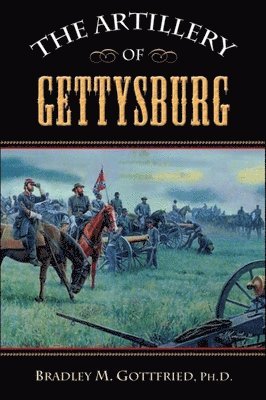
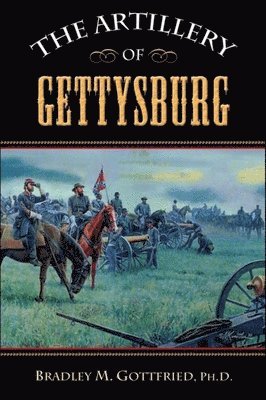
The battle of Gettysburg in July 1863 marked the turning point of the American Civil War. The apex of the Confederacy's final major invasion of the North, the devastating defeat also marked the end of the South's offensive strategy against the North. From this battle until the end of the war, the Confederate armies largely remained defensive. The Artillery of Gettysburg"" is a thoughtful look at the role of the artillery during the July 1?3, 1863 conflict. Bradley M. Gottfried provides insight into how the two armies employed their artillery, how the different kinds of weapons functioned in battle, and the strategies for using each of them. He shows how artillery affected the ebb and flow of battle for both armies and thus provides a unique way of understanding the strategies of the Federal and Union commanders.""
Häftad, Engelska, 2022
256 kr
Skickas inom 3-6 vardagar
Inbunden, Engelska, 2000
396 kr
Skickas inom 5-8 vardagar
Häftad, Engelska, 2026
196 kr
Skickas inom 5-8 vardagar