Brandon R. Byrd - Böcker
Visar alla böcker från författaren Brandon R. Byrd. Handla med fri frakt och snabb leverans.
5 produkter
5 produkter
405 kr
Skickas inom 10-15 vardagar
This transformative collection advances new approaches to Black intellectual history by foregrounding the experiences and ideas of people who lacked access to more privileged mechanisms of public discourse and power. While the anthology highlights renowned intellectuals such as W. E. B. Du Bois, it also spotlights thinkers such as enslaved people in the antebellum United States, US Black expatriates in Guyana, and Black internationals in Liberia. The knowledge production of these men, women, and children has typically been situated outside the disciplinary and conceptual boundaries of intellectual history.The volume centers on the themes of slavery and sexuality; abolitionism; Black internationalism; Black protest, politics, and power; and the intersections of the digital humanities and Black intellectual history. The essays draw from diverse methodologies and fields to examine the ideas and actions of Black thinkers from the eighteenth century to the present, offering fresh insights while creating space for even more creative approaches within the field.Timely and incisive, Ideas in Unexpected Places encourages scholars to ask new questions through innovative interpretive lenses—and invites students, scholars, and other practitioners to push the boundaries of Black intellectual history even further.
373 kr
Skickas inom 7-10 vardagar
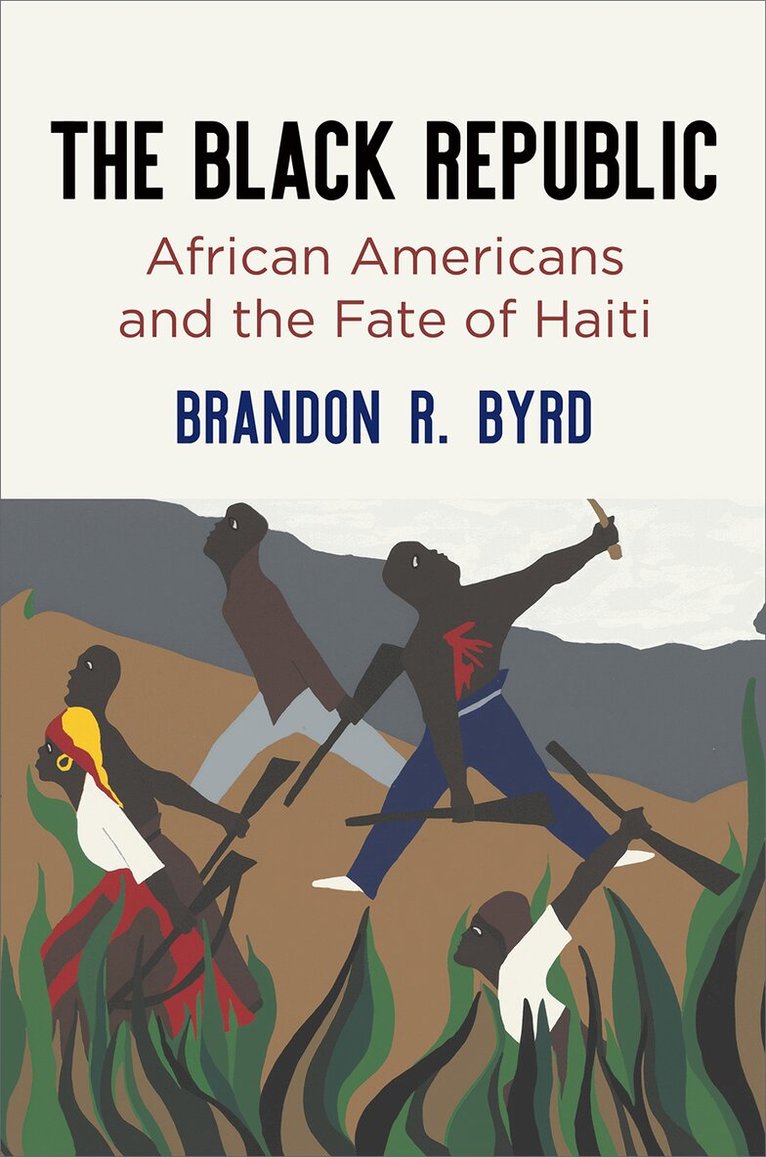
In The Black Republic, Brandon R. Byrd explores the ambivalent attitudes that African American leaders in the post-Civil War era held toward Haiti, the first and only black republic in the Western Hemisphere. Following emancipation, African American leaders of all kinds-politicians, journalists, ministers, writers, educators, artists, and diplomats-identified new and urgent connections with Haiti, a nation long understood as an example of black self-determination. They celebrated not only its diplomatic recognition by the United States but also the renewed relevance of the Haitian Revolution.While a number of African American leaders defended the sovereignty of a black republic whose fate they saw as intertwined with their own, others expressed concern over Haiti's fitness as a model black republic, scrutinizing whether the nation truly reflected the "civilized" progress of the black race. Influenced by the imperialist rhetoric of their day, many African Americans across the political spectrum espoused a politics of racial uplift, taking responsibility for the "improvement" of Haitian education, politics, culture, and society. They considered Haiti an uncertain experiment in black self-governance: it might succeed and vindicate the capabilities of African Americans demanding their own right to self-determination or it might fail and condemn the black diasporic population to second-class status for the foreseeable future.When the United States military occupied Haiti in 1915, it created a crisis for W. E. B. Du Bois and other black activists and intellectuals who had long grappled with the meaning of Haitian independence. The resulting demand for and idea of a liberated Haiti became a cornerstone of the anticapitalist, anticolonial, and antiracist radical black internationalism that flourished between World War I and World War II. Spanning the Reconstruction, post-Reconstruction, and Jim Crow eras, The Black Republic recovers a crucial and overlooked chapter of African American internationalism and political thought.
1 106 kr
Skickas inom 10-15 vardagar
In The Black Republic, Brandon R. Byrd explores the ambivalent attitudes that African American leaders in the post-Civil War era held toward Haiti, the first and only black republic in the Western Hemisphere. Following emancipation, African American leaders of all kinds-politicians, journalists, ministers, writers, educators, artists, and diplomats-identified new and urgent connections with Haiti, a nation long understood as an example of black self-determination. They celebrated not only its diplomatic recognition by the United States but also the renewed relevance of the Haitian Revolution.While a number of African American leaders defended the sovereignty of a black republic whose fate they saw as intertwined with their own, others expressed concern over Haiti's fitness as a model black republic, scrutinizing whether the nation truly reflected the "civilized" progress of the black race. Influenced by the imperialist rhetoric of their day, many African Americans across the political spectrum espoused a politics of racial uplift, taking responsibility for the "improvement" of Haitian education, politics, culture, and society. They considered Haiti an uncertain experiment in black self-governance: it might succeed and vindicate the capabilities of African Americans demanding their own right to self-determination or it might fail and condemn the black diasporic population to second-class status for the foreseeable future.When the United States military occupied Haiti in 1915, it created a crisis for W. E. B. Du Bois and other black activists and intellectuals who had long grappled with the meaning of Haitian independence. The resulting demand for and idea of a liberated Haiti became a cornerstone of the anticapitalist, anticolonial, and antiracist radical black internationalism that flourished between World War I and World War II. Spanning the Reconstruction, post-Reconstruction, and Jim Crow eras, The Black Republic recovers a crucial and overlooked chapter of African American internationalism and political thought.
415 kr
Skickas inom 7-10 vardagar
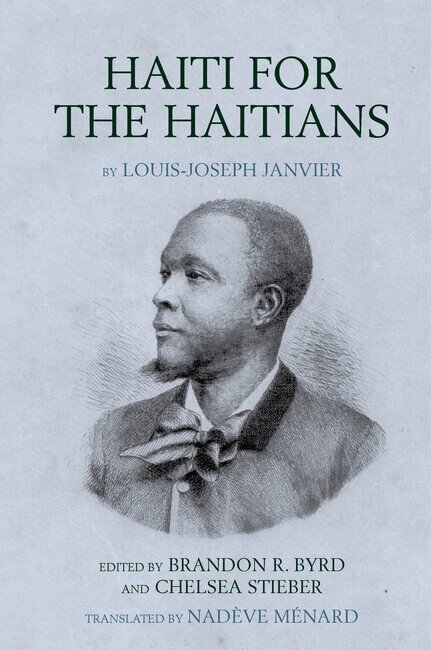
An Open Access edition of this book is available on the Liverpool University Press website and the OAPEN library.The world-historical significance of the Haitian Revolution is now firmly established in mainstream history. Yet Haiti’s nineteenth-century has yet to receive its due, this despite independent Haiti’s vital importance as the first nation to permanently ban slavery and its ongoing struggle for sovereignty in the Atlantic World.Louis-Joseph Janvier (1855–1911) is one of the foremost Haitian intellectuals and diplomats of the late-nineteenth and early twentieth centuries. His prolific oeuvre offered enduring challenges to racist slanders of Haiti and critiques of the global inequalities that arose from European colonialism and the Transatlantic Slave Trade. Through his writings, Janvier influenced the international debates about slavery, race, nation, and empire that shaped his era and, in many ways, remain unresolved today.Arguably his most powerful work, Haiti for the Haitians (1884) provides a searing critique of European and U.S. imperialism, predatory finance capitalism, and Haiti’s domestic politics. It offers his vision of Haiti’s future expressed through a remarkable phrase: Haiti for the Haitians.Haiti for the Haitians is the first major English translation of Janvier. Accompanied by an introduction, annotations, and an interdisciplinary collection of critical essays, this volume offers unprecedented access to this vital Haitian thinker and an important contribution to the scholarship on Haiti’s nineteenth century.
674 kr
Skickas inom 7-10 vardagar
An Open Access edition of this book is available on the Liverpool University Press website and the OAPEN library.The world-historical significance of the Haitian Revolution is now firmly established in mainstream history. Yet Haiti’s nineteenth-century has yet to receive its due, this despite independent Haiti’s vital importance as the first nation to permanently ban slavery and its ongoing struggle for sovereignty in the Atlantic World.Louis-Joseph Janvier (1855–1911) is one of the foremost Haitian intellectuals and diplomats of the late-nineteenth and early twentieth centuries. His prolific oeuvre offered enduring challenges to racist slanders of Haiti and critiques of the global inequalities that arose from European colonialism and the Transatlantic Slave Trade. Through his writings, Janvier influenced the international debates about slavery, race, nation, and empire that shaped his era and, in many ways, remain unresolved today.Arguably his most powerful work, Haiti for the Haitians (1884) provides a searing critique of European and U.S. imperialism, predatory finance capitalism, and Haiti’s domestic politics. It offers his vision of Haiti’s future expressed through a remarkable phrase: Haiti for the Haitians.Haiti for the Haitians is the first major English translation of Janvier. Accompanied by an introduction, annotations, and an interdisciplinary collection of critical essays, this volume offers unprecedented access to this vital Haitian thinker and an important contribution to the scholarship on Haiti’s nineteenth century.