Brandy Schillace – författare
Visar alla böcker från författaren Brandy Schillace. Handla med fri frakt och snabb leverans.
10 produkter
10 produkter
Inbunden, Engelska, 2025
307 kr
Skickas inom 5-8 vardagar
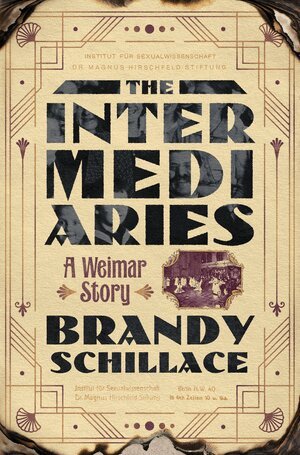
Set in interwar Germany, The Intermediaries tells the forgotten story of the Institute for Sexual Science, the world’s first centre for homosexual and transgender rights. Headed by a gay Jewish man, Dr. Magnus Hirshfeld, the institute aided in the first gender-affirming surgeries and hormone replacements, acting as a rebellious base of operations in the face of rising prejudice, nationalism and Nazi propaganda. Brandy Schillace introduces readers to Dora Richter, an institute patient whom we follow from early desperate years to gender-affirming care and her right to live as a woman. She offers an example of queer resilience in the face of punishing cultural constraints. The Intermediaries charts the interdependent relationships between nascent sexual science, queer civil rights and the fight against fascism. It tells riveting stories of LGBTQ pioneers, a surprising, long-suppressed history and offers a cautionary tale in the face of today’s oppressive anti-trans legislation.
Inbunden, Engelska, 2024
328 kr
Skickas inom 3-6 vardagar
Inbunden, Engelska, 2025
328 kr
Skickas inom 3-6 vardagar
Häftad, Engelska, 2025
527 kr
Skickas inom 3-6 vardagar
Häftad, Engelska, 2026
527 kr
Skickas inom 3-6 vardagar
Inbunden, Engelska, 2014
1 630 kr
Skickas inom 5-8 vardagar
Inbunden, Engelska, 2015
186 kr
Skickas
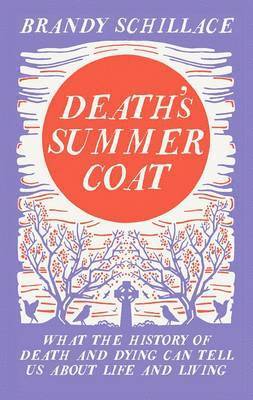
A new conversation is starting on this most universal of topics. But to know where we are heading, we need to know where we have come from...Death is the one subject we will all confront; it touches our families, our homes, our hearts. And yet we have grown used to denying its existence, treating it as an enemy to be beaten back with medical advances. What led us to this point - what drove us to sanitize death and make it foreign and unfamiliar? In Death's Summer Coat Brandy Schillace explores our past to examine what it might mean for our future. From Victorian Britain to contemporary Cambodia, forgotten customs and modern-day rituals, we learn about the incredibly diverse - and sometimes just incredible - ways in which humans have dealt with mortality in different times and places. Today, as we begin to talk about mortality, there are difficult questions to face. What does it mean to have a 'good death'? What should a funeral do? As Schillace shows, talking about death and the rituals associated with it can help to provide answers. It also brings us closer together. And conversation and community are just as important for living as for dying.Some of the stories are strikingly unfamiliar; others are far more familiar than you might suppose.But all reveal a lot about the present - and about ourselves. It's time to meet the new (old) death. As seen reviewed in The Guardian in the article Smoke Gets in Your Eyes by Caitlin Doughty review - startling stories from the crematorium. If you are keen to learn more, you can listen to the interview with Brandy Schillace on Radio Gorgeous or the interview on BBC Radio 4 Thinking Allowed, both to be aired in May 2015.
Ljudbok
Engelska, 2021369 kr
Lyssna direkt efter köp
The “delightfully macabre” (The New York Times) true tale of a brilliant and eccentric surgeon…and his quest to transplant the human soul.In the early days of the Cold War, a spirit of desperate scientific rivalry birthed a different kind of space race: not the race to outer space that we all know, but a race to master the inner space of the human body. While surgeons on either side of the Iron Curtain competed to become the first to transplant organs like the kidney and heart, a young American neurosurgeon had an even more ambitious thought: Why not transplant the brain? Dr. Robert White was a friend to two popes and a founder of the Vatican’s Commission on Bioethics. He developed lifesaving neurosurgical techniques still used in hospitals today and was nominated for the Nobel Prize. But like Dr. Jekyll before him, Dr. White had another identity. In his lab, he was waging a battle against the limits of science and against mortality itself—working to perfect a surgery that would allow the soul to live on after the human body had died. This “fascinating” (The Wall Street Journal), “provocative” (The Washington Post) tale follows his decades-long quest into tangled matters of science, Cold War politics, and faith, revealing the complex (and often murky) ethics of experimentation and remarkable innovations that today save patients from certain death. It’s a “masterful” (Science) look at our greatest fears and our greatest hopes—and the long, strange journey from science fiction to science fact.
Häftad, Engelska, 2022
252 kr
Skickas inom 3-6 vardagar
E-bok
Engelska, 2021134 kr
Läs direkt efter köp
The “delightfully macabre” (The New York Times) true tale of a brilliant and eccentric surgeon…and his quest to transplant the human soul.In the early days of the Cold War, a spirit of desperate scientific rivalry birthed a different kind of space race: not the race to outer space that we all know, but a race to master the inner space of the human body. While surgeons on either side of the Iron Curtain competed to become the first to transplant organs like the kidney and heart, a young American neurosurgeon had an even more ambitious thought: Why not transplant the brain? Dr. Robert White was a friend to two popes and a founder of the Vatican’s Commission on Bioethics. He developed lifesaving neurosurgical techniques still used in hospitals today and was nominated for the Nobel Prize. But like Dr. Jekyll before him, Dr. White had another identity. In his lab, he was waging a battle against the limits of science and against mortality itself—working to perfect a surgery that would allow the soul to live on after the human body had died. This “fascinating” (The Wall Street Journal), “provocative” (The Washington Post) tale follows his decades-long quest into tangled matters of science, Cold War politics, and faith, revealing the complex (and often murky) ethics of experimentation and remarkable innovations that today save patients from certain death. It’s a “masterful” (Science) look at our greatest fears and our greatest hopes—and the long, strange journey from science fiction to science fact.