Brenda Hosington – författare
Visar alla böcker från författaren Brenda Hosington. Handla med fri frakt och snabb leverans.
7 produkter
7 produkter
Häftad, Engelska, 1996
371 kr
Skickas inom 5-8 vardagar
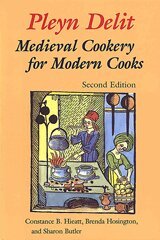
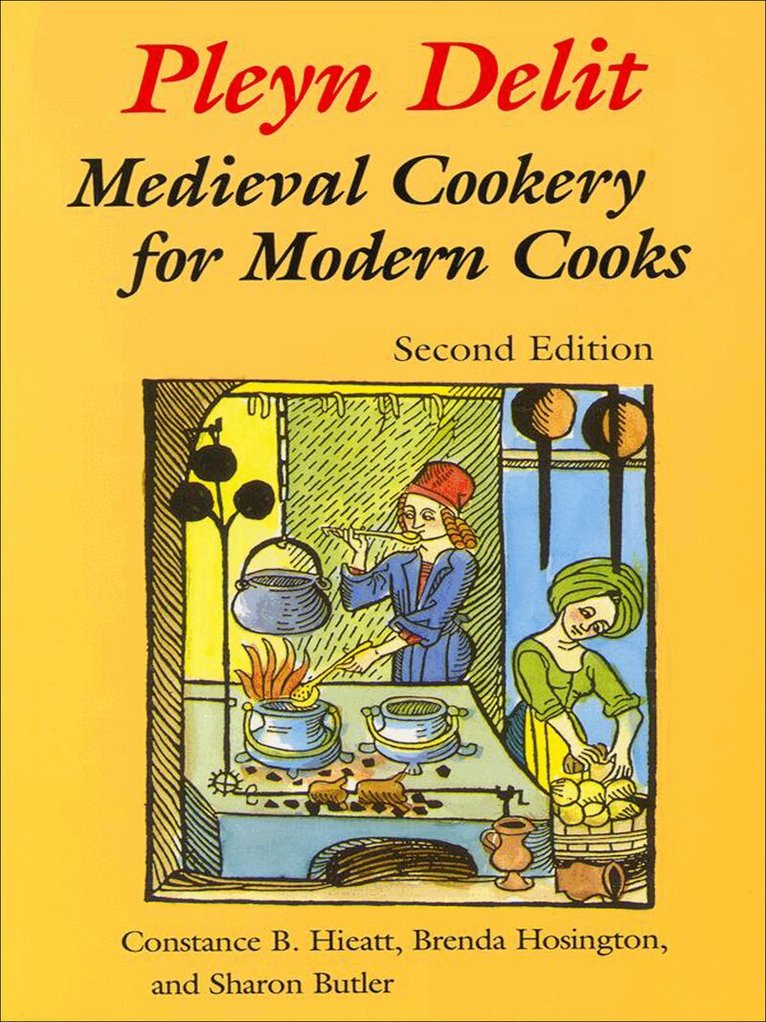
This is a completely revised edition of the classic cookbook that makes genuine medieval meals available to modern cooks. Using the best recipes from the first edition as a base, Constance Hieatt and Brenda Hosington have added many new recipes from more countries to add depth and flavour to our understanding of medieval cookery. All recipes have been carefully adapted for use in modern kitchens, thoroughly tested, and represent a wide range of foods, from appetizers and soups, to desserts and spice wine. They come largely from English and French manuscripts, but some recipes are from sources in Arabia, Catalonia and Italy. The recipes will appeal to cordon-bleus and less experienced cooks, and feature dishes for both bold and timourous palates.The approach to cooking is entirely practical. The emphasis of the book is on making medieval cookery accessible by enabling today's cooks to produce authentic medieval dishes with as much fidelity as possible. All the ingredients are readily available; where some might prove difficult to find, suitable substitutes are suggested. While modern ingredients which did not exist in the Middle Ages have been excluded (corn starch, for example), modern time and energy saving appliances have not. Authenticity of composition, taste, and appearance are the book's main concern.Unlike any other published book of medieval recipes, Pleyn Delit is based on manuscript readings verified by the authors. When this was not possible, as in the case of the Arabic recipes, the best available scholarly editions were used. The introduction provides a clear explanation of the medieval menu and related matters to bring the latest medieval scholarship to the kitchen of any home. Pleyn Delit is a recipe book dedicated to pure delight - a delight in cooking and good food.
E-bok
Engelska, 2016989 kr
Läs direkt efter köp
Despite the fame their work brought them, and despite the importance of their parents in mid-Tudor England, relatively little is known of the lives of Anne, Margaret and Jane Seymour - daughters of Anne Stanhope and the Duke of Somerset. In 1550, aged roughly eighteen, sixteen and nine, these three noblewomen composed a Latin poem of 104 distichs on the death of Marguerite de Navarre, which they sent to their former tutor, Nicolas Denisot, now living in Paris. Entitled Annae, Margaritae, Janae, Sororum virginum heroidum anglarum, in mortem Divae Margaritae Valesiae, navarrorum Reginae, Hecatodistichon, it was the first formal and original verse encomium in Latin penned by a female author to be printed in England. The Hecatodistichon was published in Paris in 1550 by Denisot, as the cornerstone of a collective tumulus, or commemorative volume, dedicated to Marguerite. The French literati were swift to respond to the appearance of the volume. In 1551 Denisot republished the Seymour''s poem in a completely new volume with a French title that emphasised the collective nature of the Tombeau volume. Both volumes are reproduced here from editions held at the British Library.
E-bok
PDF, Engelska, 2016989 kr
Läs direkt efter köp
Despite the fame their work brought them, and despite the importance of their parents in mid-Tudor England, relatively little is known of the lives of Anne, Margaret and Jane Seymour - daughters of Anne Stanhope and the Duke of Somerset. In 1550, aged roughly eighteen, sixteen and nine, these three noblewomen composed a Latin poem of 104 distichs on the death of Marguerite de Navarre, which they sent to their former tutor, Nicolas Denisot, now living in Paris. Entitled Annae, Margaritae, Janae, Sororum virginum heroidum anglarum, in mortem Divae Margaritae Valesiae, navarrorum Reginae, Hecatodistichon, it was the first formal and original verse encomium in Latin penned by a female author to be printed in England. The Hecatodistichon was published in Paris in 1550 by Denisot, as the cornerstone of a collective tumulus, or commemorative volume, dedicated to Marguerite. The French literati were swift to respond to the appearance of the volume. In 1551 Denisot republished the Seymour''s poem in a completely new volume with a French title that emphasised the collective nature of the Tombeau volume. Both volumes are reproduced here from editions held at the British Library.
E-bok
PDF, Engelska, 20001 651 kr
Läs direkt efter köp
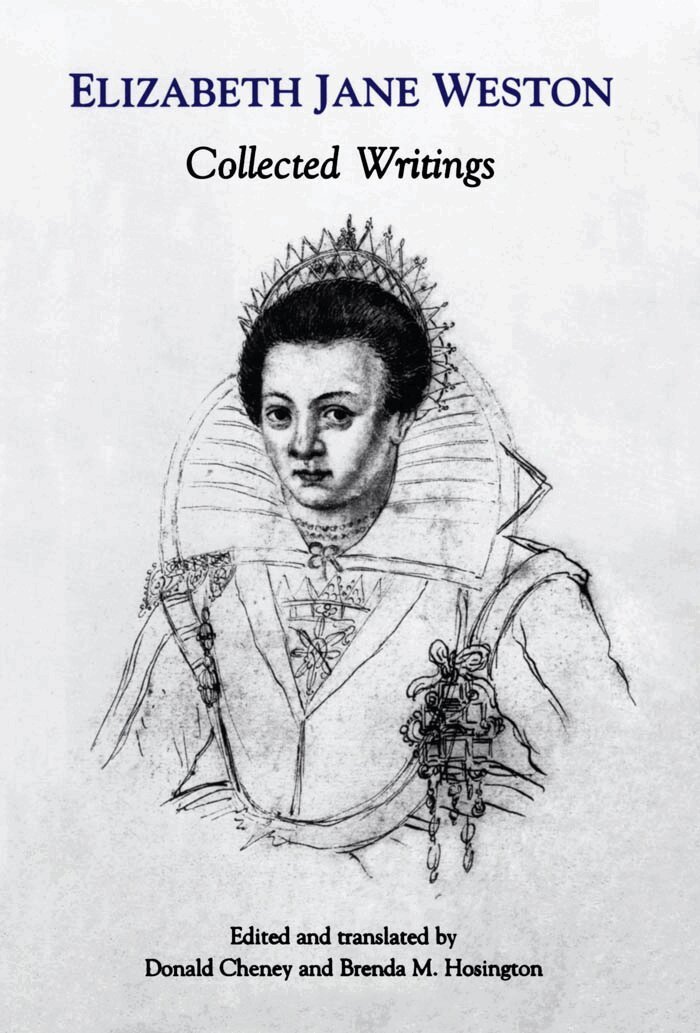
This is the first modern edition and translation of the writings of the Neo-Latin poet Elizabeth Jane Weston (c. 1581-1612), the stepdaughter of Edward Kelley, court alchemist of Rudolf II in Prague. Turning to the composition of Latin poems as a means of seeking financial support for herself and her family after Kelley's disgrace and death, Weston became widely celebrated as the 'Virgo Angla' and was held in high esteem in the international republic of letters of her time. This collection of poems and letters written by her, to her, and, occasionally, about her, sheds new light on the possibilities of artistic self-representation available to women at the end of the sixteenth century. The core of the edition (which contains the Latin text along with a facing-page English translation) is Weston's Parthenica (c. 1608), supplemented by a wide range of individual poems found in various European libraries.The editors have identified proper names and allusions where possible, while leaving to others the task of evaluating Weston's achievement.Readers of this edition will be fascinated by the evidence of a woman whose orphaned state seems to have enabled her to write freely and to be praised and published to a degree denied women under the tutelage of father or husband. This edition should be an indispensable part of the growing library of women writers in the early modern period.Winner of the Josephine Roberts Award, presented by the Society for the Study of Early Modern Women
E-bok
PDF, Engelska, 2004454 kr
Läs direkt efter köp
This is a completely revised edition of the classic cookbook that makes genuine medieval meals available to modern cooks. Using the best recipes from the first edition as a base, Constance Hieatt and Brenda Hosington have added many new recipes from more countries to add depth and flavour to our understanding of medieval cookery. All recipes have been carefully adapted for use in modern kitchens, thoroughly tested, and represent a wide range of foods, from appetizers and soups, to desserts and spice wine. They come largely from English and French manuscripts, but some recipes are from sources in Arabia, Catalonia and Italy. The recipes will appeal to cordon-bleus and less experienced cooks, and feature dishes for both bold and timourous palates.The approach to cooking is entirely practical. The emphasis of the book is on making medieval cookery accessible by enabling today's cooks to produce authentic medieval dishes with as much fidelity as possible. All the ingredients are readily available; where some might prove difficult to find, suitable substitutes are suggested. While modern ingredients which did not exist in the Middle Ages have been excluded (corn starch, for example), modern time and energy saving appliances have not. Authenticity of composition, taste, and appearance are the book's main concern.Unlike any other published book of medieval recipes, Pleyn Delit is based on manuscript readings verified by the authors. When this was not possible, as in the case of the Arabic recipes, the best available scholarly editions were used. The introduction provides a clear explanation of the medieval menu and related matters to bring the latest medieval scholarship to the kitchen of any home. Pleyn Delit is a recipe book dedicated to pure delight - a delight in cooking and good food.
E-bok
Engelska, 1996471 kr
Läs direkt efter köp
This is a completely revised edition of the classic cookbook that makes genuine medieval meals available to modern cooks. Using the best recipes from the first edition as a base, Constance Hieatt and Brenda Hosington have added many new recipes from more countries to add depth and flavour to our understanding of medieval cookery. All recipes have been carefully adapted for use in modern kitchens, thoroughly tested, and represent a wide range of foods, from appetizers and soups, to desserts and spice wine. They come largely from English and French manuscripts, but some recipes are from sources in Arabia, Catalonia and Italy. The recipes will appeal to cordon-bleus and less experienced cooks, and feature dishes for both bold and timourous palates.The approach to cooking is entirely practical. The emphasis of the book is on making medieval cookery accessible by enabling today's cooks to produce authentic medieval dishes with as much fidelity as possible. All the ingredients are readily available; where some might prove difficult to find, suitable substitutes are suggested. While modern ingredients which did not exist in the Middle Ages have been excluded (corn starch, for example), modern time and energy saving appliances have not. Authenticity of composition, taste, and appearance are the book's main concern.Unlike any other published book of medieval recipes, Pleyn Delit is based on manuscript readings verified by the authors. When this was not possible, as in the case of the Arabic recipes, the best available scholarly editions were used. The introduction provides a clear explanation of the medieval menu and related matters to bring the latest medieval scholarship to the kitchen of any home. Pleyn Delit is a recipe book dedicated to pure delight - a delight in cooking and good food.
Inbunden, Engelska, 2000
2 522 kr
Skickas inom 10-15 vardagar
Despite the fame their work brought them, and despite the importance of their parents in mid-Tudor England, relatively little is known of the lives of Anne, Margaret and Jane Seymour - daughters of Anne Stanhope and the Duke of Somerset. In 1550, aged roughly eighteen, sixteen and nine, these three noblewomen composed a Latin poem of 104 distichs on the death of Marguerite de Navarre, which they sent to their former tutor, Nicolas Denisot, now living in Paris. Entitled Annae, Margaritae, Janae, Sororum virginum heroidum anglarum, in mortem Divae Margaritae Valesiae, navarrorum Reginae, Hecatodistichon, it was the first formal and original verse encomium in Latin penned by a female author to be printed in England. The Hecatodistichon was published in Paris in 1550 by Denisot, as the cornerstone of a collective tumulus, or commemorative volume, dedicated to Marguerite. The French literati were swift to respond to the appearance of the volume. In 1551 Denisot republished the Seymour's poem in a completely new volume with a French title that emphasised the collective nature of the Tombeau volume. Both volumes are reproduced here from editions held at the British Library.