Brian Douglas Tennyson – författare
Visar alla böcker från författaren Brian Douglas Tennyson. Handla med fri frakt och snabb leverans.
6 produkter
6 produkter
2 162 kr
Skickas inom 10-15 vardagar
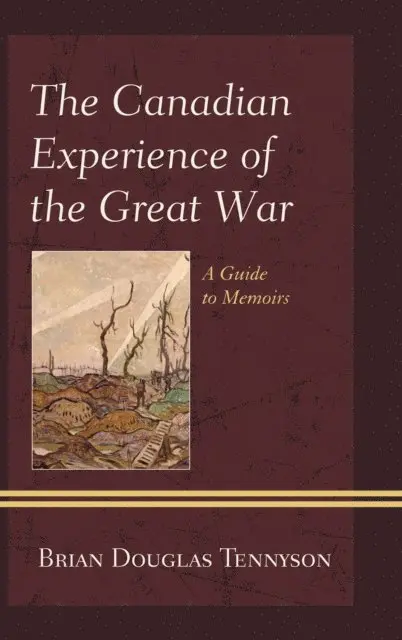
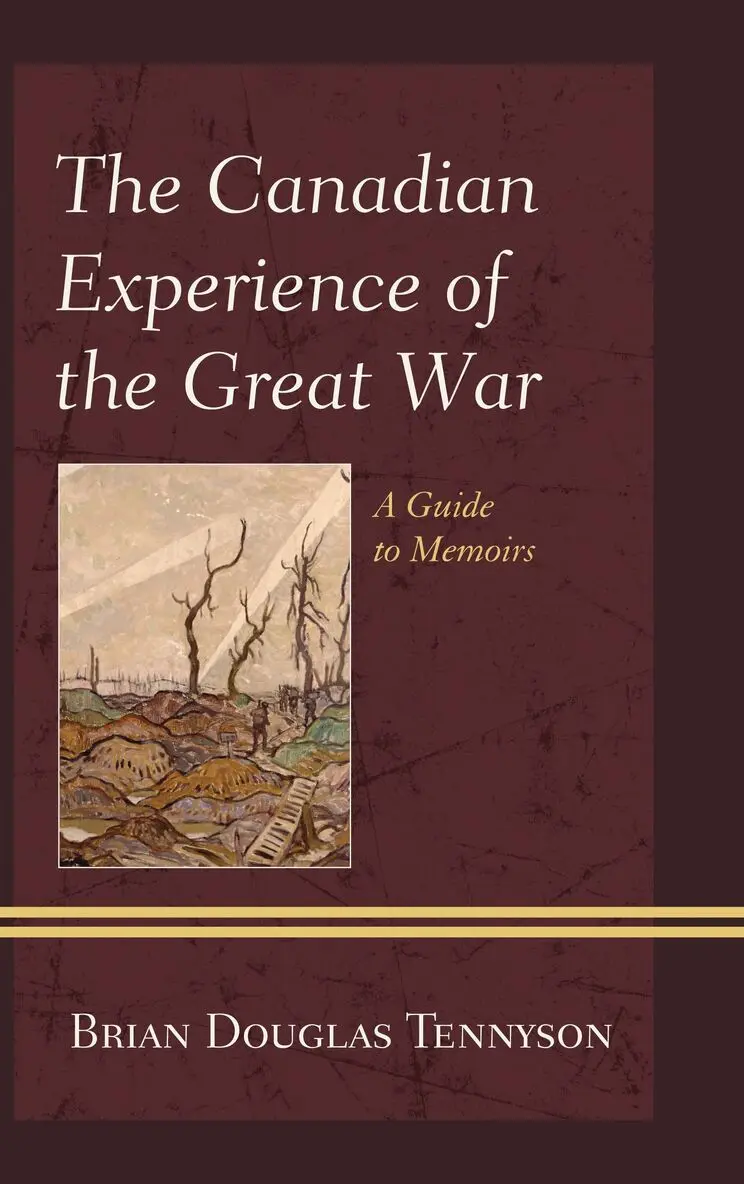
Although the United States did not enter the First World War until April 1917, Canada enlisted the moment Great Britain engaged in the conflict in August 1914. The Canadian contribution was great, as more than 600,000 men and women served in the war effort—400,000 of them overseas—out of a population of 8 million. More than 150,000 were wounded and nearly 67,000 gave their lives. The war was a pivotal turning point in the history of the modern world, and its mindless slaughter shattered a generation and destroyed seemingly secure values. The literature that the First World War generated, and continues to generate so many years later, is enormous and addresses a multitude of cultural and social matters in the history of Canada and the war itself.Although many scholars have brilliantly analyzed the literature of the war, little has been done to catalog the writings of ordinary participants: men and women who served in the war and wrote about it but are not included among well-known poets, novelists, and memoirists. Indeed, we don’t even know how many titles these people published, nor do we know how many more titles were added later by relatives who considered the recollections or collected letters worthy of publication. Brian Douglas Tennyson’s The Canadian Experience of the Great War: A Guide to Memoirs is the first attempt to identify all of the published accounts of First World War experiences by Canadian veterans.
Canada's Great War, 1914-1918
How Canada Helped Save the British Empire and Became a North American Nation
Inbunden, Engelska, 2014
1 261 kr
Skickas inom 10-15 vardagar
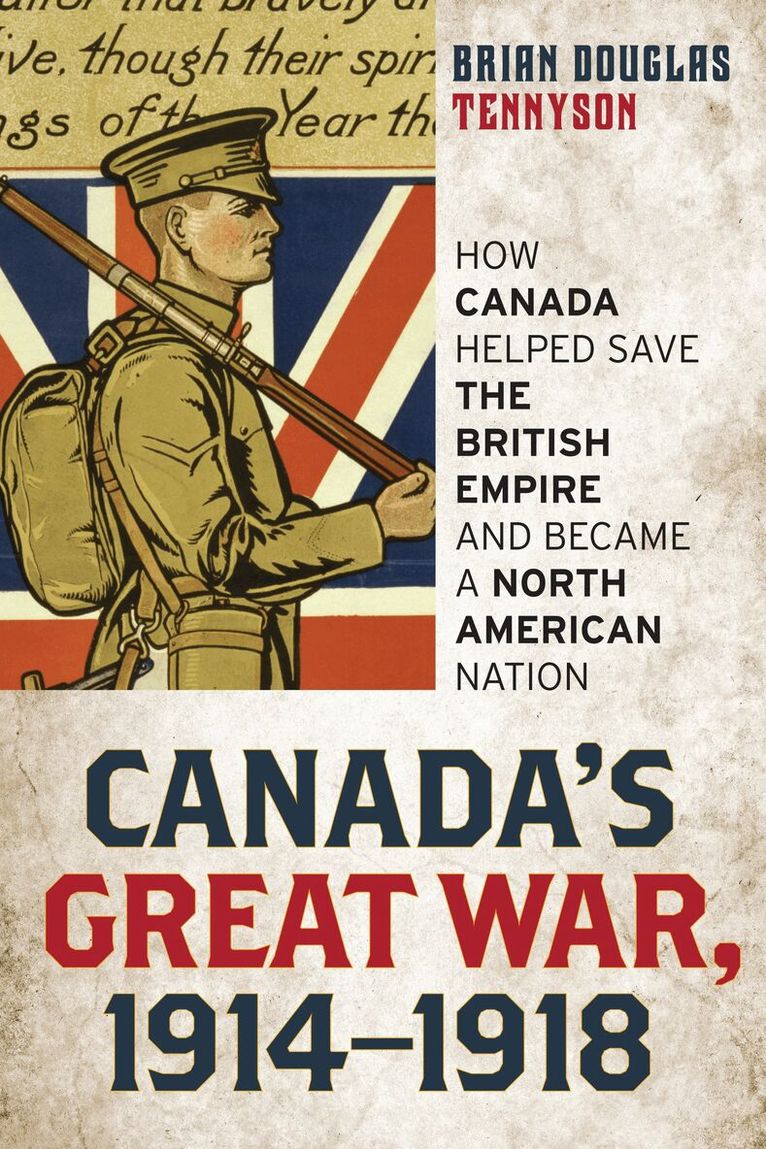
Canada’s Great War, 1914-1918: How Canada Helped Save the British Empire and Became a North American Nation describes the major role that Canada played in helping the British Empire win the greatest war in history—and, somewhat surprisingly, resulted in Canada’s closer integration not with the British Empire but with its continental neighbor, the United States.When Britain declared war against Germany and Austria-Hungary in August 1914, Canada was automatically committed as well because of its status as a Dominion in the British Empire. Despite not having a say in the matter, most Canadians enthusiastically embraced the war effort in order to defend the Empire and its values. In Canada’s Great War, 1914-1918, historian Brian Douglas Tennyson argues that Canada’s participation in the war weakened its relationship with Britain by stimulating a greater sense of Canadian identity, while at the same time bringing it much closer to the United States, especially after the latter entered the war. Their wartime cooperation strengthened their relationship, which had been delicate and often strained in the nineteenth century. This was reflected in the greater integration of their economies and the greater acceptance in Canada of American cultural products such as books, magazines, radio broadcasting and movies, and was symbolized by the astonishing American response to the Halifax explosion in December 1917. By the end of the war, Canadians were emerging as a North American people, no longer fearing close ties to the United States, even as they maintained their ties to the British Commonwealth.Canada’s Great War, 1914-1918 will interest not only Canadians unaware of how greatly their nation’s participation in the First World War reshaped its relationship with Britain and the United States, but also Americans unacquainted with the magnitude of Canada’s involvement in the war and how that contribution drew the two nations closer together.
393 kr
Tillfälligt slut
Examines Canadian relations with South Africa from 1899, when Canada helped to force the Afrikaner republics into the Empire, to 1961 when Canada played a major role in South Africa's departure from the Commonwealth.
527 kr
Tillfälligt slut
The essays in this collection examine the history of Canadian relations with the Commonwealth Caribbean from the end of the American war of independence until recent times.
731 kr
Skickas inom 5-8 vardagar
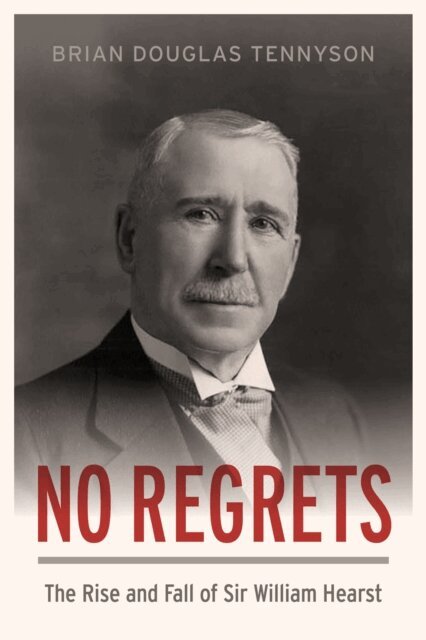
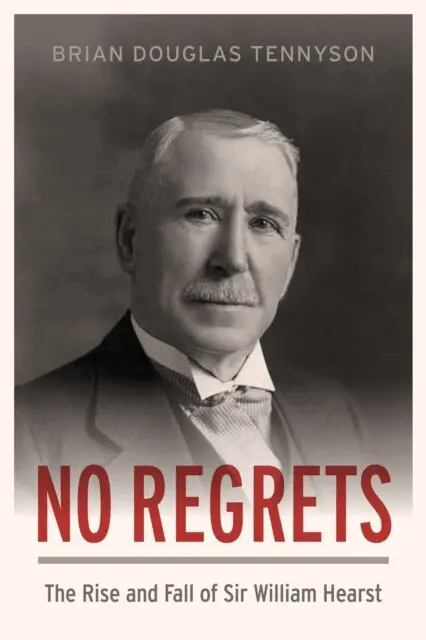
When William Hearst succeeded James Whitney as leader of Ontario’s Conservative party and Premier in 1914, he was relatively unknown and represented northern Ontario, a region that was emerging as the province’s richest source of resources and government revenues. He took office just after the outbreak of the First World War and, an unapologetic imperialist, aligned his government with Sir Robert Borden’s Unionist government during a period when the country was becoming increasingly divided. At the same time, he was a relatively progressive conservative who enfranchised women and introduced public health reforms such as restricting the consumption of alcohol – yet his government was badly defeated in the 1919 election.No Regrets examines Hearst’s political career during a tumultuous time, covering the First World War and Ontario’s mobilization as well as the temperance movement. Brian Douglas Tennyson explains that Hearst was not incompetent, but that his party was sharply divided and operating amid extraordinarily chaotic social and political instability. Tennyson’s archival research is extensive and touches on the critical issues of the time – many of which are still relevant today, including the abuse of Indigenous treaty rights in the interests of economic development.
244 kr
Kommande
A comprehensive history of the Nova Scotian nurses who served in World War I, from a leading historian and author of Nova Scotia at War, 1914?1919._x000D__x000D_Very little has been written about Canadian military nurses in the Great War largely because, more than a century later, historians still don't agree on how many Canadian military nurses served. What is generally agreed is that between a third and a half of all Canadian nurses served in uniform in the war._x000D_Bluenose Bluebirds: Nova Scotia's Military Nurses in the Great War tells the stories of Nova Scotia's military nurses as revealed through their letters, diaries, memoirs, and biographies, which examine how they coped with the horrors of modern war and death on a scale that they could not have imagined. The narrative includes those who served in military and civilian hospitals in Nova Scotia and elsewhere, and who found themselves having to cope with the influenza pandemic, the greatest global epidemic in modern history, and the Halifax Explosion._x000D_Bluenose Bluebirds also features an extensive database that profiles every single Nova Scotian nurse who served in the Great War, including both a brief biography of wartime experience as well as key information about their pre-war and postwar lives._x000D_Through tenacious research, and with the help of twenty historical images, author and historian Brian Douglas Tennyson has created an essential resource that recognizes and honours the service of an overlooked cohort of Great War heroes: the Bluenose Bluebirds who put their lives on the line in service of others.