Brian Glavey – författare
Visar alla böcker från författaren . Handla med fri frakt och snabb leverans.
5 produkter
5 produkter
Inbunden, Engelska, 2016
1 654 kr
Skickas inom 5-8 vardagar
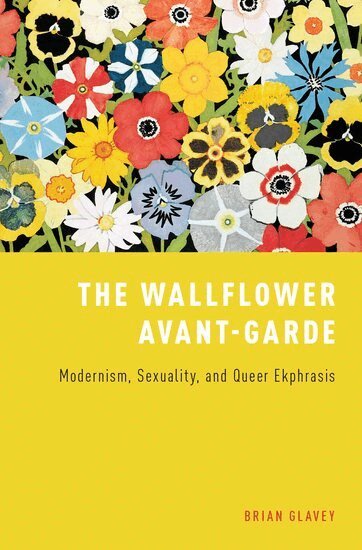
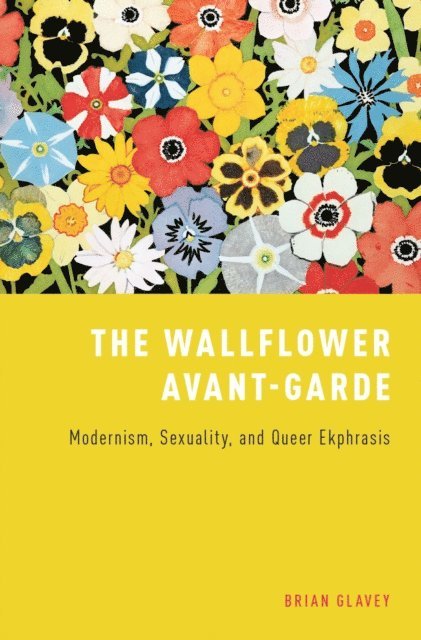
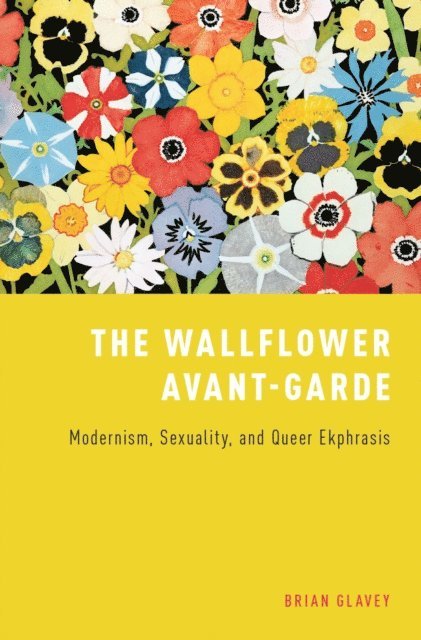
The Wallflower Avant-Garde argues for the importance of a strain of modernist formalism based in ekphrasis, the literary imitation of the visual arts. Often associated with a conservative aesthetic of wholeness, permanence, and autonomy, ekphrastic writing also involves excess, failure, and mimesis, conjuring an aesthetic sense of closure and unity out of impossible imitations. This choreography of imitation and autonomy resonates with many of the foundational insights of queer theory: the way it situates identity as an effect of performativity, artifice, and mimesis. Unlike many queer theorists, however, this book insists that we value both the imitations and the aspirations that guide them, underlining not only the illusoriness of identity but also its allure. This more capacious formalism allows aspects of modernists aesthetic that have seemed regressive or repressive to be read as generative forms of stasis, quiet, reserve, shyness, and so on.
E-bok
PDF, Engelska, 20151 228 kr
Läs direkt efter köp
The Wallflower Avant-Garde highlights a strain of formalism visible in both modernist literature and contemporary queer studies, drawing attention to an aesthetic that is as quiet and quirky as it is queer. In studies of Gertrude Stein, Djuna Barnes, Richard Bruce Nugent, Frank O''Hara, and John Ashbery, Brian Glavey argues for a recalibrated understanding of the relation between sexuality and the aesthetic, revealing a non-oppositional avant-gardism that opts out of some of the binaristic imperatives that have structured recent debates in queer theory. Refusing to decide between positive and negative affects or to side with either utopian or antisocial ambitions, The Wallflower Avant-Garde explores models of reading and writing about art that remain flexible enough to dig deep even as they gloss the surface.At the heart of this argument is a revaluation of modernist ekphrasis, a mode understood as literature''s imitation or description of the visual arts. From the well-wrought urns of the New Critics onward, ekphrasis has figured prominently in the legacy of modernist literary criticism, but a tendency to read its complicated modes of relationality in terms of either autonomy or antagonism has obscured the forms of creative failure and imitation embodied in the desire to confuse poetry for pottery. Attending to mimetic and descriptive strategies without dismissing the aspirations for wholeness and closure that often animate them allows for the recognition that queerness and modernism are intertwined in unexpected and unpredictable ways, revealing new insights into the varieties of abstraction, preterition, and spatial form that stand behind modernism''s investment in the aesthetic.
E-bok
Engelska, 20151 228 kr
Läs direkt efter köp
The Wallflower Avant-Garde highlights a strain of formalism visible in both modernist literature and contemporary queer studies, drawing attention to an aesthetic that is as quiet and quirky as it is queer. In studies of Gertrude Stein, Djuna Barnes, Richard Bruce Nugent, Frank O''Hara, and John Ashbery, Brian Glavey argues for a recalibrated understanding of the relation between sexuality and the aesthetic, revealing a non-oppositional avant-gardism that opts out of some of the binaristic imperatives that have structured recent debates in queer theory. Refusing to decide between positive and negative affects or to side with either utopian or antisocial ambitions, The Wallflower Avant-Garde explores models of reading and writing about art that remain flexible enough to dig deep even as they gloss the surface.At the heart of this argument is a revaluation of modernist ekphrasis, a mode understood as literature''s imitation or description of the visual arts. From the well-wrought urns of the New Critics onward, ekphrasis has figured prominently in the legacy of modernist literary criticism, but a tendency to read its complicated modes of relationality in terms of either autonomy or antagonism has obscured the forms of creative failure and imitation embodied in the desire to confuse poetry for pottery. Attending to mimetic and descriptive strategies without dismissing the aspirations for wholeness and closure that often animate them allows for the recognition that queerness and modernism are intertwined in unexpected and unpredictable ways, revealing new insights into the varieties of abstraction, preterition, and spatial form that stand behind modernism''s investment in the aesthetic.
Inbunden, Engelska, 2026
1 473 kr
Kommande
An engaging account of how the New York School poets used art to imagine their queerness as something that might be shared with other people.How did Frank O’Hara and other New York School poets—a small coterie associated with experimental art and gay culture —become fixtures in today’s culture, quoted on prestige television shows, in teen romances, and at the wedding ceremonies of straight celebrities? How, in other words, did these poets become so relatable? Brian Glavey’s Relatability tells the story of an aesthetic as it traveled from a cluster of mostly queer poets in the middle of the twentieth century to become increasingly central to everyday life in the early twenty-first century. That the New York School poets are more relatable now than they were during their own lifetime speaks in part to the growing acceptance of same-sex desire in American culture. But Glavey argues that this transformation also tells the story of a shift in the way that aesthetic experience is understood to work. Moving away from forms of modernist impersonality, O’Hara, John Ashbery, James Schuyler, and Joe Brainard made sociability central to the experience of art and literature. Attempting to share their experience of works of art, they were willing to risk the reader’s judgment that they had, perhaps, overshared. Glavey advances an idea of aesthetic judgment that takes seriously its missed connections as well as its successes. Relatability adds a fresh perspective to current conversations around attachment and affect in literary studies.
Häftad, Engelska, 2026
358 kr
Kommande
An engaging account of how the New York School poets used art to imagine their queerness as something that might be shared with other people.How did Frank O’Hara and other New York School poets—a small coterie associated with experimental art and gay culture —become fixtures in today’s culture, quoted on prestige television shows, in teen romances, and at the wedding ceremonies of straight celebrities? How, in other words, did these poets become so relatable? Brian Glavey’s Relatability tells the story of an aesthetic as it traveled from a cluster of mostly queer poets in the middle of the twentieth century to become increasingly central to everyday life in the early twenty-first century. That the New York School poets are more relatable now than they were during their own lifetime speaks in part to the growing acceptance of same-sex desire in American culture. But Glavey argues that this transformation also tells the story of a shift in the way that aesthetic experience is understood to work. Moving away from forms of modernist impersonality, O’Hara, John Ashbery, James Schuyler, and Joe Brainard made sociability central to the experience of art and literature. Attempting to share their experience of works of art, they were willing to risk the reader’s judgment that they had, perhaps, overshared. Glavey advances an idea of aesthetic judgment that takes seriously its missed connections as well as its successes. Relatability adds a fresh perspective to current conversations around attachment and affect in literary studies.