Bruce L. Wilkoff – författare
Visar alla böcker från författaren Bruce L. Wilkoff. Handla med fri frakt och snabb leverans.
5 produkter
Clinical Cardiac Pacing, Defibrillation and Resynchronization Therapy
Av Kenneth A. Ellenbogen, Bruce L. Wilkoff m. fl.
Inbunden, 2016
5,0 utav 5 stjärnor. Totalt antal röster: (2)
2941 kr
Lägg i varukorg
**Selected for 2025 Doody’s Core Titles� in Cardiology** This globally recognized gold standard text provides a complete overview of clinical EP, with in-depth, expert information that helps you deliver superior clinical outcomes. In this updated 5th Edition, you’ll find all-new material on …
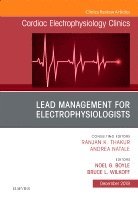
Lead Management for Electrophysiologists, An Issue of Cardiac Electrophysiology Clinics
Av Noel Boyle, Bruce L. Wilkoff
Inbunden, 2018
787 kr
Lägg i varukorg
This issue of Cardiac Electrophysiology Clinics, edited by Drs. Noel G. Boyle and Bruce Wilkoff, will focus on Lead Management for Electrophysiologists. Topics include, but are not limited to, Overview of Lead Management; Vein Management; Electrode Management; Infection Management; Definitions and …
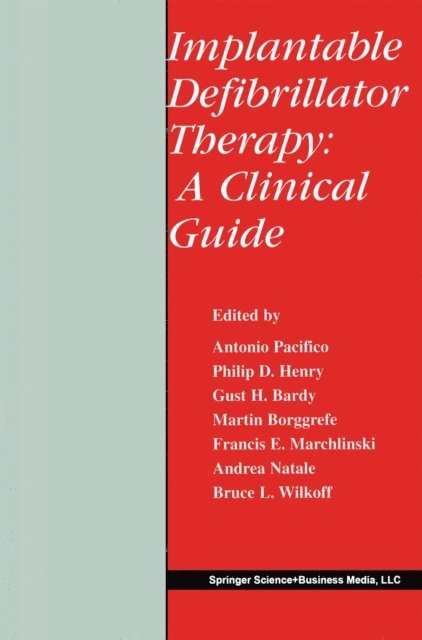
Implantable Defibrillator Therapy: A Clinical Guide
Av Antonio Pacifico, Philip D. Henry m. fl.
Inbunden, 2002
1688 kr
Lägg i varukorg
This textbook on implantable cardioverter defibrillators is organized in five sections: + Indication; + Instrumentation; + Implantation; + Follow-Up; + Complications. Implantable-Cardioverter Defibrillator Therapy: A Clinical Guide, written by leaders in the field, will be useful resource for …
Implantable Defibrillator Therapy: A Clinical Guide
Av Antonio Pacifico, Philip D. Henry m. fl.
Häftad, 2012
1688 kr
Lägg i varukorg
Implantable defibrillators as originally conceived by Michel Mirowski were limited to the detection and automatic termination of ventricular fibrillation. In the original "AID" device, the detection algoritlun sought to distinguish sinus rhytlun from ventricular fibrillation by identifying the …
Implantable Defibrillator Therapy: A Clinical Guide
Av Bruce L. Wilkoff, Andrea Natale m. fl.
E-bok, 2012
2110 kr
Lägg i varukorg
Implantable defibrillators as originally conceived by Michel Mirowski were limited to the detection and automatic termination of ventricular fibrillation. In the original "AID" device, the detection algoritlun sought to distinguish sinus rhytlun from ventricular fibrillation by identifying the …