Bruno Boulestin – författare
Visar alla böcker från författaren Bruno Boulestin. Handla med fri frakt och snabb leverans.
7 produkter
7 produkter
Del 776 - BAR International Series
Approche taphonomique des restes humains
Le cas des Mésolithiques de la grotte des Perrats et le problème du cannibalisme en préhistoire récente européenne
Häftad, Franska, 1999
1 514 kr
Skickas inom 5-8 vardagar
Del 2415 - BAR International Series
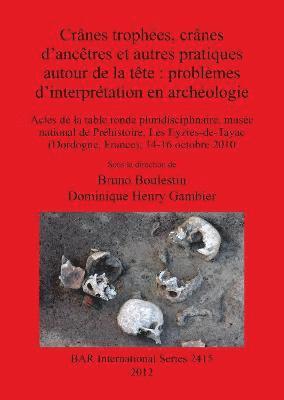
Crânes trophées crânes d'ancêtres et autres pratiques autour de la tête : problèmes d'interprétation en archéologie
Actes de la table ronde pluridisciplinaire, musée national de Préhistoire, Les Eyzies-de-Tayac (Dordogne, France), 14-16 octobre 2010
Häftad, Franska, 2012
391 kr
Skickas inom 3-6 vardagar
Häftad, Engelska, 2015
542 kr
Skickas
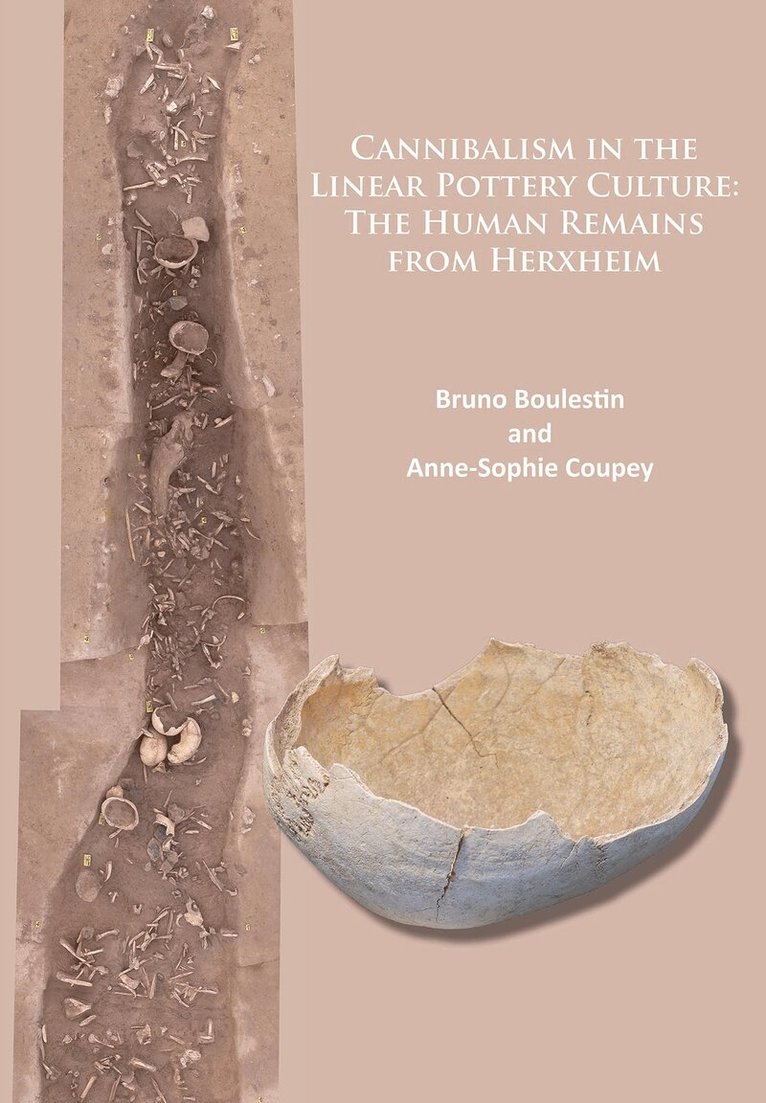
The Herxheim enclosure, located in the German region of Palatinate, is one of the major discoveries of the last two decades regarding the Linear Pottery Culture, and probably one of the most significant in advancing understanding of how this culture ended. The spectacular deposits, mostly composed of human remains, recovered on the occasion of the two excavation campaigns carried out on the site, grabbed people’s attention and at the same time raised several questions regarding their interpretation, which had so far mostly hesitated between peculiar funerary practices, war and cannibalism. The authors provide here the first extensive study of the human remains found at Herxheim, focusing mainly on those recovered during the 2005–2010 excavation campaign. They first examine the field data in order to reconstruct at best the modalities of deposition of these remains. Next, from the quantitative analyses and those of the bone modifications, they describe the treatments of the dead, showing that they actually were the victims of cannibalistic practices. The nature of this cannibalism is then discussed on the basis of biological, palaeodemographic and isotopic studies, and concludes that an exocannibalism existed linked to armed violence. Finally, the human remains are placed in both their local and chronocultural contexts, and a general interpretation is proposed of the events that unfolded in Herxheim and of the reasons for the social crisis at the end of the Linear Pottery culture in which they took place.
E-bok
PDF, Engelska, 2015326 kr
Läs direkt efter köp
The Herxheim enclosure, located in the German region of Palatinate, is one of the major discoveries of the last two decades regarding the Linear Pottery Culture, and probably one of the most significant in advancing understanding of how this culture ended. The spectacular deposits, mostly composed of human remains, recovered on the occasion of the two excavation campaigns carried out on the site, grabbed people’s attention and at the same time raised several questions regarding their interpretation, which had so far mostly hesitated between peculiar funerary practices, war and cannibalism. The authors provide here the first extensive study of the human remains found at Herxheim, focusing mainly on those recovered during the 2005–2010 excavation campaign. They first examine the field data in order to reconstruct at best the modalities of deposition of these remains. Next, from the quantitative analyses and those of the bone modifications, they describe the treatments of the dead, showing that they actually were the victims of cannibalistic practices. The nature of this cannibalism is then discussed on the basis of biological, palaeodemographic and isotopic studies, and concludes that an exocannibalism existed linked to armed violence. Finally, the human remains are placed in both their local and chronocultural contexts, and a general interpretation is proposed of the events that unfolded in Herxheim and of the reasons for the social crisis at the end of the Linear Pottery culture in which they took place.
Häftad, Franska, 2016
771 kr
Skickas
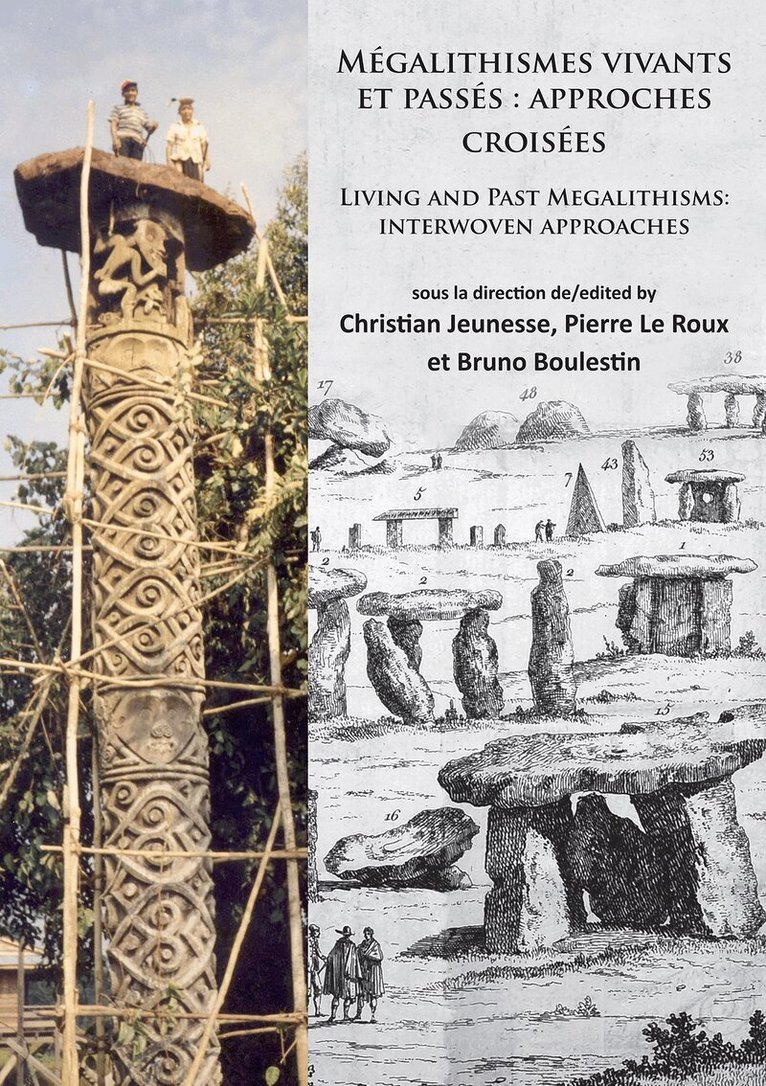
Megalithic monuments from Neolithic Europe have long been considered as rough copies of the monumental architectures built by the first civilizations of the Near East and Eastern Mediterranean. When radiocarbon dating jeopardized this diffusionist pattern, though, specialists could not but wonder why and how these Neolithic societies, usually considered as small ‘village communities’, had erected such monuments. In order to answer these questions and seek explanations in the social, political or religious contexts of recent or present megalith-building societies, the ethnological frame of references has been referred to on a regular basis. This volume comprises the papers presented by prehistorians and ethnologists at the two multi-disciplinary round tables held in Strasburg in May 2014 and May 2015. Their purpose was, with the help of both case studies and more synthetic works, to discuss how the patterns drawn from the observation of ‘living’ megalithic societies have been used to try and shed light on the functioning of European Neolithic societies, the epistemological problems raised by this transposition and the relevance of ethnology-based archeological explanations. The book is composed of three sections: the first one deals with some methodological reflections, the second and third ones with the ‘living’ or recent megalithisms of respectively the Indonesian Archipelago and Ethiopia.
Häftad, Franska, 2016
771 kr
Skickas
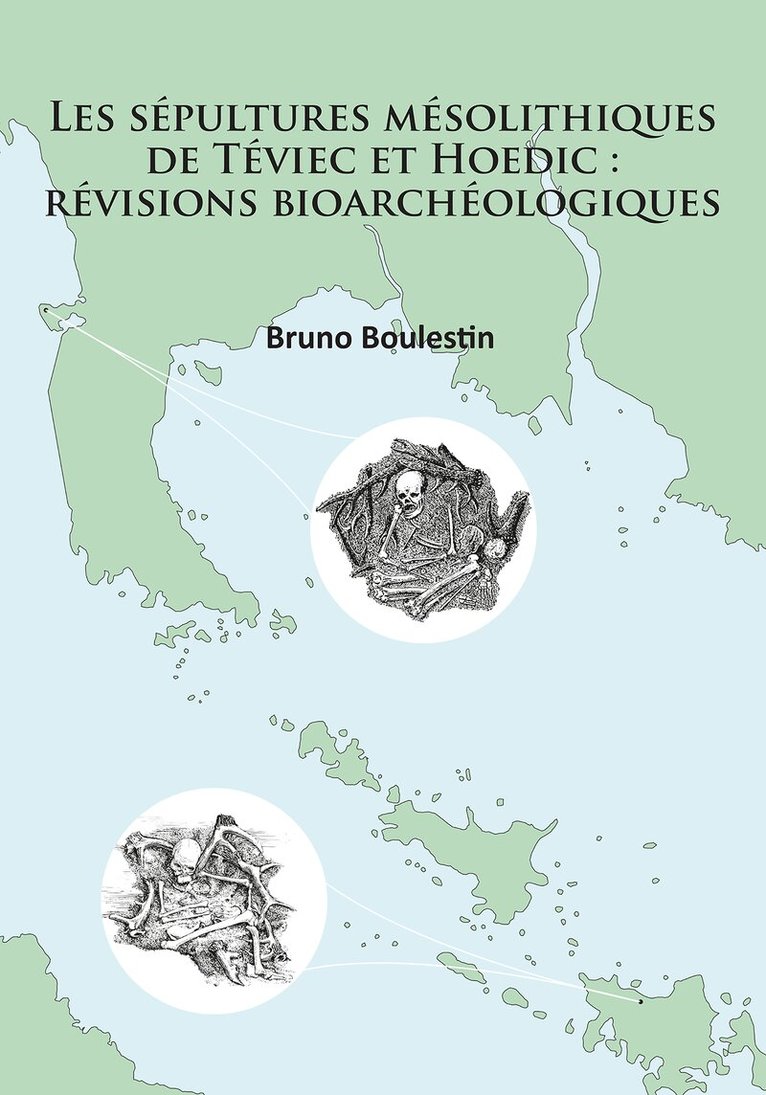
The sites of Teviec and Hoedic, located in Brittany and excavated from 1928 to 1934 by Marthe and Saint-Just Péquart, have yielded twenty-odd graves dating to the end of the Mesolithic and containing almost forty individuals. Nearly a century later, they remain the most important funerary groups ever discovered in France for this period, and two major French Mesolithic sites. Until these days though, despite previous re-examinations of part of the unearthed material, no general review of the field data or of the human remains had ever been carried out, and all the debates concerning the functioning of both cemeteries relied on the interpretations once made by the Péquart and on the anthropological studies by Marcellin Boule and Henri Victor Vallois. This book presents the long lacking bioarchaeological review study of the Teviec and Hoedic graves: the field data have been reconsidered, relying in particular on a large series of pictures taken by the excavators, and the number of dead individuals, their age and sex have been reevaluated using anthropological techniques in accordance with our current knowledge. This review also gives us the occasion to carry out a global reflection on the circumstances under which the dead were grouped during the Mesolithic period and on the society of Atlantic Europe’s last hunters-gatherers as perceived through the filter of their funerary practices.
Häftad, Franska, 2019
542 kr
Skickas
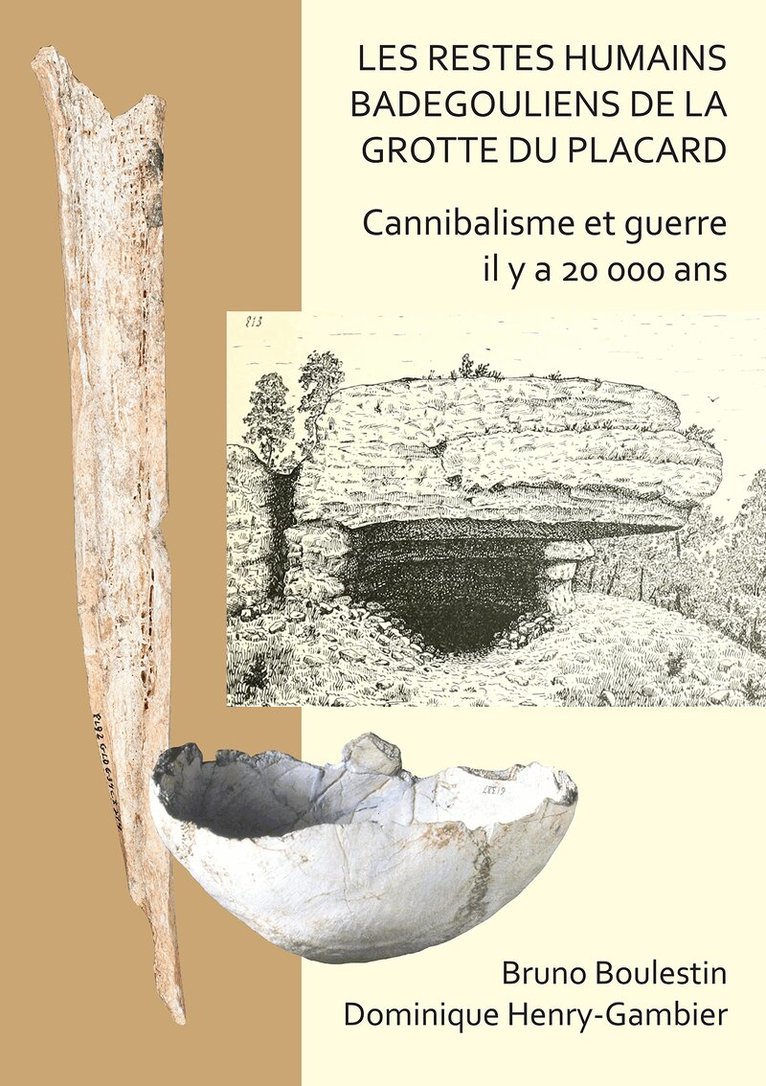
This book presents a detailed study of the Badegoulian human remains from Placard, a major Upper Palaeolithic site in France. Despite the antiquity of the discovery, the remains still constitute a unique assemblage that contributes greatly to our knowledge of the behaviours of hunter-gatherer populations in European prehistory.