C. Dejoux - Böcker
Visar alla böcker från författaren C. Dejoux. Handla med fri frakt och snabb leverans.
2 produkter
2 produkter
3 168 kr
Skickas inom 10-15 vardagar
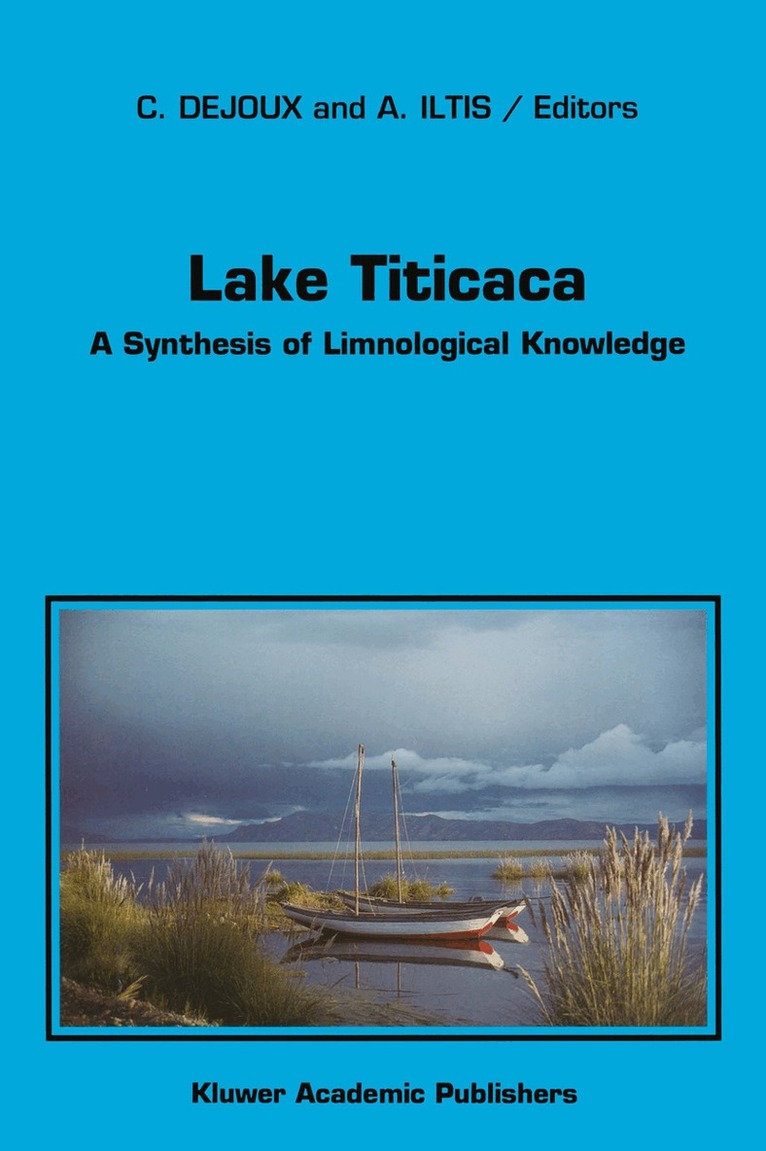
For a long time scientists, and in particular limnologists, have been interested in Lake Titicaca, a huge mass of tropical, though cold water, described as the largest navigable high-altitude lake in the world. This work assesses and summarizes the existing knowledge related to the main features of the lake: its geological origin, its slow evolution, the physical and chemical characteristics of its waters, its climate, hydrology, flora and fauna. And since it is difficult to dissociate this original biotope from the human component, which takes advantage of its resources, part of the book is dedicated to the socio-economic potential of Lake Titicaca and its littoral agriculture, as well as the human groups which in the past lived along the shoreline and on its islands. In spite of its extension and considerable water mass, Lake Titicaca constitutes a delicate ecosystem, less stable than it appears at first glance. The alteration of this aquatic environment by human actions is still low, with the exception of some shallow bays, poorly connected with the rest of the lake. Nevertheless, it is very important not to surpass the current state of pollution, and even to reduce it.It is also necessary to use carefully the natural biological and hydrological resources of this lake. The collection in this work of a large amount of limnological data should be usefull when planning further complementary studies on specific aspects which have not yet been sufficiently explored. It should also be useful for all organizations dealing with the gestion of the natural resources of the Bolivian-Peruvian Altiplano, providing them with the elements necessary for political decisions in that field.
3 168 kr
Skickas inom 10-15 vardagar
Lake Titicaca, because of its area and volume and its situation at high attitude within the tropics, is a unique hydrological site in the world. It should be noted that it stands at the transition point between two very distinct geographical regions: the desert fringe of the Pacific coast to the west and the great Amazonian forest extending to the Atlantic coast to the east. Many scientists have been attracted to the lake in the past because of its unusual limnological features. In this book the editors have compiled an exhaustive review of current knowledge from the existing literature and from the results of more recent observations. It is certain that this book will become the essential reference work for scientists wanting to make progress in revealing the lake's secrets. It can be stated unequivocally that this work constitutes a complete review of the present state of knowledge on Lake Titicaca and that it provides the latest results of research on this habitat.