C. W. Anderson – författare
Visar alla böcker från författaren C. W. Anderson. Handla med fri frakt och snabb leverans.
11 produkter
Remaking the News
Av C. W. Anderson, Pablo J. Boczkowski
E-bok, 2017
492 kr
Lägg i varukorg
Leading scholars chart the future of studies on technology and journalism in the digital age. The use of digital technology has transformed the way news is produced, distributed, and received. Just as media organizations and journalists have realized that technology is a central and indispensable …
Remaking the News
Essays on the Future of Journalism Scholarship in the Digital Age
Av Pablo J. Boczkowski, C. W. Anderson
Häftad, 2024
596 kr
Lägg i varukorg
Billy and Blaze: A Boy and His Pony
Häftad, 1992
162 kr
Lägg i varukorg
The first book in the classic, beloved Billy and Blaze series, from renowned author C.W. Anderson. Billy was a little boy who “loved horses more than anything else in the world.” Imagine how happy he was when he got his very own pony for his birthday! From that day on, Billy was seldom seen without …
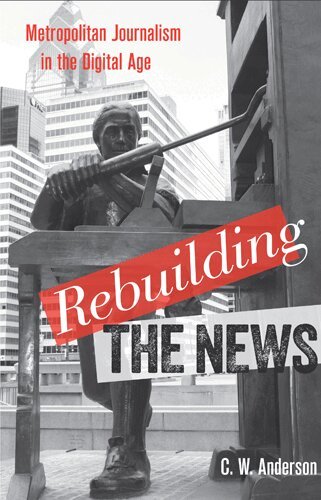
Rebuilding the News
Metropolitan Journalism in the Digital Age
Inbunden, 2013
1004 kr
Lägg i varukorg
Puts recent dramatic changes in American journalism in sociological perspective
Rebuilding the News
Metropolitan Journalism in the Digital Age
Häftad, 2013
340 kr
Lägg i varukorg
Puts recent dramatic changes in American journalism in sociological perspective
SAGE Handbook of Digital Journalism
Av Alfred Hermida, David Domingo m. fl.
E-bok, 2016
1467 kr
Lägg i varukorg
The production and consumption of news in the digital era is blurring the boundaries between professionals, citizens and activists. Actors producing information are multiplying, but still media companies hold central position. Journalism research faces important challenges to capture, examine, and …
Journalism Manifesto
Av Barbie Zelizer, Pablo J. Boczkowski m. fl.
Inbunden, 2021
560 kr
Lägg i varukorg
Drawing on the collaborative expertise of three senior scholars, The Journalism Manifesto makes a powerful case for why journalism has become outdated and why it is in need of a long-overdue transformation.Focusing on the relevance of elites, norms and audiences, Zelizer, Boczkowski and Anderson …
Journalism Manifesto
Av Barbie Zelizer, Pablo J. Boczkowski m. fl.
Häftad, 2021
145 kr
Lägg i varukorg
Drawing on the collaborative expertise of three senior scholars, The Journalism Manifesto makes a powerful case for why journalism has become outdated and why it is in need of a long-overdue transformation.Focusing on the relevance of elites, norms and audiences, Zelizer, Boczkowski and Anderson …
Journalism Manifesto
Av C. W. Anderson, Pablo J. Boczkowski m. fl.
E-bok, 2021
163 kr
Lägg i varukorg
Drawing on the collaborative expertise of three senior scholars, The Journalism Manifesto makes a powerful case for why journalism has become outdated and why it is in need of a long-overdue transformation. Focusing on the relevance of elites, norms and audiences, Zelizer, Boczkowski and Anderson …
Remaking the News
Essays on the Future of Journalism Scholarship in the Digital Age
Av Pablo J. Boczkowski, C. W. Anderson
Inbunden, 2017
368 kr
Tillfälligt slut