
CA(c)sar Ducruet – författare

858 kr
Läs direkt efter köp

858 kr
Läs direkt efter köp
824 kr
Läs direkt efter köp
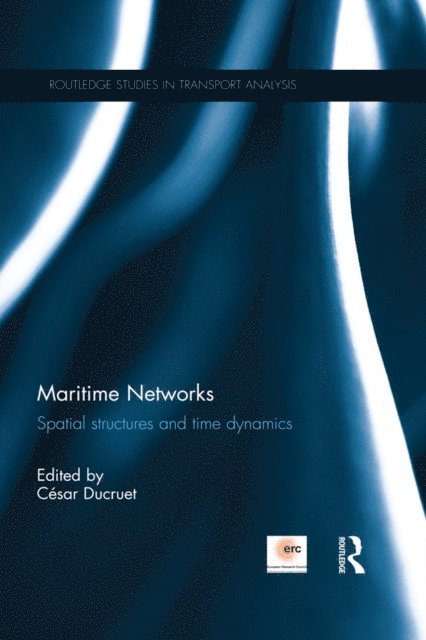
Maritime transport is one of the most ancient supports to human interactions across history and it still supports more than 90% of world trade volumes today. The changing connectivity of maritime networks is of crucial importance to port, transport, and economic development and planning. The way ports, terminals, but also cities, regions and countries, are connected with each other through maritime flows is not well-known and difficult to represent and measure, even for the transport actors themselves. There is a strong, urgent need for reviewing the relevant theories, concepts, methods, and sources that can be mobilized for the analysis of maritime networks.
With contributions from reputable scholars from all over the world, this book investigates the analysis of maritime flows and networks from diverse disciplinary angles going across archaeology, history, geography, regional science, economics, mathematics, physics, and computer sciences. Based on a vast array of methods, such as Geographical Information Systems (GIS), spatial analysis, complex networks, modelling, and simulation, it addresses several crucial issues related with port hierarchy; route density; modal interdependency; network robustness and vulnerability; traffic concentration and seasonality; technological change and urban/regional economic development. This book examines new evidence about how socio-economic trends are reflected (but also influenced) by maritime flows and networks, and about the way this knowledge can support and enhance decision-making in relation to the development of ports, supply chains, and transport networks in general.
This book is an ideal companion to anyone interested in the network analysis of transport systems and economic systems in general, as well as the effective ways to analyse large datasets to answer complex issues in transportation and socio-economic development.
824 kr
Läs direkt efter köp
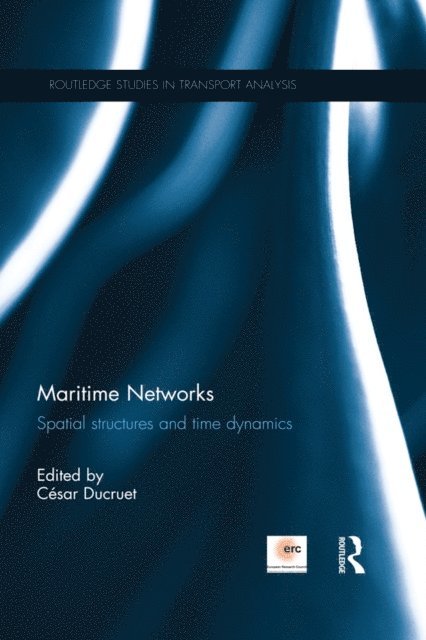
Maritime transport is one of the most ancient supports to human interactions across history and it still supports more than 90% of world trade volumes today. The changing connectivity of maritime networks is of crucial importance to port, transport, and economic development and planning. The way ports, terminals, but also cities, regions and countries, are connected with each other through maritime flows is not well-known and difficult to represent and measure, even for the transport actors themselves. There is a strong, urgent need for reviewing the relevant theories, concepts, methods, and sources that can be mobilized for the analysis of maritime networks.
With contributions from reputable scholars from all over the world, this book investigates the analysis of maritime flows and networks from diverse disciplinary angles going across archaeology, history, geography, regional science, economics, mathematics, physics, and computer sciences. Based on a vast array of methods, such as Geographical Information Systems (GIS), spatial analysis, complex networks, modelling, and simulation, it addresses several crucial issues related with port hierarchy; route density; modal interdependency; network robustness and vulnerability; traffic concentration and seasonality; technological change and urban/regional economic development. This book examines new evidence about how socio-economic trends are reflected (but also influenced) by maritime flows and networks, and about the way this knowledge can support and enhance decision-making in relation to the development of ports, supply chains, and transport networks in general.
This book is an ideal companion to anyone interested in the network analysis of transport systems and economic systems in general, as well as the effective ways to analyse large datasets to answer complex issues in transportation and socio-economic development.
763 kr
Läs direkt efter köp
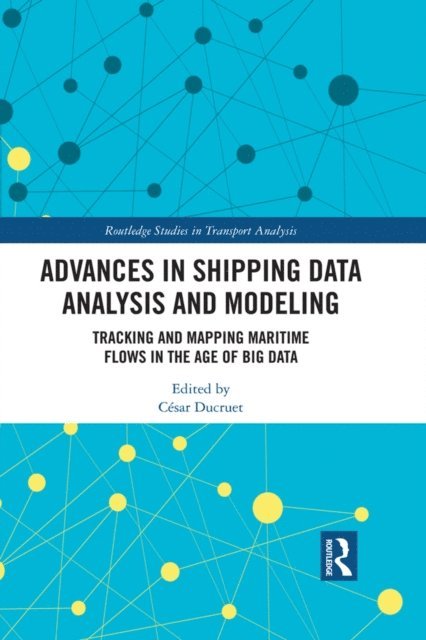
Shipping flows – maritime ‘footprints’ – remain underexplored in the existing literature despite the crucial importance of freight transport for global trade and economic development. Additionally, decision-makers lack a comprehensive view on how shipping flows can be measured, analyzed, and mapped in order to support their policies and strategies. This interdisciplinary volume, drawing on an international cast-list of experts, explores a number of crucial issues in shipping data estimation, construction, collection, mining, analysis, visualization, and mapping.
Advances in Shipping Data Analysis and Modeling delivers several key messages. First, that in a world of just-in-time delivery and rapid freight transit, it is important to bear in mind the long-term roots of current trends as well as foreseeable future developments because shipping patterns exhibit recurrent, if not cyclical and path-dependent, dynamics. Second, shipping flows are currently often understood at the micro-level of intra-urban logistics delivery and at the national level using commodity flow analyses, but this volume emphasizes the need to expand the scale of analysis by offering new evidence on the changing distribution of global and international shipping flows, based on actual data. Third, that this multidisciplinary approach to shipping flows can shed important light on crucial issues that go beyond shipping itself including climate change, urban development, technological change, commodity specialization, digital humanities, navigation patterns, international trade, and regional growth.
Edited by experts in their field, this volume is of upmost importance to those who study industrial economics, shipping industries and economic and transport geography.
790 kr
Läs direkt efter köp
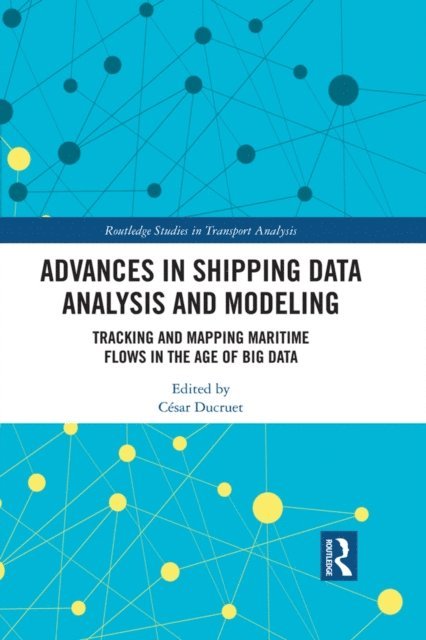
Shipping flows – maritime ‘footprints’ – remain underexplored in the existing literature despite the crucial importance of freight transport for global trade and economic development. Additionally, decision-makers lack a comprehensive view on how shipping flows can be measured, analyzed, and mapped in order to support their policies and strategies. This interdisciplinary volume, drawing on an international cast-list of experts, explores a number of crucial issues in shipping data estimation, construction, collection, mining, analysis, visualization, and mapping.
Advances in Shipping Data Analysis and Modeling delivers several key messages. First, that in a world of just-in-time delivery and rapid freight transit, it is important to bear in mind the long-term roots of current trends as well as foreseeable future developments because shipping patterns exhibit recurrent, if not cyclical and path-dependent, dynamics. Second, shipping flows are currently often understood at the micro-level of intra-urban logistics delivery and at the national level using commodity flow analyses, but this volume emphasizes the need to expand the scale of analysis by offering new evidence on the changing distribution of global and international shipping flows, based on actual data. Third, that this multidisciplinary approach to shipping flows can shed important light on crucial issues that go beyond shipping itself including climate change, urban development, technological change, commodity specialization, digital humanities, navigation patterns, international trade, and regional growth.
Edited by experts in their field, this volume is of upmost importance to those who study industrial economics, shipping industries and economic and transport geography.