Carl Freedman – Författare
Visar alla böcker från författaren Carl Freedman. Handla med fri frakt och snabb leverans.
8 produkter
8 produkter
246 kr
Skickas inom 5-8 vardagar
394 kr
Skickas inom 5-8 vardagar
334 kr
Skickas inom 10-15 vardagar
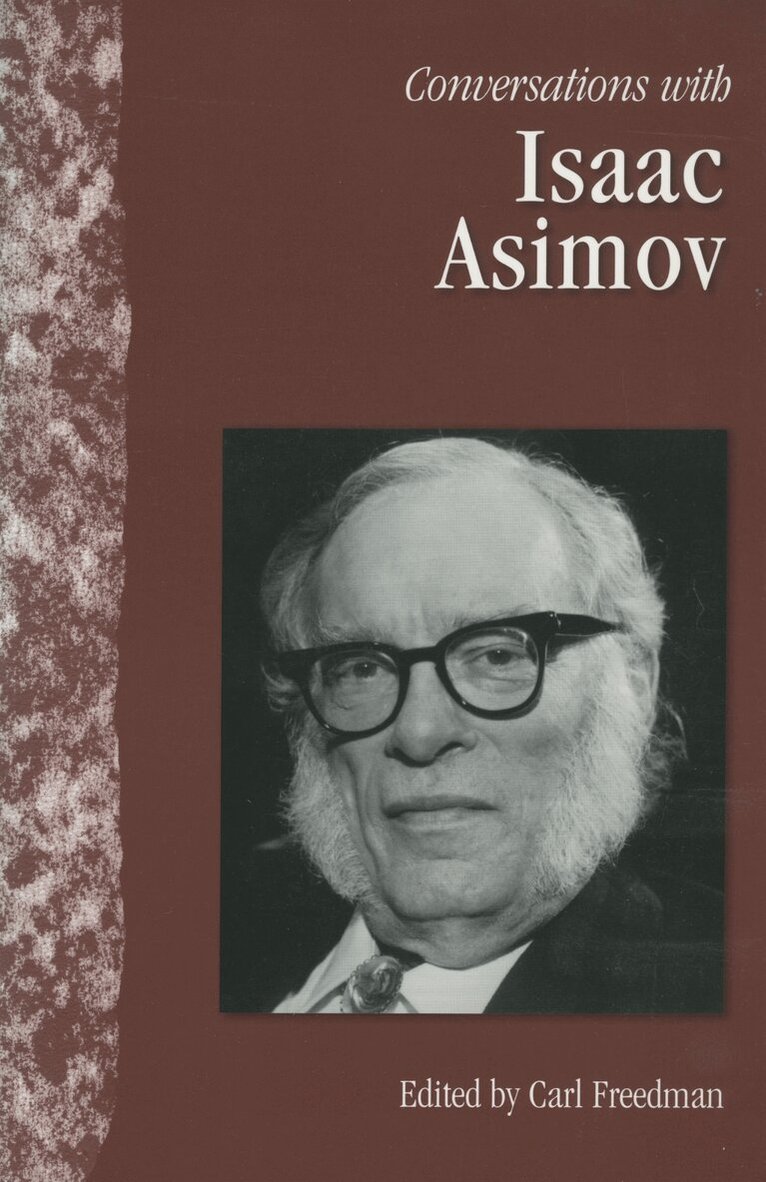
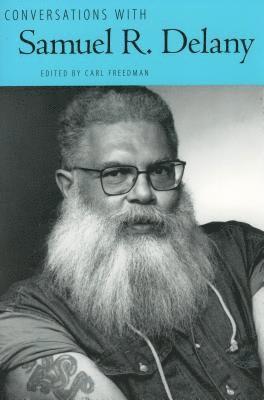
Isaac Asimov (1920-1992), one of the most popular and influential American authors of the twentieth century, sparked the imagination of generations of writers. His Foundation trilogy paved the way for science fiction that was more speculative and philosophical than had been previously seen in the genre, and his book I, Robot and his story ""The Bicentennial Man"" have been made into popular movies. First published as a teenager in John W. Campbell's groundbreaking science-fiction magazine Astounding, Asimov published over two hundred books during his lifetime. While most prolific writers tend to concentrate almost exclusively on a single genre, Asimov was a polymath who wrote widely on a variety of subjects. He authored mysteries, autobiographies, histories, satires, companions to Shakespeare, children's books on science, and collections of bawdy limericks. A lifelong atheist, he nevertheless wrote more than a half dozen books on the Bible. Asimov's varied interests establish him as a premier public intellectual, one who was frequently called upon to clarify debates in science, in history, and on the effects of technology on the modern age. Conversations with Isaac Asimov collects interviews with a man considered to be-along with Robert Heinlein, A. E. van Vogt, and Arthur C. Clarke-a founder of modern science fiction. Despite this, Asimov is perhaps best known for his many books of popular science writing. Carl Sagan once described Asimov as the greatest explainer of his age, and this talent made Asimov a natural for the interview form. His manner is always crisp and lucid, his tone always engaging, and his comments always enlightening. Carl Freedman, Baton Rouge, Louisiana, is professor of English at Louisiana State University. He is the author of Critical Theory and Science Fiction, The Incomplete Projects: Marxism, Modernity, and the Politics of Culture, and George Orwell: A Study in Ideology and Literary Form.
357 kr
Skickas inom 7-10 vardagar
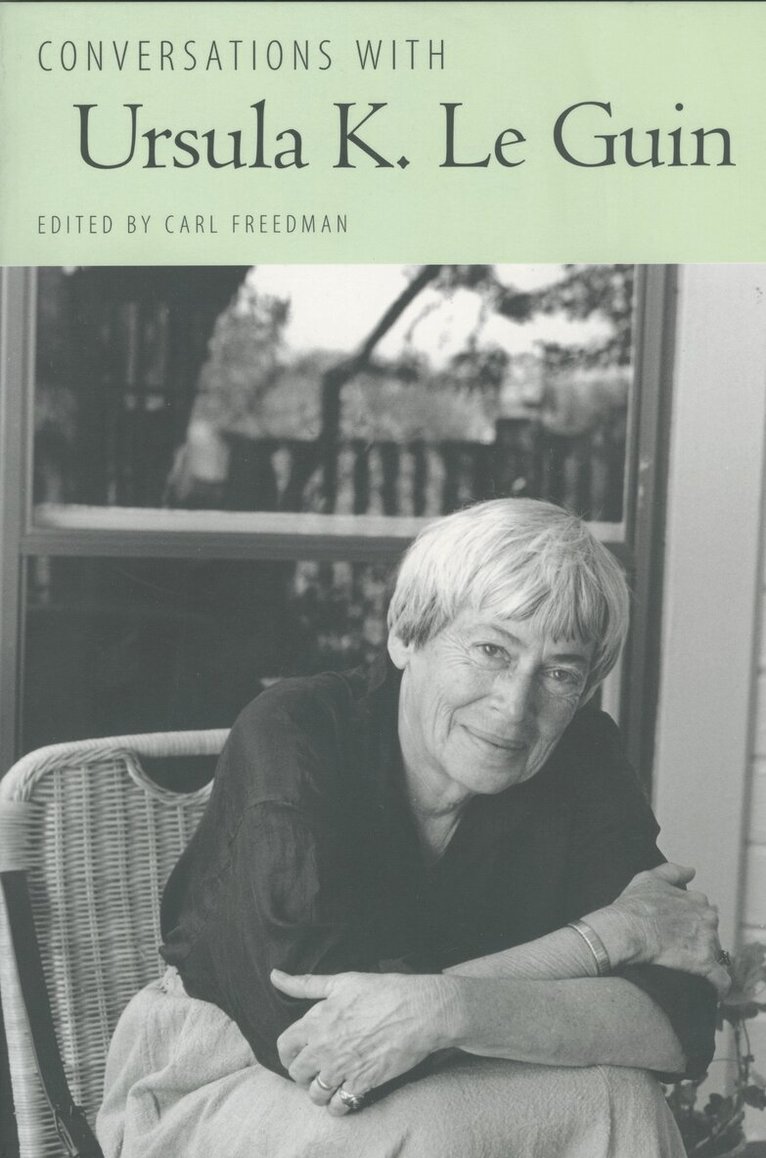
Conversations with Ursula K. Le Guin assembles interviews with the renowned science-fiction and fantasy author of The Left Hand of Darkness, The Dispossessed, The Lathe of Heaven, and the Earthsea sequence of novels and stories. For nearly five decades, Le Guin (b. 1929) has enjoyed immense success--both critical and popular--in science fiction and fantasy. But she has also published well-received works in such genres as realistic fiction, poetry, children's literature, criticism, and translation. In the pieces collected here, Le Guin takes every interview not as an opportunity to recapitulate long-held views but as an occasion for in-depth intellectual discourse. In interviews spanning over twenty-five years of her literary career, including a previously unpublished piece conducted by the volume's editor, Le Guin talks about such diverse subjects as U.S. foreign policy, the history of architecture, the place of women and feminist consciousness in American literature, and the differences between science fiction and fantasy. Carl Freedman is professor of English at Louisiana State University and is the author of Critical Theory and Science Fiction; The Incomplete Projects: Marxism, Modernity, and the Politics of Culture; and George Orwell: A Study in Ideology and Literary Form.
Del 3 - SF Storyworlds: Critical Studies in Science Fiction
Art and Idea in the Novels of China Miéville
Häftad, Engelska, 2022
531 kr
Skickas inom 5-8 vardagar
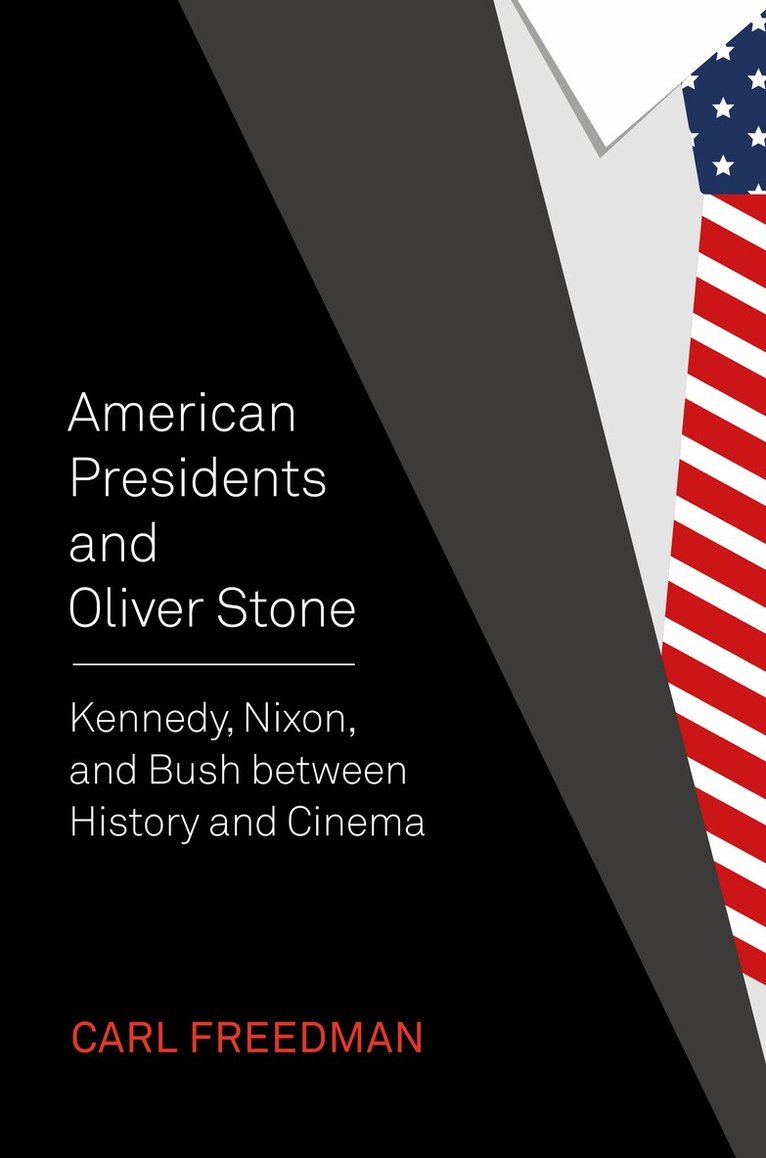
American Presidents and Oliver Stone
Kennedy, Nixon, and Bush between History and Cinema
Häftad, Engelska, 2020
327 kr
Skickas inom 5-8 vardagar
Perhaps no current filmmaker has made more provocative films about American history than Oliver Stone. In this book, Carl Freedman gives a detailed and nuanced account of the presidencies of John F. Kennedy, Richard Nixon and George W. Bush as fictionalized in Stone’s biographical films JFK, Nixon and W.Offering detailed historical perspectives alongside careful aesthetic criticism, Freedman explores how Stone uses melodrama, tragedy and farce to transform politics into national mythology. Synthesizing film criticism with political and historical analysis, the book transcends the limitations of formalism and empiricism, reflecting on both Stone’s achievements as a filmmaker and American politics of the past sixty years. Oliver Stone’s importance among filmmakers as the major chronicler of recent US history is the starting point for the analysis of his three ‘presidential’ films: JFK, Nixon and W. While not claiming equal artistic merit for Stone’s films, Freedman makes some comparison with Shakespeare’s history plays and draws on T.S. Eliot’s notion of ‘essential history’ to transcend the barren dichotomy of formalism versus empiricism – that is treating historical fiction as either only pure fiction, with nothing to say about real history, or judging it as non-fiction by the extent to which it adheres to superficial historical detail. Instead the focus is on the capacity of Stone’s films to illuminate the structural workings of history, contemporary and general.Freedman is thoroughly familiar with his subject, and his meticulous attention to historical accuracy and critical attention to the films is impeccable. This book has a powerfully original focus and makes a significant contribution to the field through offering these detailed historical perspectives alongside much more careful aesthetic criticism of the films. It has the potential to become not only a great source on its subject, but a model of how to approach historical fiction in general.This is an academic study but is written in such an accessible style that it will have genuine appeal to the general reader – to anyone with an interest in cinema, politics and recent history. Wide-ranging, accessible and highly original, American Presidents combines erudition and complex analysis with jargon-free writing and is sure to engage anyone interested in the intersection of American politics and cinema.The academic readership will be among humanities scholars and students of film, popular culture, media, politics, political history and modern history. It will be highly relevant to undergraduate and postgraduate students studying film or modern American history and culture.
Versions of Hollywood Crime Cinema
Studies in Ford, Wilder, Coppola, Scorsese, and Others
Häftad, Engelska, 2013
508 kr
Skickas inom 5-8 vardagar
No society is without crime, prompting Nathaniel Hawthorne’s narrator to make his famous statement in The Scarlet Letter that, however high its hopes are, no civilization can fail to allot a portion of its soil as the site of a prison. By establishing the category of crime – by drawing a line between the lawful and criminal, however thin, blurry or even effectively meaningless the line may in practice become – society offers its own perhaps most consequential self-definition. Film, argues Carl Freedman, is an especially fruitful medium for considering questions like these. With Versions of Hollywood Crime Cinema, he offers a series of critical readings spanning several genres, by directors Coppola, Scorsese, Ford and Wilder. From among the mob movies, Freedman focuses on Francis Ford Coppola’s Godfather trilogy – arguably the foremost work of crime cinema – using it to reflect on the Marxist notion of primitive accumulation and relationship between 'gangsterism and capitalism'. The volume also includes in-depth critique of classics of film noir (including Double Indemnity and Body Heat) and, surprisingly, Western, which is not often thought of as a kind of crime film even though its setting is an entire society in which crime flourishes yet is fought against, bringing into focus films of John Wayne. For crime fans and scholars alike, the radical readings of known classics in Versions of Hollywood Crime Cinema provide an insightful critique of modern culture and high capitalism that produced, and that are reflected in, the range of films discussed.
153 kr
Skickas inom 7-10 vardagar
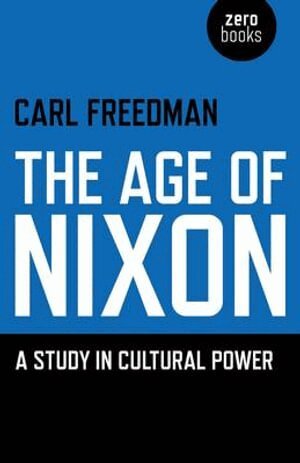
The fundamental argument of this book is, first, that Richard Nixon, though not generally regarded as a charismatic or emotionally outgoing politician like Franklin Roosevelt or Ronald Reagan, did establish profound psychic connections with the American people, connections that can be detected both in the brilliant electoral success that he enjoyed for most of his career and in his ultimate defeat during the Watergate scandal; and, second and even more important, that these connections are symptomatic of many of the most important currents in American life. The book is not just a work of political history or political biography but a study of cultural power: that is, a study in the ways that culture shapes our politics and frames our sense of possibilities and values. In its application of Marxist, psychoanalytic, and other theoretical tools to the study of American electoral politics, and in a way designed for the general as well as for the academic reader, it is a new kind of book.