
Carl Friedrich – författare
Visar alla böcker från författaren Carl Friedrich. Handla med fri frakt och snabb leverans.
19 produkter
19 produkter
Häftad, Engelska, 2007
743 kr
Skickas inom 10-15 vardagar
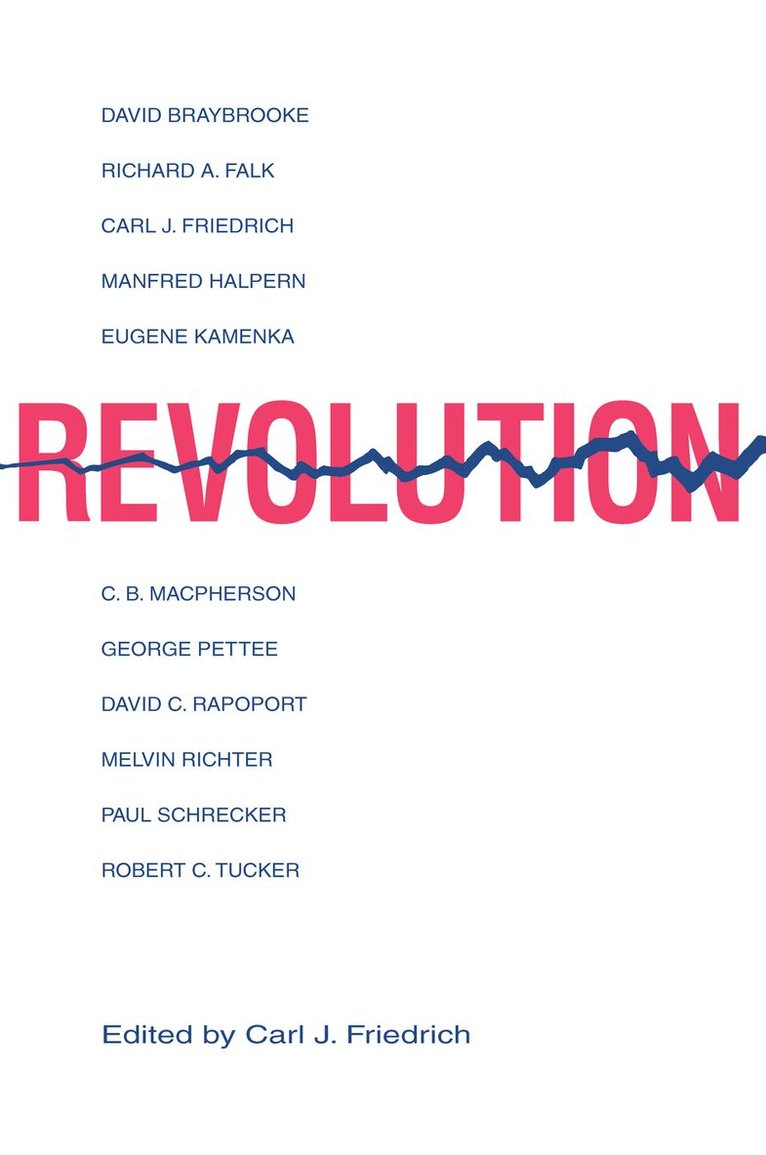
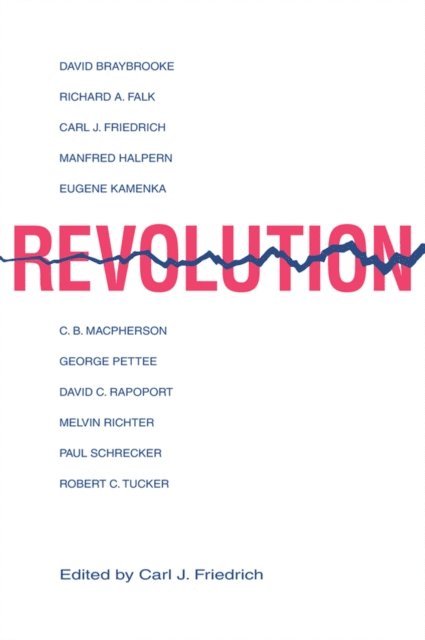
Professor C.E. Black of Princeton University called this "a valuable contribution to our understanding of the revolutionary movements that are now a worldwide phenomenon. It includes thoughtful essays on many varieties of revolution, considered in the light both of past developments and future prospects. The twentieth century was an age of revolution. Over many areas of the world the two great ideologies of nationalism and communism spawned violent upheavals, often differing in form but aiming at the transformation of the existing order by means of coups d'etat, revolutions, and "wars of national liberation." Eleven distinguished political scientists and policy theorists offer a penetrating analysis of the theoretical and substantive aspects of revolution. Their scholarly, lucid, and well-balanced essays explore the revolutionary theories and experience of several centuries and apply them to the most crucial problem of this century. Carl J. Friedrich argues that it is the failure of government, which is at the core of the political revolution, and shows that constitutional regimes that have allowed "little revolutions" promoting gradual political and social change have been singularly free of revolutionary upheaval. Presenting the thinking of some of the best minds of the 20th century, this volume offers important guideposts for the future study of the etiology of revolutions. Here are not mere speculative and historical distillations, but new insights and conclusions regarding the origin, purpose, and impact of revolution on the world of today and tomorrow. An indispensable work for every student and scholar of comparative politics, international relations, and the history and theory of Communism, it will also be welcomed by the statesman and the educated layman who want to probe the causes of the historical upheavals of our time.
Häftad, Engelska, 2007
693 kr
Skickas inom 10-15 vardagar
To a historian the most interesting thing about decisions is the fact that everyone talks about them. No one interested in social ideas can fail to notice how large a part the word "decision" has come to play in the vocabulary of moral and political discourse. It meets one on every page. Inevitably one asks, "Why?" Why is there so much talk of decisions and of those who are said to make them? Are there any ideological reasons for it?In asking such questions, and in offering "ideology" as an explanation, nothing complex or pejorative is implied by Friedrich. He uses "ideology" to refer to personal responses to what is regarded as a prevalent social situation and to the efforts to critically explain and evaluate that situation, whether the latter be real, imagined, or a bit of both. An investigation of the ideological aspects of political concepts is, clearly, not the only way to explain them, but this and similar genetic explorations can show us how and why large numbers of people come to concentrate on specific issues.If such explorations can tell us little about the validity of political ideas, they can still provide a degree of self-understanding without which political thought is apt to become complacent, irrelevant, and excessively abstract. There is nothing denigrating in recognizing the ideological perimeter within which political ideas move. It will seem so to only those of us who identify the worth and rationality of our thinking with its remoteness from our own experiences, and especially from those that we share with our less reflective neighbors.The topic of rational decision-making presents the student of philosophical politics with the vast and inexhaustible problem of rationality in its relation to decision-making. The present interest in decision-making among social scientists has tended to apply inadequate attention to the application of rationality to the process.
Häftad, Engelska, 2007
707 kr
Skickas inom 10-15 vardagar
Recent writing on the nature of freedom has served to underline a crucial gap in the academic experience. First--and most obviously--the concept of freedom has been modernized by its application to contemporary institutions. Second, a new approach to the concept of liberty has been pioneered in the construction of new typologies of freedom. Finally, awareness of variety in concepts of freedom has been paralleled in variations in the practice of freedom. The tumultuous history of Western man may be conceptualized as the story of how freedom has become embodied. What is missing from the story is the relationship of concepts to actions.This relationship has been established for some specific notions of freedom. Many of the philosophical analyses--especially recent ones like pragmatism and existentialism--have been predicated on actual human behavior. On the other hand, many classic histories of freedom--those of Georg Wilhelm Friedrich Hegel, John Bagnell Bury, Guido de Ruggiero, and Harold Laski--have traced the actual development of a definite kind of freedom.This volume contains essays prepared to celebrate the anniversary of the publication of John Stuart Mill's On Liberty, revised in the light of discussions by Henry D. Aiken, William Ebenstein, Mark DeWolfe Howe, and David Spitz, as well as other articles, many of them growing out of the discussion either in the form of commentary or independent contributions. There are also two papers written independently (Andrew Hacker and Leonard Krieger).
Inbunden, Engelska, 2017
2 179 kr
Skickas inom 10-15 vardagar
Recent writing on the nature of freedom has served to underline a crucial gap in the academic experience. First--and most obviously--the concept of freedom has been modernized by its application to contemporary institutions. Second, a new approach to the concept of liberty has been pioneered in the construction of new typologies of freedom. Finally, awareness of variety in concepts of freedom has been paralleled in variations in the practice of freedom. The tumultuous history of Western man may be conceptualized as the story of how freedom has become embodied. What is missing from the story is the relationship of concepts to actions.This relationship has been established for some specific notions of freedom. Many of the philosophical analyses--especially recent ones like pragmatism and existentialism--have been predicated on actual human behavior. On the other hand, many classic histories of freedom--those of Georg Wilhelm Friedrich Hegel, John Bagnell Bury, Guido de Ruggiero, and Harold Laski--have traced the actual development of a definite kind of freedom.This volume contains essays prepared to celebrate the anniversary of the publication of John Stuart Mill's On Liberty, revised in the light of discussions by Henry D. Aiken, William Ebenstein, Mark DeWolfe Howe, and David Spitz, as well as other articles, many of them growing out of the discussion either in the form of commentary or independent contributions. There are also two papers written independently (Andrew Hacker and Leonard Krieger).
Inbunden, Engelska, 2017
2 179 kr
Skickas inom 10-15 vardagar
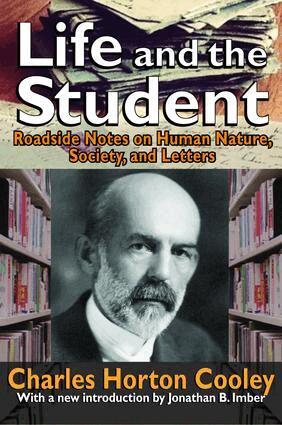
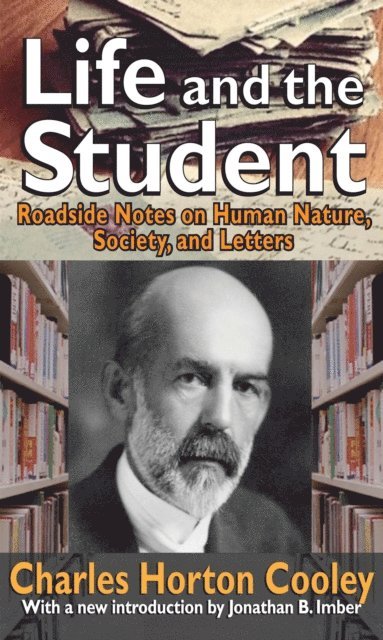
Life and the Student (1927), with a new introduction by Jonathan B. Imber, is a compilation of reflections, commentaries, and letters from other scholars that Charles Horton Cooley, accumulated throughout his life. The book includes personal passages on various topics within the realms of reading and writing, thinking, art, science, sociology, academia, religion, and human nature.There is no formal structure to the book, except the literary sense that organizes these thoughts and observations about life. It is impossible to categorize these widely ranging commentaries. They include discussions of the automobile, the impressionable nature of young people, the claim that the question of racial superiority is still unresolved, his belief that eugenists are inconsistent in their views, and more.Cooley's work sought to emphasize the connection between society and the individual. He believed that the two could only be understood in relationship to each other. While researching the effects of social responses and social participation, he created the concept of the "looking-glass self," which is the theory that a person's sense of self grows out of interpersonal interactions and the perceptions of others. Cooley also showed that social life and the relationship between groups and communities stems from mental phenomena.
Inbunden, Engelska, 2017
2 179 kr
Skickas inom 10-15 vardagar
To a historian the most interesting thing about decisions is the fact that everyone talks about them. No one interested in social ideas can fail to notice how large a part the word "decision" has come to play in the vocabulary of moral and political discourse. It meets one on every page. Inevitably one asks, "Why?" Why is there so much talk of decisions and of those who are said to make them? Are there any ideological reasons for it?In asking such questions, and in offering "ideology" as an explanation, nothing complex or pejorative is implied by Friedrich. He uses "ideology" to refer to personal responses to what is regarded as a prevalent social situation and to the efforts to critically explain and evaluate that situation, whether the latter be real, imagined, or a bit of both. An investigation of the ideological aspects of political concepts is, clearly, not the only way to explain them, but this and similar genetic explorations can show us how and why large numbers of people come to concentrate on specific issues.If such explorations can tell us little about the validity of political ideas, they can still provide a degree of self-understanding without which political thought is apt to become complacent, irrelevant, and excessively abstract. There is nothing denigrating in recognizing the ideological perimeter within which political ideas move. It will seem so to only those of us who identify the worth and rationality of our thinking with its remoteness from our own experiences, and especially from those that we share with our less reflective neighbors.The topic of rational decision-making presents the student of philosophical politics with the vast and inexhaustible problem of rationality in its relation to decision-making. The present interest in decision-making among social scientists has tended to apply inadequate attention to the application of rationality to the process.
Inbunden, Engelska, 2017
2 179 kr
Skickas inom 10-15 vardagar
Professor C.E. Black of Princeton University called this "a valuable contribution to our understanding of the revolutionary movements that are now a worldwide phenomenon. It includes thoughtful essays on many varieties of revolution, considered in the light both of past developments and future prospects. The twentieth century was an age of revolution. Over many areas of the world the two great ideologies of nationalism and communism spawned violent upheavals, often differing in form but aiming at the transformation of the existing order by means of coups d'etat, revolutions, and "wars of national liberation." Eleven distinguished political scientists and policy theorists offer a penetrating analysis of the theoretical and substantive aspects of revolution. Their scholarly, lucid, and well-balanced essays explore the revolutionary theories and experience of several centuries and apply them to the most crucial problem of this century. Carl J. Friedrich argues that it is the failure of government, which is at the core of the political revolution, and shows that constitutional regimes that have allowed "little revolutions" promoting gradual political and social change have been singularly free of revolutionary upheaval. Presenting the thinking of some of the best minds of the 20th century, this volume offers important guideposts for the future study of the etiology of revolutions. Here are not mere speculative and historical distillations, but new insights and conclusions regarding the origin, purpose, and impact of revolution on the world of today and tomorrow. An indispensable work for every student and scholar of comparative politics, international relations, and the history and theory of Communism, it will also be welcomed by the statesman and the educated layman who want to probe the causes of the historical upheavals of our time.
E-bok
Engelska, 2017828 kr
Läs direkt efter köp
Professor C.E. Black of Princeton University called this "a valuable contribution to our understanding of the revolutionary movements that are now a worldwide phenomenon. It includes thoughtful essays on many varieties of revolution, considered in the light both of past developments and future prospects. The twentieth century was an age of revolution. Over many areas of the world the two great ideologies of nationalism and communism spawned violent upheavals, often differing in form but aiming at the transformation of the existing order by means of coups d''etat, revolutions, and "wars of national liberation." Eleven distinguished political scientists and policy theorists offer a penetrating analysis of the theoretical and substantive aspects of revolution. Their scholarly, lucid, and well-balanced essays explore the revolutionary theories and experience of several centuries and apply them to the most crucial problem of this century. Carl J. Friedrich argues that it is the failure of government, which is at the core of the political revolution, and shows that constitutional regimes that have allowed "little revolutions" promoting gradual political and social change have been singularly free of revolutionary upheaval. Presenting the thinking of some of the best minds of the 20th century, this volume offers important guideposts for the future study of the etiology of revolutions. Here are not mere speculative and historical distillations, but new insights and conclusions regarding the origin, purpose, and impact of revolution on the world of today and tomorrow. An indispensable work for every student and scholar of comparative politics, international relations, and the history and theory of Communism, it will also be welcomed by the statesman and the educated layman who want to probe the causes of the historical upheavals of our time.
E-bok
PDF, Engelska, 2017828 kr
Läs direkt efter köp
Professor C.E. Black of Princeton University called this "a valuable contribution to our understanding of the revolutionary movements that are now a worldwide phenomenon. It includes thoughtful essays on many varieties of revolution, considered in the light both of past developments and future prospects. The twentieth century was an age of revolution. Over many areas of the world the two great ideologies of nationalism and communism spawned violent upheavals, often differing in form but aiming at the transformation of the existing order by means of coups d''etat, revolutions, and "wars of national liberation." Eleven distinguished political scientists and policy theorists offer a penetrating analysis of the theoretical and substantive aspects of revolution. Their scholarly, lucid, and well-balanced essays explore the revolutionary theories and experience of several centuries and apply them to the most crucial problem of this century. Carl J. Friedrich argues that it is the failure of government, which is at the core of the political revolution, and shows that constitutional regimes that have allowed "little revolutions" promoting gradual political and social change have been singularly free of revolutionary upheaval. Presenting the thinking of some of the best minds of the 20th century, this volume offers important guideposts for the future study of the etiology of revolutions. Here are not mere speculative and historical distillations, but new insights and conclusions regarding the origin, purpose, and impact of revolution on the world of today and tomorrow. An indispensable work for every student and scholar of comparative politics, international relations, and the history and theory of Communism, it will also be welcomed by the statesman and the educated layman who want to probe the causes of the historical upheavals of our time.
E-bok
Engelska, 2017795 kr
Läs direkt efter köp
To a historian the most interesting thing about decisions is the fact that everyone talks about them. No one interested in social ideas can fail to notice how large a part the word "decision" has come to play in the vocabulary of moral and political discourse. It meets one on every page. Inevitably one asks, "Why?" Why is there so much talk of decisions and of those who are said to make them? Are there any ideological reasons for it?
E-bok
PDF, Engelska, 2017802 kr
Läs direkt efter köp
To a historian the most interesting thing about decisions is the fact that everyone talks about them. No one interested in social ideas can fail to notice how large a part the word "decision" has come to play in the vocabulary of moral and political discourse. It meets one on every page. Inevitably one asks, "Why?" Why is there so much talk of decisions and of those who are said to make them? Are there any ideological reasons for it?
E-bok
Engelska, 2017811 kr
Läs direkt efter köp
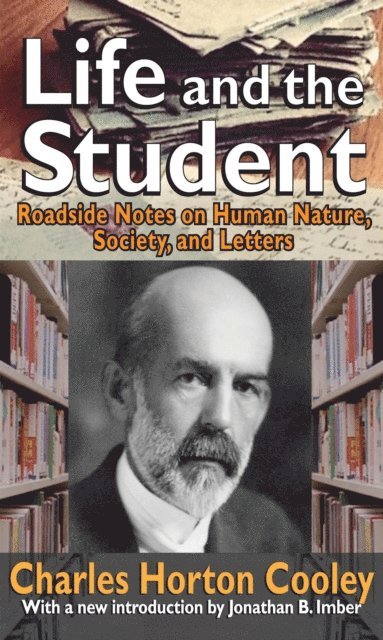
Life and the Student (1927), with a new introduction by Jonathan B. Imber, is a compilation of reflections, commentaries, and letters from other scholars that Charles Horton Cooley, accumulated throughout his life. The book includes personal passages on various topics within the realms of reading and writing, thinking, art, science, sociology, academia, religion, and human nature.There is no formal structure to the book, except the literary sense that organizes these thoughts and observations about life. It is impossible to categorize these widely ranging commentaries. They include discussions of the automobile, the impressionable nature of young people, the claim that the question of racial superiority is still unresolved, his belief that eugenists are inconsistent in their views, and more.Cooley''s work sought to emphasize the connection between society and the individual. He believed that the two could only be understood in relationship to each other. While researching the effects of social responses and social participation, he created the concept of the "looking-glass self," which is the theory that a person''s sense of self grows out of interpersonal interactions and the perceptions of others. Cooley also showed that social life and the relationship between groups and communities stems from mental phenomena.
E-bok
PDF, Engelska, 2017811 kr
Läs direkt efter köp
Life and the Student (1927), with a new introduction by Jonathan B. Imber, is a compilation of reflections, commentaries, and letters from other scholars that Charles Horton Cooley, accumulated throughout his life. The book includes personal passages on various topics within the realms of reading and writing, thinking, art, science, sociology, academia, religion, and human nature.There is no formal structure to the book, except the literary sense that organizes these thoughts and observations about life. It is impossible to categorize these widely ranging commentaries. They include discussions of the automobile, the impressionable nature of young people, the claim that the question of racial superiority is still unresolved, his belief that eugenists are inconsistent in their views, and more.Cooley''s work sought to emphasize the connection between society and the individual. He believed that the two could only be understood in relationship to each other. While researching the effects of social responses and social participation, he created the concept of the "looking-glass self," which is the theory that a person''s sense of self grows out of interpersonal interactions and the perceptions of others. Cooley also showed that social life and the relationship between groups and communities stems from mental phenomena.
E-bok
Engelska, 2017811 kr
Läs direkt efter köp
Recent writing on the nature of freedom has served to underline a crucial gap in the academic experience. First--and most obviously--the concept of freedom has been modernized by its application to contemporary institutions. Second, a new approach to the concept of liberty has been pioneered in the construction of new typologies of freedom. Finally, awareness of variety in concepts of freedom has been paralleled in variations in the practice of freedom. The tumultuous history of Western man may be conceptualized as the story of how freedom has become embodied. What is missing from the story is the relationship of concepts to actions.This relationship has been established for some specific notions of freedom. Many of the philosophical analyses--especially recent ones like pragmatism and existentialism--have been predicated on actual human behavior. On the other hand, many classic histories of freedom--those of Georg Wilhelm Friedrich Hegel, John Bagnell Bury, Guido de Ruggiero, and Harold Laski--have traced the actual development of a definite kind of freedom.This volume contains essays prepared to celebrate the anniversary of the publication of John Stuart Mill''s On Liberty, revised in the light of discussions by Henry D. Aiken, William Ebenstein, Mark DeWolfe Howe, and David Spitz, as well as other articles, many of them growing out of the discussion either in the form of commentary or independent contributions. There are also two papers written independently (Andrew Hacker and Leonard Krieger).
E-bok
PDF, Engelska, 2017811 kr
Läs direkt efter köp
Recent writing on the nature of freedom has served to underline a crucial gap in the academic experience. First--and most obviously--the concept of freedom has been modernized by its application to contemporary institutions. Second, a new approach to the concept of liberty has been pioneered in the construction of new typologies of freedom. Finally, awareness of variety in concepts of freedom has been paralleled in variations in the practice of freedom. The tumultuous history of Western man may be conceptualized as the story of how freedom has become embodied. What is missing from the story is the relationship of concepts to actions.This relationship has been established for some specific notions of freedom. Many of the philosophical analyses--especially recent ones like pragmatism and existentialism--have been predicated on actual human behavior. On the other hand, many classic histories of freedom--those of Georg Wilhelm Friedrich Hegel, John Bagnell Bury, Guido de Ruggiero, and Harold Laski--have traced the actual development of a definite kind of freedom.This volume contains essays prepared to celebrate the anniversary of the publication of John Stuart Mill''s On Liberty, revised in the light of discussions by Henry D. Aiken, William Ebenstein, Mark DeWolfe Howe, and David Spitz, as well as other articles, many of them growing out of the discussion either in the form of commentary or independent contributions. There are also two papers written independently (Andrew Hacker and Leonard Krieger).
Häftad, Engelska, 2015
814 kr
Skickas inom 10-15 vardagar
Life and the Student (1927), with a new introduction by Jonathan B. Imber, is a compilation of reflections, commentaries, and letters from other scholars that Charles Horton Cooley, accumulated throughout his life. The book includes personal passages on various topics within the realms of reading and writing, thinking, art, science, sociology, academia, religion, and human nature.There is no formal structure to the book, except the literary sense that organizes these thoughts and observations about life. It is impossible to categorize these widely ranging commentaries. They include discussions of the automobile, the impressionable nature of young people, the claim that the question of racial superiority is still unresolved, his belief that eugenists are inconsistent in their views, and more.Cooley's work sought to emphasize the connection between society and the individual. He believed that the two could only be understood in relationship to each other. While researching the effects of social responses and social participation, he created the concept of the "looking-glass self," which is the theory that a person's sense of self grows out of interpersonal interactions and the perceptions of others. Cooley also showed that social life and the relationship between groups and communities stems from mental phenomena.
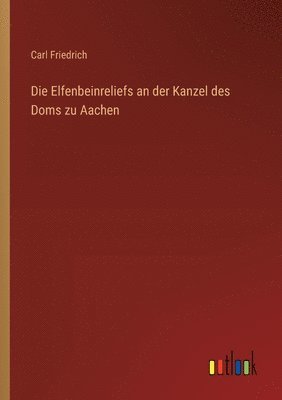
Häftad, Tyska, 2025
205 kr
Skickas inom 5-8 vardagar
Inbunden, Tyska, 2025
498 kr
Skickas inom 5-8 vardagar
Inbunden, Tyska, 2024
498 kr
Tillfälligt slut