Carl T. Bogus – författare
Visar alla böcker från författaren Carl T. Bogus. Handla med fri frakt och snabb leverans.
7 produkter
7 produkter
Inbunden, Engelska, 2023
378 kr
Skickas inom 5-8 vardagar
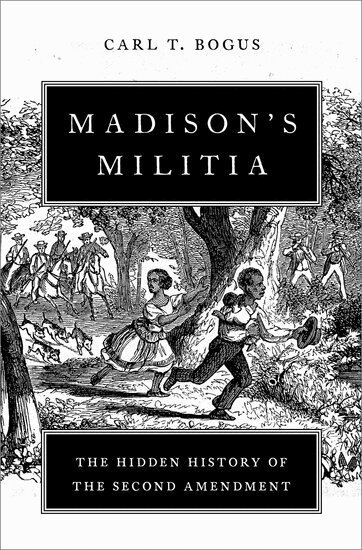
This engaging history overturns the conventional wisdom about the Second Amendment--showing that the right to bear arms was not about protecting liberty but about preserving slavery.In Madison's Militia, Carl Bogus illuminates why James Madison and the First Congress included the right to bear arms in the Bill of Rights. Linking together dramatic accounts of slave uprisings and electric debates over whether the Constitution should be ratified, Bogus shows that--contrary to conventional wisdom--the fitting symbol of the Second Amendment is not the musket in the hands of the minuteman on Lexington Green but the musket wielded by a slave patrol member in the South.Bogus begins with a dramatic rendering of the showdown in Virginia between James Madison and his federalist allies, who were arguing for ratification of the new Constitution, and Patrick Henry and the antifederalists, who were arguing against it. Henry accused Madison of supporting a constitution that empowered Congress to disarm the militia, on which the South relied for slave control. The narrative then proceeds to the First Congress, where Madison had to make good a congressional campaign promise to write a Bill of Rights--and seizing that opportunity to solve the problem Henry had raised.Three other collections of stories--on slave insurrections, Revolutionary War battles, and the English Declaration of Rights--are skillfully woven into the narrative and show how arming ragtag militias was never the primary goal of the amendment. And as the puzzle pieces come together, even initially skeptical readers will be surprised by the completed picture: one that forcefully demonstrates that the Second Amendment was intended in the first instance to protect slaveholders from the people they owned.
E-bok
PDF, Engelska, 2023245 kr
Läs direkt efter köp
This engaging history overturns the conventional wisdom about the Second Amendment--showing that the right to bear arms was not about protecting liberty but about preserving slavery.In Madison''s Militia, Carl Bogus illuminates why James Madison and the First Congress included the right to bear arms in the Bill of Rights. Linking together dramatic accounts of slave uprisings and electric debates over whether the Constitution should be ratified, Bogus shows that--contrary to conventional wisdom--the fitting symbol of the Second Amendment is not the musket in the hands of the minuteman on Lexington Green but the musket wielded by a slave patrol member in the South.Bogus begins with a dramatic rendering of the showdown in Virginia between James Madison and his federalist allies, who were arguing for ratification of the new Constitution, and Patrick Henry and the antifederalists, who were arguing against it. Henry accused Madison of supporting a constitution that empowered Congress to disarm the militia, on which the South relied for slave control. The narrative then proceeds to the First Congress, where Madison had to make good a congressional campaign promise to write a Bill of Rights--and seizing that opportunity to solve the problem Henry had raised.Three other collections of stories--on slave insurrections, Revolutionary War battles, and the English Declaration of Rights--are skillfully woven into the narrative and show how arming ragtag militias was never the primary goal of the amendment. And as the puzzle pieces come together, even initially skeptical readers will be surprised by the completed picture: one that forcefully demonstrates that the Second Amendment was intended in the first instance to protect slaveholders from the people they owned.
E-bok
Engelska, 2023245 kr
Läs direkt efter köp
This engaging history overturns the conventional wisdom about the Second Amendment--showing that the right to bear arms was not about protecting liberty but about preserving slavery.In Madison''s Militia, Carl Bogus illuminates why James Madison and the First Congress included the right to bear arms in the Bill of Rights. Linking together dramatic accounts of slave uprisings and electric debates over whether the Constitution should be ratified, Bogus shows that--contrary to conventional wisdom--the fitting symbol of the Second Amendment is not the musket in the hands of the minuteman on Lexington Green but the musket wielded by a slave patrol member in the South.Bogus begins with a dramatic rendering of the showdown in Virginia between James Madison and his federalist allies, who were arguing for ratification of the new Constitution, and Patrick Henry and the antifederalists, who were arguing against it. Henry accused Madison of supporting a constitution that empowered Congress to disarm the militia, on which the South relied for slave control. The narrative then proceeds to the First Congress, where Madison had to make good a congressional campaign promise to write a Bill of Rights--and seizing that opportunity to solve the problem Henry had raised.Three other collections of stories--on slave insurrections, Revolutionary War battles, and the English Declaration of Rights--are skillfully woven into the narrative and show how arming ragtag militias was never the primary goal of the amendment. And as the puzzle pieces come together, even initially skeptical readers will be surprised by the completed picture: one that forcefully demonstrates that the Second Amendment was intended in the first instance to protect slaveholders from the people they owned.
Inbunden, Engelska, 2001
915 kr
Skickas inom 10-15 vardagar
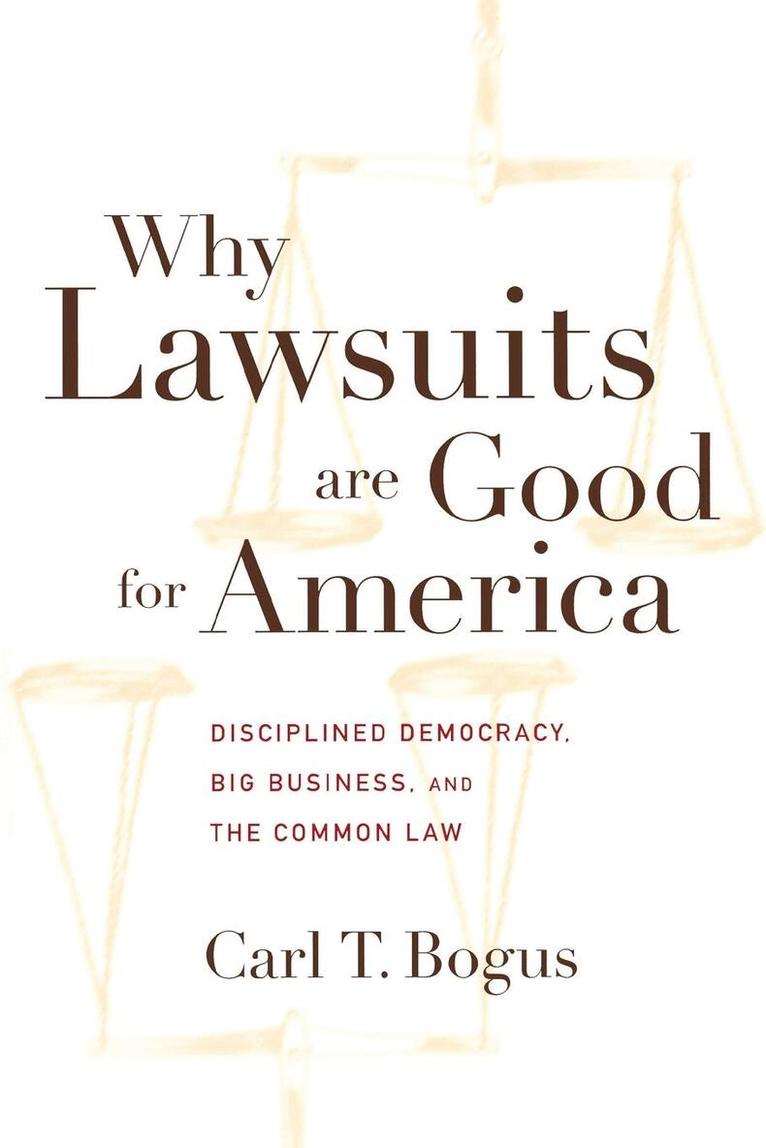
Argues that lawsuits work far better than commonly understoodJudging by the frequency with which it makes an appearance in television news shows and late night stand up routines, the frivolous lawsuit has become part and parcel of our national culture. A woman sues McDonald's because she was scalded when she spilled her coffee. Thousands file lawsuits claiming they were injured by Agent Orange, silicone breast implants, or Bendectin although scientists report these substances do not cause the diseases in question. The United States, conventional wisdom has it, is a hyperlitigious society, propelled by avaricious lawyers, harebrained judges, and runaway juries. Lawsuits waste money and time and, moreover, many are simply groundless.Carl T. Bogus is not so sure. In Why Lawsuits Are Good for America, Bogus argues that common law works far better than commonly understood. Indeed, Bogus contends that while the system can and occasionally does produce "wrong" results, it is very difficult for it to make flatly irrational decisions. Blending history, theory, empirical data, and colorful case studies, Bogus explains why the common law, rather than being outdated, may be more necessary than ever.As Bogus sees it, the common law is an essential adjunct to governmental regulation—essential, in part, because it is not as easily manipulated by big business. Meanwhile, big business has launched an all out war on the common law. "Tort reform"—measures designed to make more difficult for individuals to sue corporations—one of the ten proposals in the Republican Contract With America, and George W. Bush's first major initiative as Governor of Texas. And much of what we have come to believe about the system comes from a coordinated propaganda effort by big business and its allies.Bogus makes a compelling case for the necessity of safeguarding the system from current assaults. Why Lawsuits Are Good for America provides broad historical overviews of the development of American common law, torts, products liability, as well as fresh and provocative arguments about the role of the system of "disciplined democracy" in the twenty-first century.
Häftad, Engelska, 2003
347 kr
Skickas inom 5-8 vardagar
Argues that lawsuits work far better than commonly understoodJudging by the frequency with which it makes an appearance in television news shows and late night stand up routines, the frivolous lawsuit has become part and parcel of our national culture. A woman sues McDonald's because she was scalded when she spilled her coffee. Thousands file lawsuits claiming they were injured by Agent Orange, silicone breast implants, or Bendectin although scientists report these substances do not cause the diseases in question. The United States, conventional wisdom has it, is a hyperlitigious society, propelled by avaricious lawyers, harebrained judges, and runaway juries. Lawsuits waste money and time and, moreover, many are simply groundless.Carl T. Bogus is not so sure. In Why Lawsuits Are Good for America, Bogus argues that common law works far better than commonly understood. Indeed, Bogus contends that while the system can and occasionally does produce "wrong" results, it is very difficult for it to make flatly irrational decisions. Blending history, theory, empirical data, and colorful case studies, Bogus explains why the common law, rather than being outdated, may be more necessary than ever.As Bogus sees it, the common law is an essential adjunct to governmental regulation—essential, in part, because it is not as easily manipulated by big business. Meanwhile, big business has launched an all out war on the common law. "Tort reform"—measures designed to make more difficult for individuals to sue corporations—one of the ten proposals in the Republican Contract With America, and George W. Bush's first major initiative as Governor of Texas. And much of what we have come to believe about the system comes from a coordinated propaganda effort by big business and its allies.Bogus makes a compelling case for the necessity of safeguarding the system from current assaults. Why Lawsuits Are Good for America provides broad historical overviews of the development of American common law, torts, products liability, as well as fresh and provocative arguments about the role of the system of "disciplined democracy" in the twenty-first century.
E-bok
Engelska, 2011154 kr
Läs direkt efter köp
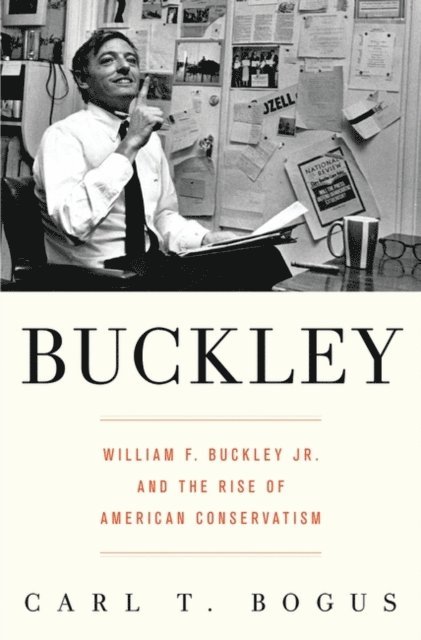
“This is an insightful book that will please anyone interested in midcentury American history and politics. Anyone serious about political philosophy will learn from it. Highly recommended.” -Library Journal (starred review) William F. Buckley Jr. was the foremost architect of the conservative movement that transformed American politics between the 1960s and the end of the century. When Buckley launched National Review in 1955, conservatism was a beleaguered, fringe segment of the Republican Party. Three decades later Ronald Reagan-who credited National Review with shaping his beliefs-was in the White House. Buckley and his allies devised a new-model conservatism that replaced traditional ideals of Edmund Burke with a passionate belief in the free market; religious faith; and an aggressive stance on foreign policy. Buckley''s TV show, Firing Line, and his campaign for mayor of New York City made him a celebrity; his wit and zest for combat made conservatism fun. But Buckley was far more than a controversialist. Deploying his uncommon charm, shrewdly recruiting allies, quashing ideological competitors, and refusing to compromise on core principles, he almost single-handedly transformed conservatism from a set of retrograde attitudes into a revolutionary force.
Inbunden, Engelska, 2002
234 kr
Tillfälligt slut