Carlo Cacciabue – författare
Visar alla böcker från författaren Carlo Cacciabue. Handla med fri frakt och snabb leverans.
14 produkter
Probabilistic Safety Assessment and Management '96
ESREL’96 — PSAM-III June 24–28 1996, Crete, Greece Volume 1
Av Ioannis A. Papazoglou, Carlo Cacciabue
E-bok, 2012
1502 kr
Lägg i varukorg
IE-2 > FV 5E-3 > FV IE-3 > FV IE-4 > FV Trun- Total IST and IST Components Total IST FV> IE-2 Type >5E-3 > IE-3 > IE-4 >0 cated IPE Components Not Modeled in PRA Components 11 3 6 5 27 73 100 AOV 2 CV 4 21 24 16 12 77 94 171 4 6 10 HOV 4 34 158 MOV 2 5 35 33 24 25 124 43 43 MV 2 PORV 1 1 2 PUMP 12 …
Probabilistic Safety Assessment and Management ’96
ESREL’96 — PSAM-III June 24–28 1996, Crete, Greece Volume 1
Av Carlo Cacciabue, Ioannis A. Papazoglou
2012
1331 kr
Lägg i varukorg
IE-2 > FV 5E-3 > FV IE-3 > FV IE-4 > FV Trun- Total IST and IST Components Total IST FV> IE-2 Type >5E-3 > IE-3 > IE-4 >0 cated IPE Components Not Modeled in PRA Components 11 3 6 5 27 73 100 AOV 2 CV 4 21 24 16 12 77 94 171 4 6 10 HOV 4 34 158 MOV 2 5 35 33 24 25 124 43 43 MV 2 PORV 1 1 2 PUMP 12 …
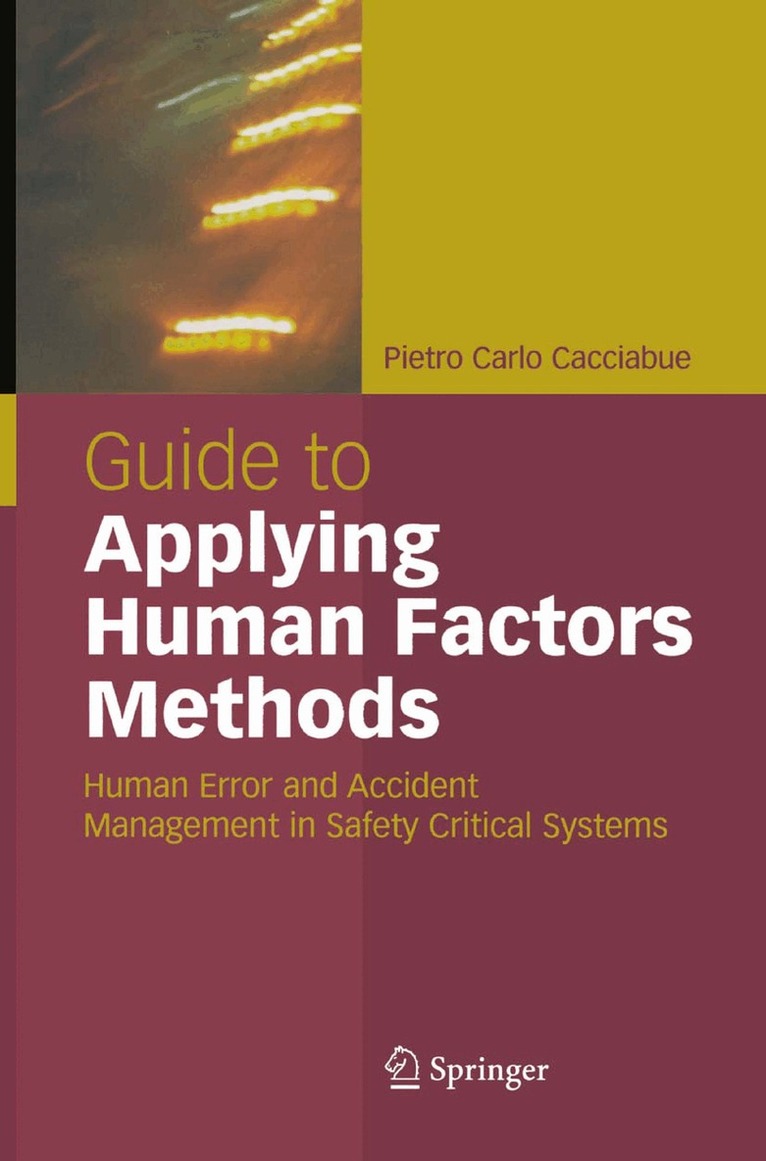
Guide to Applying Human Factors Methods
Human Error and Accident Management in Safety-Critical Systems
E-bok, 2013
734 kr
Lägg i varukorg
Human error plays a significant role in many accidents involving safety-critical systems, and it is now a standard requirement in both the US and Europe for Human Factors (HF) to be taken into account in system design and safety assessment. This book will be an essential guide for anyone who uses …
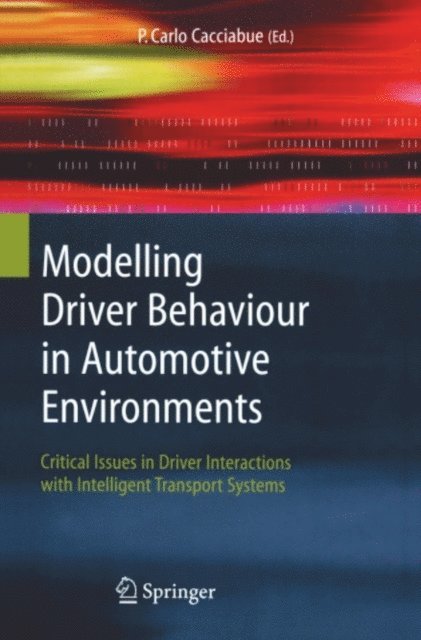
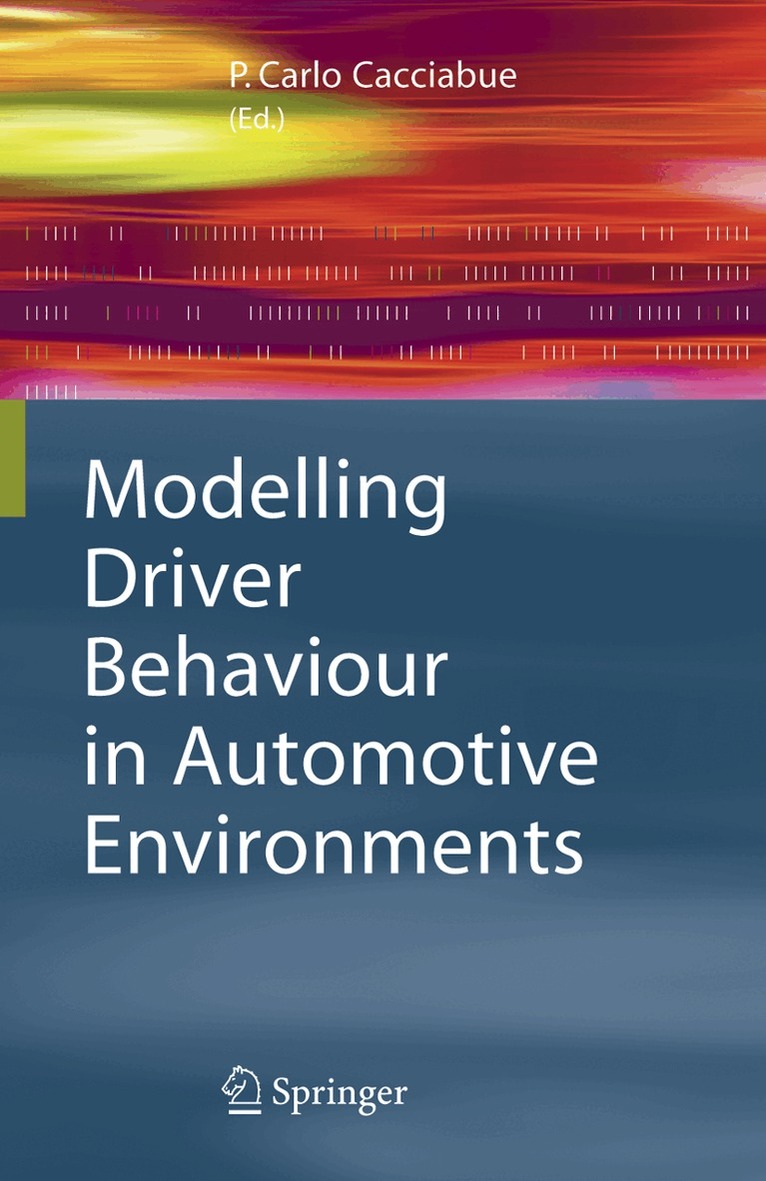
Modelling Driver Behaviour in Automotive Environments
Critical Issues in Driver Interactions with Intelligent Transport Systems
Inbunden, 2007
1641 kr
Lägg i varukorg
In the automotive environment, the paradigm of the joint human machine system is called the "Driver-Vehicle-Environment" (DVE) model. Several studies have pointed out the uniqueness of this domain, which can refer to minimum standardisation and normalisation of behaviours, contexts and …
Modelling Driver Behaviour in Automotive Environments
Critical Issues in Driver Interactions with Intelligent Transport Systems
E-bok, 2010
2174 kr
Lägg i varukorg
In the automotive environment, the paradigm of the joint human machine system is called the "Driver-Vehicle-Environment" (DVE) model. Several studies have pointed out the uniqueness of this domain, which can refer to minimum standardisation and normalisation of behaviours, contexts and technology. …
Modelling Driver Behaviour in Automotive Environments
Critical Issues in Driver Interactions with Intelligent Transport Systems
Häftad, 2010
1690 kr
Lägg i varukorg
In the automotive environment, the paradigm of the joint human machine system is called the "Driver-Vehicle-Environment" (DVE) model. Several studies have pointed out the uniqueness of this domain, which can refer to minimum standardisation and normalisation of behaviours, contexts and …
Guide to Applying Human Factors Methods
Human Error and Accident Management in Safety-Critical Systems
Häftad, 2011
552 kr
Lägg i varukorg
Human error plays a significant role in many accidents involving safety-critical systems, and it is now a standard requirement in both the US and Europe for Human Factors (HF) to be taken into account in system design and safety assessment. This book will be an essential guide for anyone who uses …
Guide to Applying Human Factors Methods
Human Error and Accident Management in Safety-Critical Systems
Inbunden, 2004
552 kr
Lägg i varukorg
Human error plays a significant role in many accidents involving safety-critical systems, and it is now a standard requirement in both the US and Europe for Human Factors (HF) to be taken into account in system design and safety assessment. This book will be an essential guide for anyone who uses …
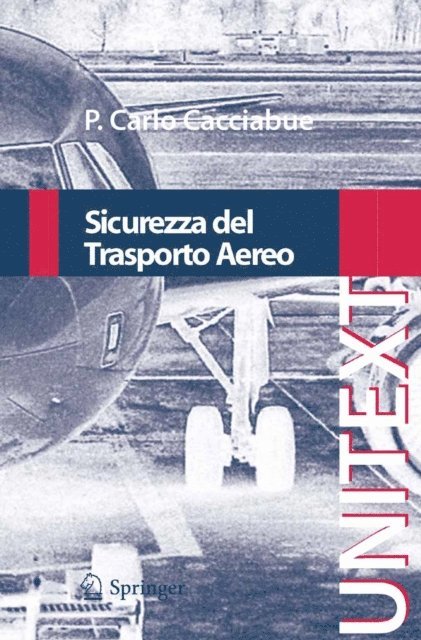
Sicurezza del Trasporto Aereo
E-bok, 2010
272 kr
Lägg i varukorg
Il presente testo si propone di far acquisire al lettore le conoscenze delle metodologie e teorie di base per effettuare analisi di sicurezza e valutazione del rischio in diversi ambienti aeronautici, in un quadro di "Safety Management System". Vengono dapprima analizzati e descritti in dettaglio i …
Human Modelling in Assisted Transportation
Models, Tools and Risk Methods
Av Carlo Cacciabue, Magnus Hjälmdahl m. fl.
Inbunden, 2011
2185 kr
Lägg i varukorg
The objective of this Workshop is to confront models, methods and tools developed within the projects with the ongoing research worldwide and to provide an environment for fruitful exchange of ideas. The main topics are: 1. Advanced human models in transportation. 2. Human Errors and Risk …
Human Modelling in Assisted Transportation
Models, Tools and Risk Methods
Av Costanza Riccioli, Andreas Luedtke m. fl.
E-bok, 2011
1948 kr
Lägg i varukorg
The objective of this Workshop is to confront models, methods and tools developed within the projects with the ongoing research worldwide and to provide an environment for fruitful exchange of ideas. The main topics are: 1. Advanced human models in transportation. 2. Human Errors and Risk …
Sicurezza del Trasporto Aereo
Av Carlo Cacciabue, Italo Oddone m. fl.
Inbunden, 2019
421 kr
Lägg i varukorg
Il testo si propone di far acquisire al lettore le conoscenze delle metodologie e teorie di base per effettuare delle analisi di sicurezza e valutazione del rischio in diversi ambienti aeronautici, in un quadro di "Safety Management System". Vengono analizzati e descritti in dettaglio i metodi per …
Sicurezza del Trasporto Aereo
Av Ivan Rizzolo, Italo Oddone m. fl.
E-bok, 2019
415 kr
Lägg i varukorg
Il testo si propone di far acquisire al lettore le conoscenze delle metodologie e teorie di base per effettuare delle analisi di sicurezza e valutazione del rischio in diversi ambienti aeronautici, in un quadro di "Safety Management System". Vengono analizzati e descritti in dettaglio i metodi per …
Human Modelling in Assisted Transportation
Models, Tools and Risk Methods
Av Carlo Cacciabue, Magnus Hjälmdahl m. fl.
Häftad, 2014
1635 kr
Lägg i varukorg
The objective of this Workshop is to confront models, methods and tools developed within the projects with the ongoing research worldwide and to provide an environment for fruitful exchange of ideas. The main topics are: 1. Advanced human models in transportation. 2. Human Errors and Risk …