Carol Kramer – författare
Visar alla böcker från författaren Carol Kramer. Handla med fri frakt och snabb leverans.
2 produkter
2 produkter
Häftad, Engelska, 2001
595 kr
Skickas inom 7-10 vardagar
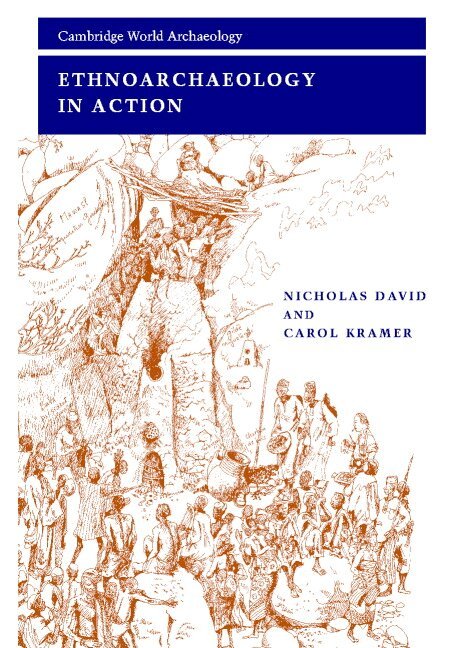
Ethnoarchaeology first developed as the study of ethnographic material culture from archaeological perspectives. Over the past half century it has expanded its scope, especially to cultural and social anthropology. Both authors are leading practitioners, and their theoretical perspective embraces both the processualism of the New Archaeology and the post-processualism of the 1980s and 90s. A case-study approach enables a balanced global geographic and topical coverage, including consideration of materials in French and German. Three introductory chapters discuss the subject and its history, survey the theory, and discuss field methods and ethics. Ten topical chapters consider formation processes, subsistence, the study of artefacts and style, settlement systems, site structure and architecture, specialist craft production, trade and exchange, and mortuary practices and ideology. Ethnoarchaeology in Action concludes with ethnoarchaeology's contributions actual and potential, and with a look at its place within anthropology. It is generously illustrated, including many photographs of leading ethnoarchaeologists in action.
E-bok
PDF, Engelska, 2014779 kr
Läs direkt efter köp
Village Ethnoarchaeology: Rural Iran in Archaeological Perspective discusses selected tangible features of the subject area, noting the differences in households and associated material culture. The book comments among settlement variability, the complexities in relationships among population density, settlement age, area, and function. The text also deals with material correlates of sociocultural behavior, spatial organization, architectural variability, regional patterns, and archaeological sampling strategies. The book presents a study based on three sets of contemporary data: (1) from an ethnographic fieldwork on Aliabad in summer 1975; (2) the census and cartographic documents published by the Iranian government; and (3) a corpus of published comparative ethnographic data. The book notes that among the households in Aliabad, which is neither economically stratified nor markedly heterogeneous, economic variations exist. The text suggests that that material diversity and systems involving socioeconomic differentiation can have substantial time depth in this part of the world. The book can prove beneficial for archaeologists, anthropologist, sociologists, and researchers interested in ethnographic accounts of Middle Eastern communities.