Carol Max Lang – författare
Visar alla böcker från författaren Carol Max Lang. Handla med fri frakt och snabb leverans.
3 produkter
3 produkter
Häftad, Engelska, 1981
564 kr
Skickas inom 10-15 vardagar
This second edition of Animal Physiologic Surgery presents an integrated introduction to surgery for students in all of the health sciences. As with the first, this edition introduces the novice to surgery using the animal model, and emphasizes the relation of surgery to physiologic function. The book begins with a practical introduction to sterile technique and instrumentation, then develops the student's familiarity with basic surgical skills, and progresses to procedures requiring some proficiency and inter pretation. While all of the procedures involve a degree of complexity, our experience has shown that beginning students are capable of handling these exercises as we have presented them. We have expanded and revised the section covering surgical technique in response to the many useful and encouraging comments we received on the first edition. In addition, the section on clinical procedures and laboratory techniques has been reorgan ized to include a chapter on emergency and resuscitative procedures. By emphasizing the physiologic responses to disease states and to surgical intervention, we not only convey an understanding of surgery's potential and limitations, but also point out the student's responsibility for providing the best possible pre-, intra-, and postoperative care. The section on laboratory procedures is designed to provide further insight into the body's physiology in a clinical context. I am grateful to the contributors for their close cooperation, especially Dr.
E-bok
PDF, Engelska, 2012708 kr
Läs direkt efter köp
This second edition of Animal Physiologic Surgery presents an integrated introduction to surgery for students in all of the health sciences. As with the first, this edition introduces the novice to surgery using the animal model, and emphasizes the relation of surgery to physiologic function. The book begins with a practical introduction to sterile technique and instrumentation, then develops the student''s familiarity with basic surgical skills, and progresses to procedures requiring some proficiency and inter pretation. While all of the procedures involve a degree of complexity, our experience has shown that beginning students are capable of handling these exercises as we have presented them. We have expanded and revised the section covering surgical technique in response to the many useful and encouraging comments we received on the first edition. In addition, the section on clinical procedures and laboratory techniques has been reorgan ized to include a chapter on emergency and resuscitative procedures. By emphasizing the physiologic responses to disease states and to surgical intervention, we not only convey an understanding of surgery''s potential and limitations, but also point out the student''s responsibility for providing the best possible pre-, intra-, and postoperative care. The section on laboratory procedures is designed to provide further insight into the body''s physiology in a clinical context. I am grateful to the contributors for their close cooperation, especially Dr.
E-bok
PDF, Engelska, 20131 132 kr
Läs direkt efter köp
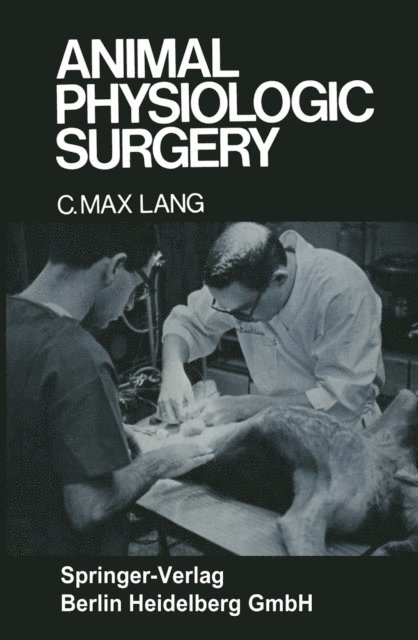
Animal Physiologic Surgery presents an integrated approach to the study of surgery for first-year medical students and graduate students in physiology. The primary emphasis is on the interrela tionships between surgical techniques and physiologic phenomena observed before, during, and after surgery. All procedures described in the book are designed so that the student with a limited knowledge of surgery can successfully assume responsibility for pre- and postoperative care, as well as for the operation. Therefore, the attitude reflected in this work shows the student his obligation, and his privilege, to find the best method of treatment for the patient and to work at his highest capacity. The text begins with an introduction to operating-room proce dures, sutures and instruments, wound healing, anesthesia, and water and electrolyte balance. The second part deals with step-by step surgical instructions and clinical consideration in techniques, such as laparotomy, splenectomy, nephrectomy, and laminectomy. This part is followed by a section on laboratory techniques neces sary for following and evaluating the course of the patient and on postmortem techniques. The text strikes a balance between exacting detail and discussion of basic principles; it is easily adaptable to any curriculum. I am grateful to the contributors for their close cooperation, especially Dr. William J. White for sharing much of the responsi bilities. I am also very appreciative to Catherine Jackson and Anne Kupstas for their valuable editorial assistance, and to Joyce Greene vii Preface and Becky Robertson for their assistance in preparing the manu script.