Carol Scott-Conner – författare
Visar alla böcker från författaren Carol Scott-Conner. Handla med fri frakt och snabb leverans.
3 produkter
3 produkter
464 kr
Skickas inom 5-8 vardagar
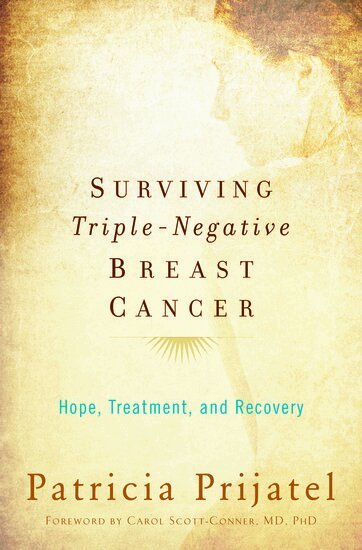
After her diagnosis of triple negative breast cancer (TNBC), health journalist Patricia Prijatel did what any reporter would do: start investigating the disease, how it occurs, and how it's treated. While she learned that important research was emerging, she found a noticeable lack of resources on the disease, which affects 70,000 women a year and differs from hormone-positive breast cancer in important ways, including prognosis and treatment options. Hormone negative breast cancer disproportionately affects younger women and African-American women - and it can be more dangerous than other types of breast cancer. But there are many reasons to be hopeful, as Prijatel learned. Through her blog, Positives About Negative, she has met hundreds of women who have told her their stories and shared their fears, confusion, and frustration. After her recovery, she began writing this book to provide the first dedicated resource for women diagnosed with TNBC. Surviving Triple Negative Breast Cancer delivers research-based information on the biology of TNBC; the role of genetics, family history, and race; how to navigate treatment options; and a plethora of strategies to reduce the risk of recurrence, including diet and lifestyle changes. In clear, approachable language, Prijatel provides an accessible guide to understanding a pathology report and a vast array of scientific studies. Woven throughout the book are stories of women who have faced TNBC. These are mothers, wives, daughters, and sisters who went through a variety of medical treatments and then got on with life -- one competes in triathlons, two had babies after being treated with chemo, one got remarried in her 50s, and one just celebrated the 30th birthday of the son she was nursing when she was diagnosed.With honesty and humor, Prijatel's inspiring story shows the heart of a survivor. Her message is that TNBC is a disease to take seriously, with proper and occasionally aggressive treatment, but it is not automatically a killer. Most women diagnosed with the disease do survive. Surviving Triple Negative Breast Cancer is a roadmap for women who want to be empowered through their treatment and recovery.
1 637 kr
Skickas inom 10-15 vardagar
This comprehensive manual on breast disease deals with all aspects of the surgical management of both benign and malignant disease. The chapters are written by leading experts, clearly illustrated with line drawings, clinical photos and diagnostic radiology images. Breast Surgery is divided into sections following the patterns of patient management from diagnosis through treatment and reconstruction. Part One, "Fundamentals", addresses common aspects of working with breast cancer patients and understanding the members of the breast cancer team. Part Two is an overview of "Biologic Principles". Parts Three, Four, and Five review "The Initial Evaluation", "Common Presenting Problems", and "Diagnostic Techniques". Part Six, an overview of breast cancer treatment, includes chapters on "Breast Cancer Staging", "Introduction to Gene Expression Profiling", and "Psychological Issues". Part's Seven through Twelve deal with important aspects of breast surgery and interdisciplinary care including pathology, medical oncology, and radiation oncology, with several chapters on neoadjuvant therapy and partial breast irradiation. Part Thirteen includes many chapters on followup of the breast cancer survivor, including late changes on physical exam and imaging, local recurrence, and treating metastatic disease. Though not intended to replace a text reference, Breast Surgical Disease and Interdisciplinary Management offers a comprehensive guide to provide practical advice for those seeking concise, expert input that can be quickly accessed on multiple topics associated with the care of the breast cancer patient.
14 464 kr
Kommande
Breast Cancer care is progressing at a rapid pace and with an increasing requirement for interdisciplinary collaboration, highly nuanced cross-discipline expertise and required understanding of advances in breast cancer biology. The first edition of Breast Surgical Techniques and Interdisciplinary Management introduced a text of considerable breadth and depth. This second edition updates general areas but also more fully addresses the accelerating nuances in care. While other texts continue to force the reader to "dig" for relevant information that is often dispersed across several chapters, the editors have retained the content delivery in a focused fashion that enable the reader to quickly grasp the key concepts that is problem-based. The obvious benefit to the reader is the ability to take away actionable information in much shorter time period and with a much higher retention rate. This makes the text of considerable value for those who require "must have" knowledge in as short a time period as possible. This text continues to deliver content that is easily readable with key points absorbed clearly and rapidly. The new chapters most importantly add topics that are of essential importance to the breast cancer specialist, including our "new world" and highly important method of evaluating physician performance; breast cancer stem cells as a unifying concept for breast cancer care and therapy; next-gen sequencing to more clearly understand the specific genetic and other biologic variables that will likely impact care for individual patients; the changing surgical management of axillary nodes; more nuanced information regarding targeted systemic therapies; evolving roles of accelerated forms of radiation as well as areas where radiotherapy is potentially replacing surgery; the increasing importance of psychosocial care and palliative care, both as the "right" thing to do as a an overall movement in general cancer care. There is no other textavailable which brings this material together in such an accessible fashion to the student, resident, fellow, clinician in the early stages of their career or to those who are "re-tooling" the focus of their career. Even seasoned clinicians will find "pearls" in the text in areas outside their particular expertise.