Carola Barbero – författare
Visar alla böcker från författaren Carola Barbero. Handla med fri frakt och snabb leverans.
3 produkter
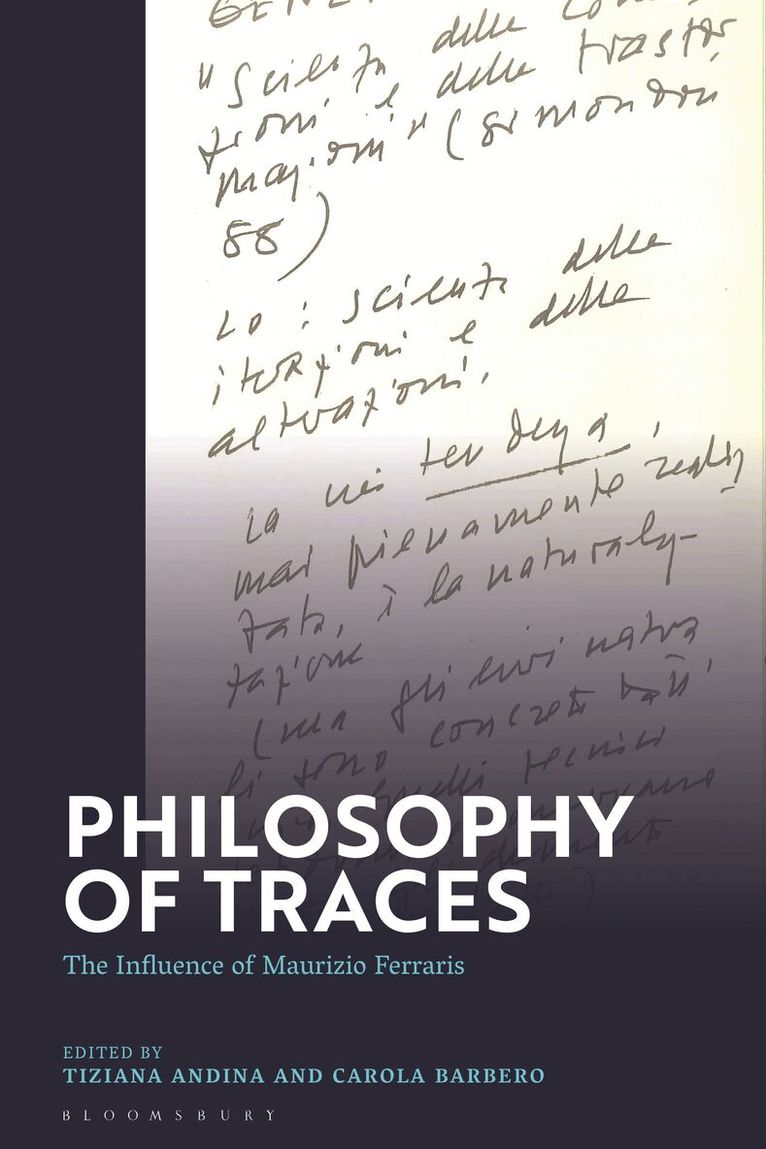
Philosophy of Traces
The Influence of Maurizio Ferraris
Av Tiziana Andina, Carola Barbero
Inbunden, 2026
1208 kr
Lägg i varukorg
The first book to offer extended critical engagement of the work of the major contemporary Italian philosopher Maurizio Ferraris, showing how his thought is essential to international debates around New Materialism, Speculative Realism and Deconstruction.In Philosophy of Traces, twenty-two …
Philosophy of Traces
The Influence of Maurizio Ferraris
Av Tiziana Andina, Carola Barbero
E-bok, 2026
1325 kr
Lägg i varukorg
The first book to offer extended critical engagement of the work of the major contemporary Italian philosopher Maurizio Ferraris, showing how his thought is essential to international debates around New Materialism, Speculative Realism and Deconstruction.In Philosophy of Traces, twenty-two …
Philosophy of Traces
The Influence of Maurizio Ferraris
Av Tiziana Andina, Carola Barbero
E-bok, 2026
1325 kr
Lägg i varukorg
The first book to offer extended critical engagement of the work of the major contemporary Italian philosopher Maurizio Ferraris, showing how his thought is essential to international debates around New Materialism, Speculative Realism and Deconstruction.In Philosophy of Traces, twenty-two …