Caroline A. Kita – författare
Visar alla böcker från författaren Caroline A. Kita. Handla med fri frakt och snabb leverans.
4 produkter
4 produkter
Inbunden, Engelska, 2027
1 406 kr
Kommande
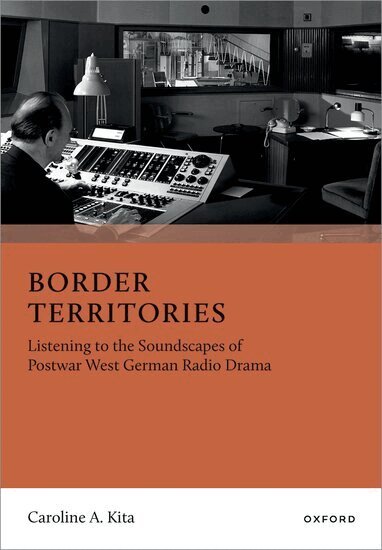
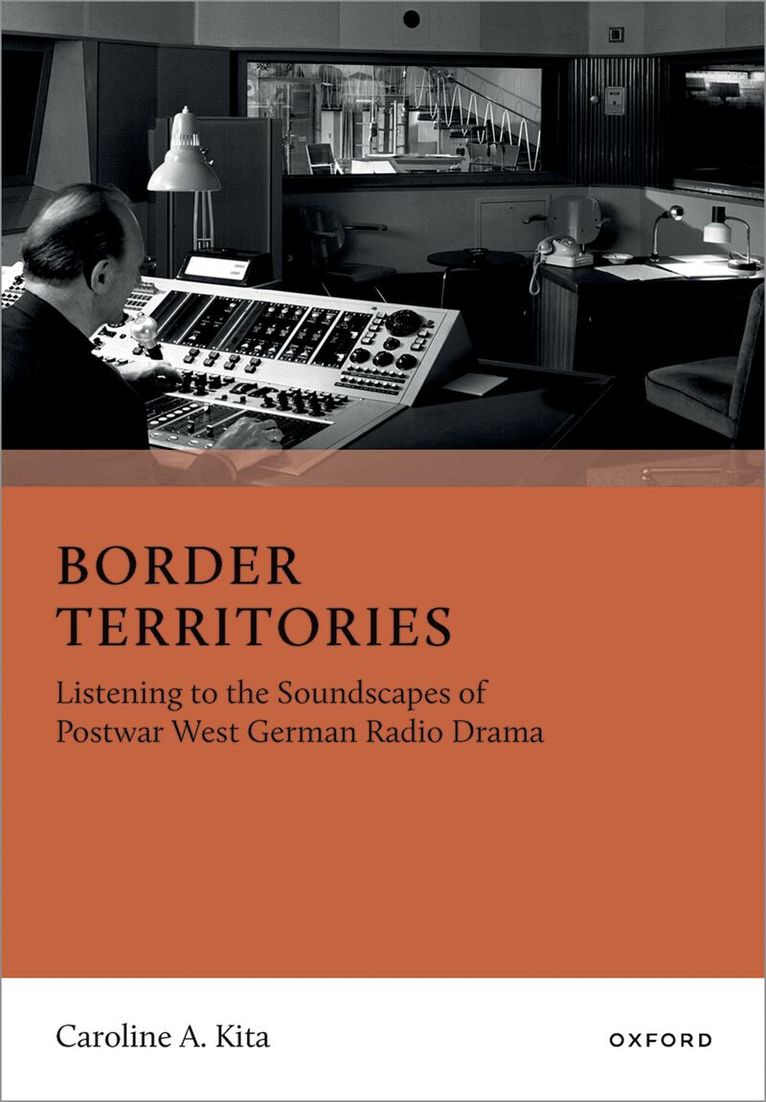
Border Territories: Listening to the Soundscapes of Postwar West German Radio Drama explores how narrative radio drama shaped and responded to public discourses on listening, memory, and democracy in the Federal Republic of Germany from 1945 to 1965. Through ten case studies of radio dramas produced at the North(west) German Radio in Hamburg (NWDR/NDR), a creative center of radio storytelling in the postwar period, the book examines the soundscapes of these works as unique acoustic realms where the multilayered and associative power of voices, music, noises, and silence were mobilized to sound what oftentimes could not be said. Part I focuses on the "remapping" of the radio soundscape from the National Socialist ideal of an immersive and homogenizing sound world, into a new discursive space in the immediate postwar period. It traces the development of two distinct dramaturgical styles^—^the Border Territory, which mirrored the fragmented postwar geography of occupation and experiences of dislocation, and the Radiotopia, a heterogenous realm of plural voices and opinions that reflected the urge toward democratization. Part II focuses on how radio dramas produced by NWDR/NDR in the 1950s and early 1960s responded to a crisis of listening that emerged in the aftermath of National Socialist rule, which questioned whether fascist propaganda had rendered German audiences passive, or if German ears could be "retrained" to become critical receivers. This new history of radio in postwar Germany provides both innovative models for analyzing language and sound in acoustic drama and insights into the complex collaborations between writers, composers, sound engineers, directors, and actors that produced these works.
Häftad, Engelska, 2027
407 kr
Kommande
Border Territories: Listening to the Soundscapes of Postwar West German Radio Drama explores how narrative radio drama shaped and responded to public discourses on listening, memory, and democracy in the Federal Republic of Germany from 1945 to 1965. Through ten case studies of radio dramas produced at the North(west) German Radio in Hamburg (NWDR/NDR), a creative center of radio storytelling in the postwar period, the book examines the soundscapes of these works as unique acoustic realms where the multilayered and associative power of voices, music, noises, and silence were mobilized to sound what oftentimes could not be said. Part I focuses on the "remapping" of the radio soundscape from the National Socialist ideal of an immersive and homogenizing sound world, into a new discursive space in the immediate postwar period. It traces the development of two distinct dramaturgical styles^—^the Border Territory, which mirrored the fragmented postwar geography of occupation and experiences of dislocation, and the Radiotopia, a heterogenous realm of plural voices and opinions that reflected the urge toward democratization. Part II focuses on how radio dramas produced by NWDR/NDR in the 1950s and early 1960s responded to a crisis of listening that emerged in the aftermath of National Socialist rule, which questioned whether fascist propaganda had rendered German audiences passive, or if German ears could be "retrained" to become critical receivers. This new history of radio in postwar Germany provides both innovative models for analyzing language and sound in acoustic drama and insights into the complex collaborations between writers, composers, sound engineers, directors, and actors that produced these works.
Inbunden, Engelska, 2019
525 kr
Skickas inom 5-8 vardagar
During the mid-19th century, the works of Arthur Schopenhauer and Richard Wagner sparked an impulse toward German cultural renewal and social change that drew on religious myth, metaphysics, and spiritualism. The only problem was that their works were deeply antisemitic and entangled with claims that Jews were incapable of creating compassionate art. By looking at the works of Jewish composers and writers who contributed to a lively and robust biblical theatre in fin de siècle Vienna, Caroline A. Kita shows how they reimagined myths of the Old Testament to offer new aesthetic and ethical views of compassion. These Jewish artists, including Gustav Mahler, Siegfried Lipiner, Richard Beer-Hofmann, Stefan Zweig, and Arnold Schoenberg, reimagined biblical stories through the lens of the modern Jewish subject to plead for justice and compassion toward the Jewish community. By tracing responses to antisemitic discourses of compassion, Kita reflects on the explicitly and increasingly troubled political and social dynamics at the end of the Habsburg Empire.
E-bok
PDF, Engelska, 2019242 kr
Läs direkt efter köp
During the mid-19th century, the works of Arthur Schopenhauer and Richard Wagner sparked an impulse toward German cultural renewal and social change that drew on religious myth, metaphysics, and spiritualism. The only problem was that their works were deeply antisemitic and entangled with claims that Jews were incapable of creating compassionate art. By looking at the works of Jewish composers and writers who contributed to a lively and robust biblical theatre in fin de siècle Vienna, Caroline A. Kita shows how they reimagined myths of the Old Testament to offer new aesthetic and ethical views of compassion. These Jewish artists, including Gustav Mahler, Siegfried Lipiner, Richard Beer-Hofmann, Stefan Zweig, and Arnold Schoenberg, reimagined biblical stories through the lens of the modern Jewish subject to plead for justice and compassion toward the Jewish community. By tracing responses to antisemitic discourses of compassion, Kita reflects on the explicitly and increasingly troubled political and social dynamics at the end of the Habsburg Empire.