Carolyn Steel – författare
Visar alla böcker från författaren Carolyn Steel. Handla med fri frakt och snabb leverans.
10 produkter
10 produkter
Häftad, Engelska, 2021
144 kr
Skickas inom 3-6 vardagar
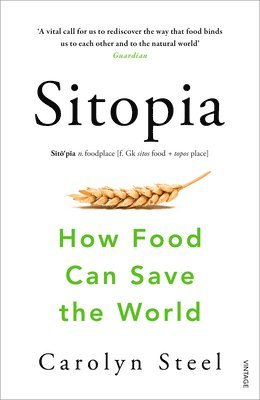
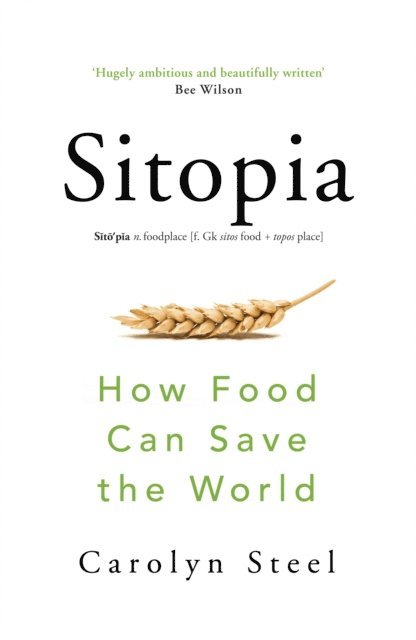
'A visionary look at how quality food should replace money as the new world currency' Tim Spector'Hugely ambitious and beautifully written...destined to become a modern classic' Bee WilsonHow we search for, make and consume food has defined human history. It transforms our bodies and homes, our politics and our trade, our landscapes and our climate. But by forgetting our culinary heritage and relying on cheap, intensively produced food, we have drifted into a way of life that threatens our planet and ourselves.What if there were a more sustainable way to eat and live? Drawing on many disciplines, as well as stories of the farmers, designers and economists who are remaking our relationship with food, this inspiring and deeply thoughtful book gives us a provocative and exhilarating vision for change, and points the way to a better future.'Utterly brilliant' Thomasina MiersWINNER OF THE 2021 GUILD FOOD OF WRITERS AWARD FOR BEST FOOD BOOK*Shortlisted for the Wainwright Prize 2020*
Häftad, Engelska, 2013
161 kr
Skickas
*According to the Trussell Trust, food bank use between April and Sept 2018 was up 13% on the same period in 2017.**Every year in the UK 18 million tonnes of food end up in landfill.*Why is this the case and what can we do about it?The relationship between food and cities is fundamental to our everyday lives. Food shapes cities and through them it moulds us - along with the countryside that feeds us. Yet few of us are conscious of the process and we rarely stop to wonder how food reaches our plates.Hungry City examines the way in which modern food production has damaged the balance of human existence, and reveals that we have yet to resolve a centuries-old dilemma - one which holds the key to a host of current problems, from obesity and the inexorable rise of the supermarkets, to the destruction of the natural world.Original, inspiring and written with infectious enthusiasm and belief, Hungry City illuminates an issue that is fundamental to us all.
E-bok
Engelska, 2013102 kr
Läs direkt efter köp
'Cities cover just 2% of the world’s surface, but consume 75% of the world’s resources’.The relationship between food and cities is fundamental to our everyday lives. Food shapes cities and through them it moulds us - along with the countryside that feeds us. Yet few of us are conscious of the process and we rarely stop to wonder how food reaches our plates. Hungry City examines the way in which modern food production has damaged the balance of human existence, and reveals that we have yet to resolve a centuries-old dilemma - one which holds the key to a host of current problems, from obesity and the inexorable rise of the supermarkets, to the destruction of the natural world.Original, inspiring and written with infectious enthusiasm and belief, Hungry City illuminates an issue that is fundamental to us all.
E-bok
Engelska, 2020122 kr
Läs direkt efter köp
'A visionary look at how quality food should replace money as the new world currency' Tim Spector'Hugely ambitious and beautifully written...destined to become a modern classic' Bee WilsonHow we search for, make and consume food has defined human history. It transforms our bodies and homes, our politics and our trade, our landscapes and our climate. But by forgetting our culinary heritage and relying on cheap, intensively produced food, we have drifted into a way of life that threatens our planet and ourselves.What if there were a more sustainable way to eat and live? Drawing on many disciplines, as well as stories of the farmers, designers and economists who are remaking our relationship with food, this inspiring and deeply thoughtful book gives us a provocative and exhilarating vision for change, and points the way to a better future.'Utterly brilliant' Thomasina MiersWINNER OF THE 2021 GUILD FOOD OF WRITERS AWARD FOR BEST FOOD BOOK*Shortlisted for the Wainwright Prize 2020*
E-bok
PDF, Engelska, 2018160 kr
Läs direkt efter köp
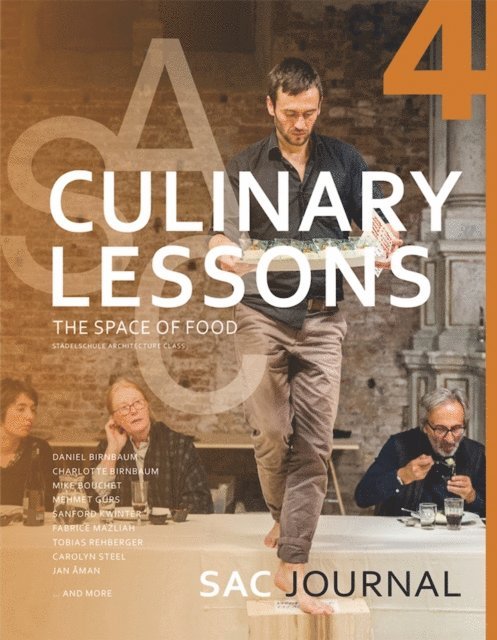
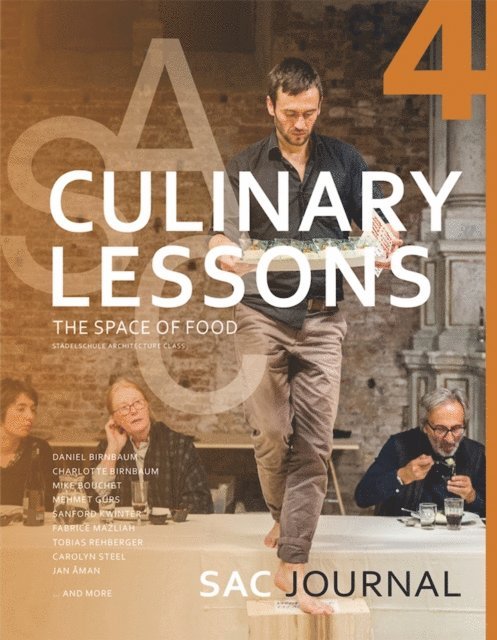
CULINARY LESSONS - The Space of Food is based on a series of events, Culinary Lessons, which were hosted by the Städelschule Architecture Class and which engaged with the relation between food, art and architecture. The series addressed the enormous so- cial, economic and cultural spaces that accompany the production and consumption of food, and attempted to unravel some of these spaces'' structure and dynamics. The central ambition was to learn from culinary history and, not the least, the recent vanguard of culinary practice.No human activity is so encompassing and engenders such ef- fects on our societies and lives as the culinary. Culinary practices lay out aesthetic as much as ethical trajectories that span from century-old traditions to lifesaving experiments for the present and future. They provide for human sustenance and the highest form of bodily enjoyment while transversing the spaces that they at once produce and profoundly affect.This fourth issue of the SAC JOURNAL presents the central con- versation in Culinary Lessons, which took place in Venice, together with a series of texts and projects that chart and speculate on the relationship between architecture, art and the culinary wor- ld. Contributors to this issue include, amongst others, Charlotte Birnbaum, Daniel Birnbaum, Mike Bouchet, Sanford Kwinter, Fabrice Mazliah, Tobias Rehberger, David Ruy, Kivi Sotamaa, Carolyn Steel, Jan Åman and Johan Bettum. It also features the winning projects of the AIV Master Thesis Prize in 2015 and 2016.SAC JOURNAL is a publication series that addresses topical isues within architecture. The journal documents, critically reviews and presents theoretical discussions concerning contemporary design and research. The content of SAC JOURNAL is produced by invited contributors and students and faculty at the Städel- schule Architecture Class.
E-bok
Engelska, 2018161 kr
Läs direkt efter köp
CULINARY LESSONS - The Space of Food is based on a series of events, Culinary Lessons, which were hosted by the Städelschule Architecture Class and which engaged with the relation between food, art and architecture. The series addressed the enormous so- cial, economic and cultural spaces that accompany the production and consumption of food, and attempted to unravel some of these spaces'' structure and dynamics. The central ambition was to learn from culinary history and, not the least, the recent vanguard of culinary practice.No human activity is so encompassing and engenders such ef- fects on our societies and lives as the culinary. Culinary practices lay out aesthetic as much as ethical trajectories that span from century-old traditions to lifesaving experiments for the present and future. They provide for human sustenance and the highest form of bodily enjoyment while transversing the spaces that they at once produce and profoundly affect.This fourth issue of the SAC JOURNAL presents the central con- versation in Culinary Lessons, which took place in Venice, together with a series of texts and projects that chart and speculate on the relationship between architecture, art and the culinary wor- ld. Contributors to this issue include, amongst others, Charlotte Birnbaum, Daniel Birnbaum, Mike Bouchet, Sanford Kwinter, Fabrice Mazliah, Tobias Rehberger, David Ruy, Kivi Sotamaa, Carolyn Steel, Jan Åman and Johan Bettum. It also features the winning projects of the AIV Master Thesis Prize in 2015 and 2016.SAC JOURNAL is a publication series that addresses topical isues within architecture. The journal documents, critically reviews and presents theoretical discussions concerning contemporary design and research. The content of SAC JOURNAL is produced by invited contributors and students and faculty at the Städel- schule Architecture Class.
Inbunden, Engelska, 2026
657 kr
Skickas inom 3-6 vardagar
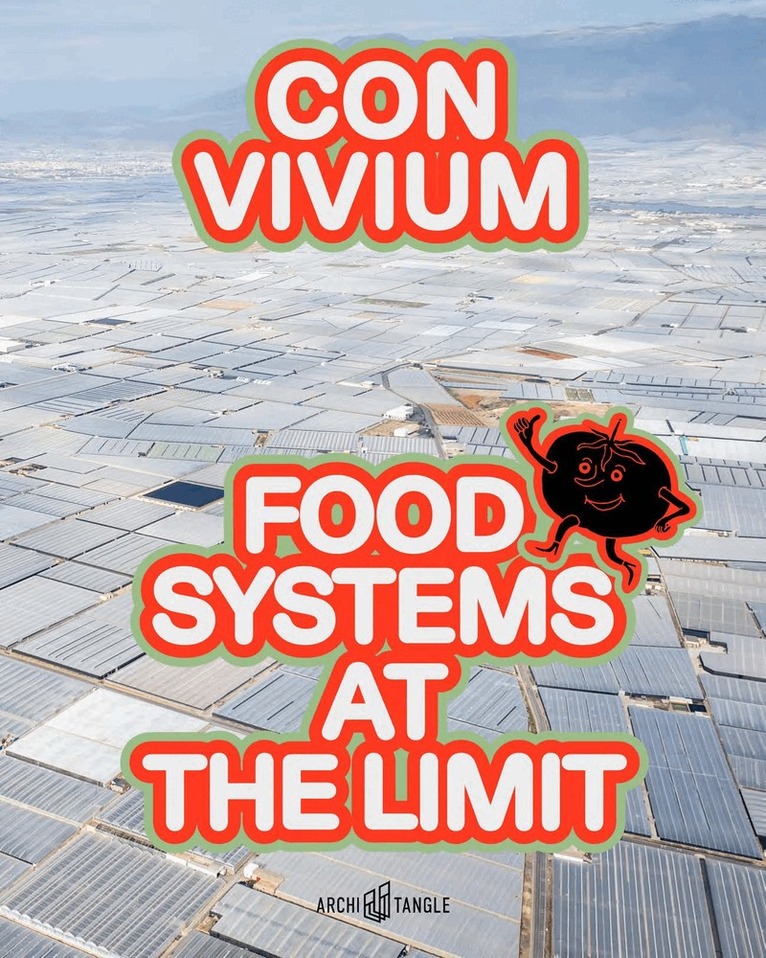
CONVIVIUM: Food Systems at the Limit invites readers on a journey through the intricate networks that feed the world. It explores how food production shapes landscapes, cities and everyday life, uncovering the architecture of global food systems. From greenhouses and fishing ports to agricultural enterprises and feed-crop fields, it traces how architecture and territory respond to the pressures of industrialized food production.Through a rich interplay of essays, photography, and research, CONVIVIUM highlights the environmental, political, and social challenges that define what and how we eat. It asks pressing questions that link ecology and culture, science and design: How do tomatoes connect to salmon? What happens to soil after desertification? How do barns shape animal lives? And how does soy from Brazil end up feeding livestock in Europe?At the heart of this volume are twelve protagonists—tomato, strawberry, salmon, tropical fruits, cow, bull, octopus, carp, shrimp, soy, grains, and worm—each with its own story to tell. These characters guide readers through a complex web of trade routes, technologies, and labour. They reveal how food production is linked to climate change, migration, and the transformation of rural and urban spaces. By following these stories, CONVIVIUM exposes the hidden infrastructures, economic systems, and spatial consequences of industrial agriculture and global supply chains.Richly illustrated, the book combines analytical insight with visual storytelling. It invites readers to rethink the systems behind everyday meals—to see how food shapes the world we inhabit and to imagine more sustainable and equitable ways of living together.With contributions by Grace Abou Jaoude, Maximilian Atta, Andjelka Badnjar, Sepp Braun, Giulia Bruno, Jean-Marc Caimi, Neal Haddaway, Diego Inglez de Souza, Natalie Judkowsky, Nikos Katsikis, Andres Lepik, María D. López Rodríguez, Jan Müller, Víctor Muñoz Sanz, Sofia Nannini, Raj Patel, Valentina Piccinni, Olga Pindyuk, Stefan Pielmeier, Réka Rozsnyói, Tiago Saraiva, Gent Shehu, Katrin Schneider, Dániel Szalai, Amelie Steffen, Carolyn Steel, Rafael Sousa Santos, André Tavares, Mark Titley, José Luis Vicente Vicente, and Sinan von Stietencron.
Inbunden, Tyska, 2026
676 kr
Skickas inom 3-6 vardagar
E-bok
Spanska, 2020140 kr
Läs direkt efter köp
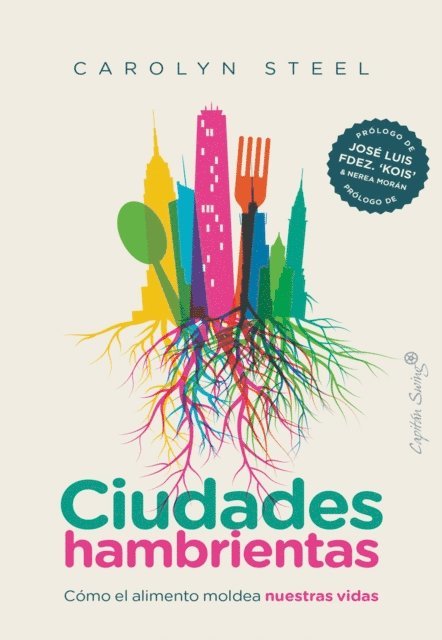
La comida da forma a las ciudades y moldea el campo que las abastece. Podría decirse que alimentar ciudades tiene un impacto sobre nosotros y nuestro planeta mucho mayor que cualquier otra actividad humana. Sin embargo, pocos ciudadanos occidentales somos conscientes del proceso. La comida llega a nuestros platos como por arte de magia, y rara vez nos paramos a preguntarnos cómo ha llegado allí.Pensando que, para una ciudad como Londres, todos los días se debe producir, importar, vender, cocinar, comer y eliminar nuevamente unos treinta millones de comidas, y que esto sucede a diario con cada ciudad del mundo, resulta sorprendente que quienes vivimos en los núcleos urbanos consigamos comer.Ciudades hambrientas es un libro sobre cómo comen las ciudades, un estudio insólito y revolucionario que examina la forma en que la producción moderna de alimentos ha dañado el equilibrio de la existencia humana y revela un dilema centenario aún por resolver, que podría ser la clave para muchos problemas actuales como la obesidad, el inexorable aumento de los supermercados o la destrucción del mundo natural. Una llamada de advertencia sobre el desperdicio y la destrucción causada por los sistemas alimentarios actuales, y una guía para corregir sus errores.
E-bok
Spanska, 2022136 kr
Läs direkt efter köp
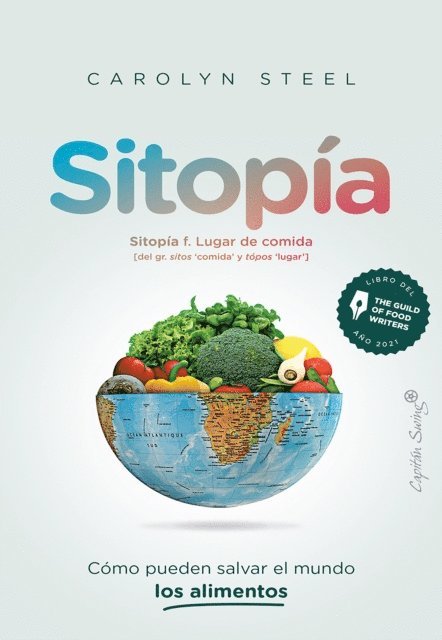
Sitopia es la continuación de ''Ciudades Hambrientas''. Explora la idea desarrollada por primera vez en ''Ciudades Hambrientas'' de que la comida da forma a nuestras vidas, y se pregunta qué podemos hacer con este conocimiento para llevarlas mejor. En esencia, es una filosofía práctica basada en la comida.La comida es el medio más poderoso del que disponemos para pensar de forma conectada en los numerosos dilemas a los que nos enfrentamos hoy en día. Durante incontables milenios, la comida ha dado forma a nuestros cuerpos, vidas, sociedades y mundo. Sus efectos están tan extendidos y son tan profundos que la mayoría de nosotros ni siquiera podemos verlos; sin embargo, nos resulta tan familiar como nuestro propio rostro. La comida es el gran conector, el bastón de la vida y su metáfora más fácil. Esta capacidad de abarcar mundos e ideas es lo que confiere a los alimentos un poder sin parangón. Se podría decir que la comida es la herramienta más poderosa para transformar nuestras vidas y el mundo que no sabíamos que teníamos.Mientras que ''Ciudades Hambrientas'' explora cómo el viaje de la comida a través de la ciudad ha dado forma a las civilizaciones a lo largo del tiempo, ''Sitopia'' comienza con un plato de comida y viaja hasta el universo. Su estructura consiste, pues, en una serie de escalas superpuestas, en las que la comida es siempre el centro. La comida anima nuestros cuerpos, hogares y sociedades, la ciudad y el campo, la naturaleza y el tiempo: siete escalas que forman los capítulos del libro. Explora los efectos de la comida a distintas escalas que interactúan de múltiples maneras interconectadas. Desde las normas culturales en las que nacemos hasta los gustos y preferencias personales que afectan a nuestra salud y placer individuales, pero también a la vitalidad de las economías locales, la geopolítica global y la ecología.La forma en que buscamos, hacemos y consumimos los alimentos ha definido la historia de la humanidad. Transforma nuestros cuerpos y hogares, nuestra política y nuestro comercio, nuestros paisajes y nuestro clima. Pero al olvidar nuestra herencia culinaria y depender de alimentos baratos y producidos de forma intensiva, hemos derivado hacia un modo de vida que amenaza a nuestro planeta y a nosotros mismos.¿Y si hubiera una forma más sostenible de comer y vivir? Basándose en muchas disciplinas, así como en las historias de los agricultores, diseñadores y economistas que están rehaciendo nuestra relación con los alimentos, este libro inspirador y profundamente reflexivo nos ofrece una visión provocadora y estimulante para el cambio, y señala el camino hacia un futuro mejor.WINNER Guild of Food Writers Food Book of the Year 2021.SHORTLISTED for the 2020 Wainwright Prize for Writing on Global Conservation.