Carrie Noland - Böcker
Visar alla böcker från författaren Carrie Noland. Handla med fri frakt och snabb leverans.
5 produkter
5 produkter
628 kr
Skickas inom 10-15 vardagar
In Agency and Embodiment, Carrie Noland examines the ways in which culture is both embodied and challenged through the corporeal performance of gestures. Arguing against the constructivist metaphor of bodily inscription dominant since Foucault, Noland maintains that kinesthetic experience, produced by acts of embodied gesturing, places pressure on the conditioning a body receives, encouraging variations in cultural practice that cannot otherwise be explained. Drawing on work in disciplines as diverse as dance and movement theory, phenomenology, cognitive science, and literary criticism, Noland argues that kinesthesia—feeling the body move—encourages experiment, modification, and, at times, rejection of the routine. Noland privileges corporeal performance and the sensory experience it affords in order to find a way beyond constructivist theory’s inability to produce a convincing account of agency. She observes that despite the impact of social conditioning, human beings continue to invent surprising new ways of altering the inscribed behaviors they are called on to perform. Through lucid close readings of Marcel Mauss, Maurice Merleau-Ponty, Bill Viola, André Leroi-Gourhan, Henri Michaux, Judith Butler, Frantz Fanon, Jacques Derrida, and contemporary digital artist Camille Utterback, Noland illustrates her provocative thesis, addressing issues of concern to scholars in critical theory, performance studies, anthropology, and visual studies.
1 051 kr
Skickas inom 7-10 vardagar
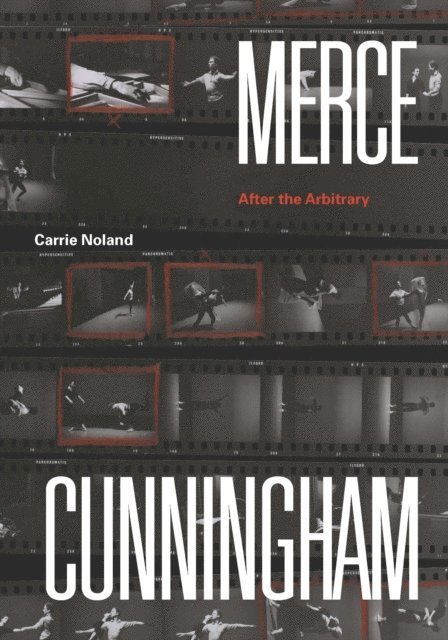
One of the most influential choreographers of the twentieth century, Merce Cunningham is known for introducing chance to dance. Far too often, however, accounts of Cunningham's work have neglected its full scope, focusing on his collaborations with the visionary composer John Cage or insisting that randomness was the singular goal of his choreography. In this book, the first dedicated to the complete arc of Cunningham's career, Carrie Noland brings new insight to this transformative artist's philosophy and career, providing a fresh perspective on his artistic process while exploring aspects of his choreographic practice never studied before.Examining a rich and previously unseen archive that includes photographs, film footage, and unpublished writing by Cunningham, Noland counters prior understandings of Cunningham's influential embrace of the unintended, demonstrating that Cunningham in fact set limits on the role chance played in his dances. Drawing on Cunningham's written and performed work, Noland reveals that Cunningham introduced variables before the chance procedure was applied and later shaped and modified the chance results. Chapters explore his relation not only to Cage, but also Marcel Duchamp, Robert Rauschenberg, James Joyce, and Bill T. Jones. Ultimately, Noland shows that Cunningham approached movement as more than "movement in itself," and that his work in fact enacted archetypal human dramas. This remarkable book will forever change our appreciation of the choreographer's work and legacy.
325 kr
Skickas inom 7-10 vardagar
One of the most influential choreographers of the twentieth century, Merce Cunningham is known for introducing chance to dance. Far too often, however, accounts of Cunningham's work have neglected its full scope, focusing on his collaborations with the visionary composer John Cage or insisting that randomness was the singular goal of his choreography. In this book, the first dedicated to the complete arc of Cunningham's career, Carrie Noland brings new insight to this transformative artist's philosophy and career, providing a fresh perspective on his artistic process while exploring aspects of his choreographic practice never studied before.Examining a rich and previously unseen archive that includes photographs, film footage, and unpublished writing by Cunningham, Noland counters prior understandings of Cunningham's influential embrace of the unintended, demonstrating that Cunningham in fact set limits on the role chance played in his dances. Drawing on Cunningham's written and performed work, Noland reveals that Cunningham introduced variables before the chance procedure was applied and later shaped and modified the chance results. Chapters explore his relation not only to Cage, but also Marcel Duchamp, Robert Rauschenberg, James Joyce, and Bill T. Jones. Ultimately, Noland shows that Cunningham approached movement as more than "movement in itself," and that his work in fact enacted archetypal human dramas. This remarkable book will forever change our appreciation of the choreographer's work and legacy.
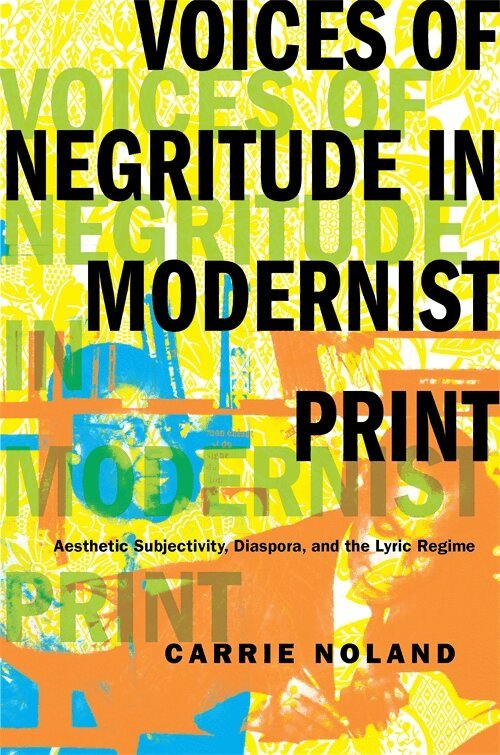
Voices of Negritude in Modernist Print
Aesthetic Subjectivity, Diaspora, and the Lyric Regime
Inbunden, Engelska, 2015
596 kr
Skickas inom 7-10 vardagar
Carrie Noland approaches Negritude as an experimental, text-based poetic movement developed by diasporic authors of African descent through the means of modernist print culture. Engaging primarily the works of Aime Cesaire and Leon-Gontran Damas, Noland shows how the demands of print culture alter the personal voice of each author, transforming an empirical subjectivity into a hybrid, textual entity that she names, after Theodor Adorno, an "aesthetic subjectivity." This aesthetic subjectivity, transmitted by the words on the page, must be actualized-performed, reiterated, and created anew-by each reader, at each occasion of reading. Lyric writing and lyric reading therefore attenuate the link between author and phenomenalized voice. Yet the Negritude poem insists upon its connection to lived experience even as it emphasizes its printed form. Ironically, a purely formalist reading would have to ignore the ways formal-and not merely thematic-elements point toward the poem's own conditions of emergence.Blending archival research on the historical context of Negritude with theories of the lyric "voice," Noland argues that Negritude poems present a challenge to both form-based (deconstructive) theories and identity-based theories of poetic representation. Through close readings, she reveals that the racialization of the author places pressure on a lyric regime of interpretation, obliging us to reconceptualize the relation of author to text in poetries of the first person.
578 kr
Skickas inom 7-10 vardagar
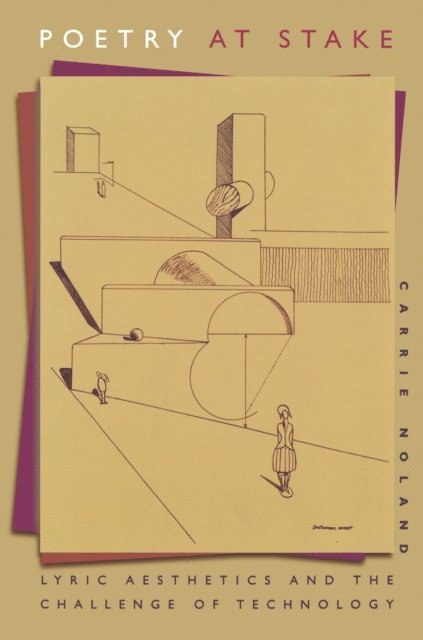
Taking seriously Guillaume Apollinaire's wager that twentieth-century poets would one day "mechanize" poetry as modern industry has mechanized the world, Carrie Noland explores poetic attempts to redefine the relationship between subjective expression and mechanical reproduction, high art and the world of things. Noland builds upon close readings to construct a tradition of diverse lyricists--from Arthur Rimbaud, Blaise Cendrars, and Rene Char to contemporary performance artists Laurie Anderson and Patti Smith--allied in their concern with the nature of subjectivity in an age of mechanical reproduction.