Casey Baker – författare
Visar alla böcker från författaren . Handla med fri frakt och snabb leverans.
9 produkter
9 produkter
Häftad, Engelska, 2019
219 kr
Skickas inom 5-8 vardagar
Häftad, Engelska, 2019
300 kr
Skickas inom 5-8 vardagar
E-bok
PDF, Engelska, 2026222 kr
Läs direkt efter köp
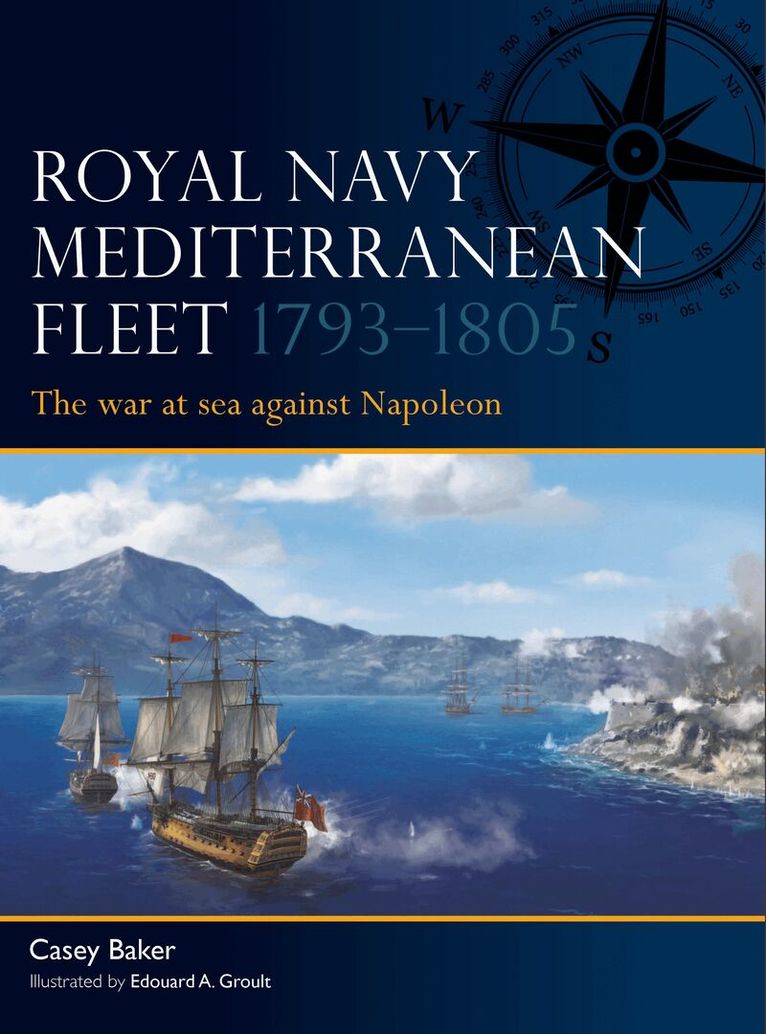
A fresh, all-encompassing study of the most active British fleet of the French Revolutionary and Napoleonic wars: the Mediterranean Fleet, in which Horatio Nelson made his legendary name.When war broke out with Revolutionary France in 1893, the Royal Navy's Mediterranean Fleet was launched into a long and complex war. Operating at arm's length from London, the fleet assumed traditional responsibilities for trade protection, blockade, and high-seas warfare, but also diplomatic and counter-revolutionary activities across the region. It was the theatre that produced some of the most iconic moments of British naval history, and made a legend out of Horatio Nelson. However, the reality of the Mediterranean war has long been overshadowed by its famous battles and huge personalities. In this book, naval scholar Casey Baker draws upon his years of archive research to present a comprehensive portrait of the Mediterranean Fleet's war its strategic roles, its organization and decision-making, fighting capabilities and shortcomings, diplomatic and political responsibilities, logistics and manning, and the combat that it saw from the Levant to Cape Trafalgar. With superb original artwork, new maps and 3D diagrams of little-studied actions from amphibious operations to the maritime trade war, he assesses how Royal Navy's most active fleet of the Revolutionary and Napoleonic Wars fought and operated in this most crucial theatre.
Häftad, Engelska, 2026
190 kr
Kommande
A fresh, all-encompassing study of the most active British fleet of the French Revolutionary and Napoleonic wars: the Mediterranean Fleet, in which Horatio Nelson made his legendary name.When war broke out with Revolutionary France in 1893, the Royal Navy’s Mediterranean Fleet was launched into a long and complex war. Operating at arm's length from London, the fleet assumed traditional responsibilities for trade protection, blockade, and high-seas warfare, but also diplomatic and counter-revolutionary activities across the region. It was the theatre that produced some of the most iconic moments of British naval history, and made a legend out of Horatio Nelson. However, the reality of the Mediterranean war has long been overshadowed by its famous battles and huge personalities. In this book, naval scholar Casey Baker draws upon his years of archive research to present a comprehensive portrait of the Mediterranean Fleet’s war – its strategic roles, its organization and decision-making, fighting capabilities and shortcomings, diplomatic and political responsibilities, logistics and manning, and the combat that it saw from the Levant to Cape Trafalgar. With superb original artwork, new maps and 3D diagrams of little-studied actions from amphibious operations to the maritime trade war, he assesses how Royal Navy’s most active fleet of the Revolutionary and Napoleonic Wars fought and operated in this most crucial theatre.
E-bok
Engelska, 2026222 kr
Läs direkt efter köp
A fresh, all-encompassing study of the most active British fleet of the French Revolutionary and Napoleonic wars: the Mediterranean Fleet, in which Horatio Nelson made his legendary name.When war broke out with Revolutionary France in 1893, the Royal Navy's Mediterranean Fleet was launched into a long and complex war. Operating at arm's length from London, the fleet assumed traditional responsibilities for trade protection, blockade, and high-seas warfare, but also diplomatic and counter-revolutionary activities across the region. It was the theatre that produced some of the most iconic moments of British naval history, and made a legend out of Horatio Nelson. However, the reality of the Mediterranean war has long been overshadowed by its famous battles and huge personalities. In this book, naval scholar Casey Baker draws upon his years of archive research to present a comprehensive portrait of the Mediterranean Fleet's war its strategic roles, its organization and decision-making, fighting capabilities and shortcomings, diplomatic and political responsibilities, logistics and manning, and the combat that it saw from the Levant to Cape Trafalgar. With superb original artwork, new maps and 3D diagrams of little-studied actions from amphibious operations to the maritime trade war, he assesses how Royal Navy's most active fleet of the Revolutionary and Napoleonic Wars fought and operated in this most crucial theatre.
Häftad, Engelska, 2020
250 kr
Skickas inom 5-8 vardagar
Häftad, Engelska, 2019
239 kr
Skickas inom 5-8 vardagar
Häftad, Engelska, 2017
247 kr
Skickas inom 3-6 vardagar
Häftad, Engelska, 2026
521 kr
Kommande
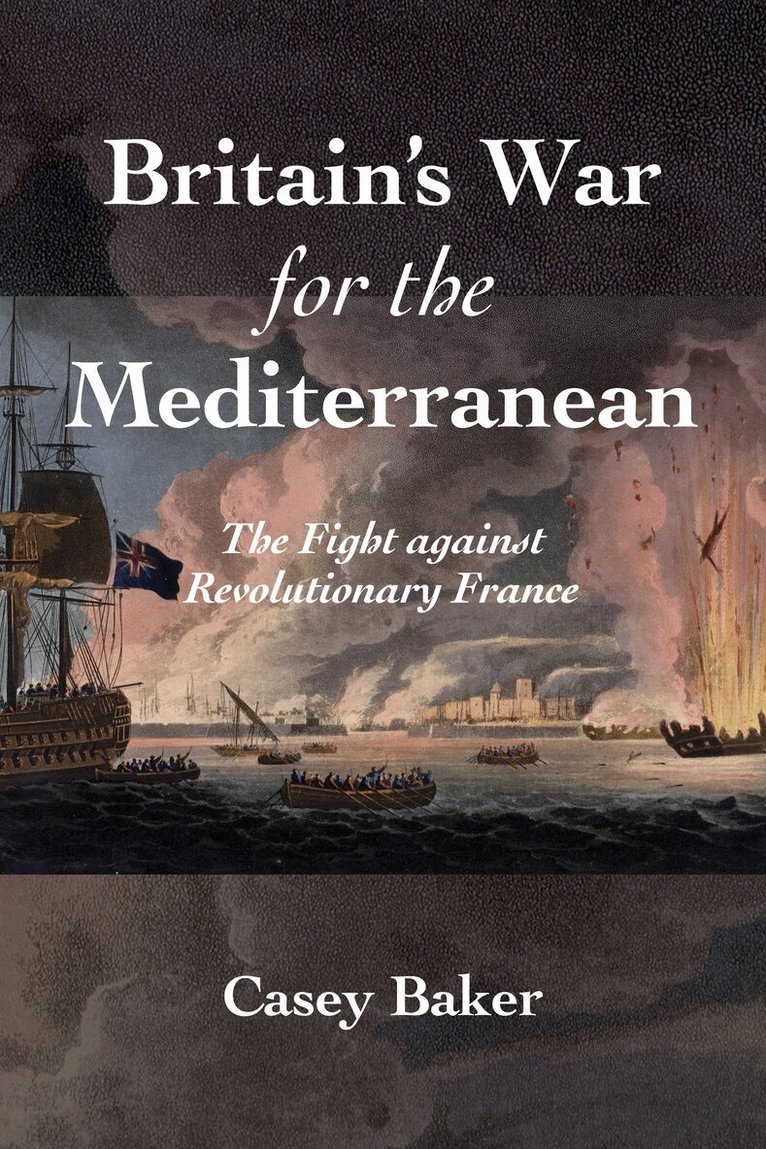
Britain’s War for the Mediterranean provides a definitive study on British warmaking in the Mediterranean during the War of the First Coalition. It traces the origins of foreign and naval policies from the early eighteenth century to describe the duality of British affairs. These contradictions manifested themselves in the War of the First Coalition as Great Britain attempted to build consensus in the Mediterranean World while clinging to its power base of naval power and commerce. The book explores the decisions of individuals and the wider trends of the British political and naval system, honed over the course of the eighteenth century. In explaining war against Revolutionary France, the book follows the decisions of admirals, diplomats, and politicians in attempting to cobble together a coalition of Spanish, Austrian, Sardinian, and Neapolitan forces. This book also makes connections with the other theaters of war: The Austrian Netherlands and the Caribbean.Britain’s War for the Mediterranean examines the internal working of the British government during the crisis of the French Revolution. It focuses on how politicians, diplomats, and military commanders formulated strategy for the Mediterranean theater. One of the major conclusions of this book is that the British government never spoke with one voice. Lacking synchronization in a changing conflict, the structure and conflicting objectives of each branch of the government failed to create a coherent plan to resist Republican expansion in the region. The book complicates the simplistic view of previous works on the weakness of allies and the naivete of the Pitt ministry, providing agency to diplomats and commanders across the region.The second major conclusion is that these conflicting objectives were firmly rooted in the experiences of the eighteenth century. British diplomacy, crippled in the aftermath of the American Revolution, saw the French Revolution as an opportunity to build consensus and a shared view of a British world. French aggression offered an opportunity to reclaim a position of influence lost over the course of the 1700s. In contrast, the trajectory of British foreign policy shaped the use of the Royal Navy in the eighteenth century. A trans-Atlantic force, a war in the Mediterranean forced British admirals to relearn the complicated nature of regional foreign policy. Diplomacy and naval power clashed over the conduct of the war – one rooted in foreign courts, the other in maritime coercion.