Céline Frigau Manning – författare
Visar alla böcker från författaren Céline Frigau Manning. Handla med fri frakt och snabb leverans.
6 produkter
6 produkter
Inbunden, Engelska, 2016
1 995 kr
Skickas inom 10-15 vardagar
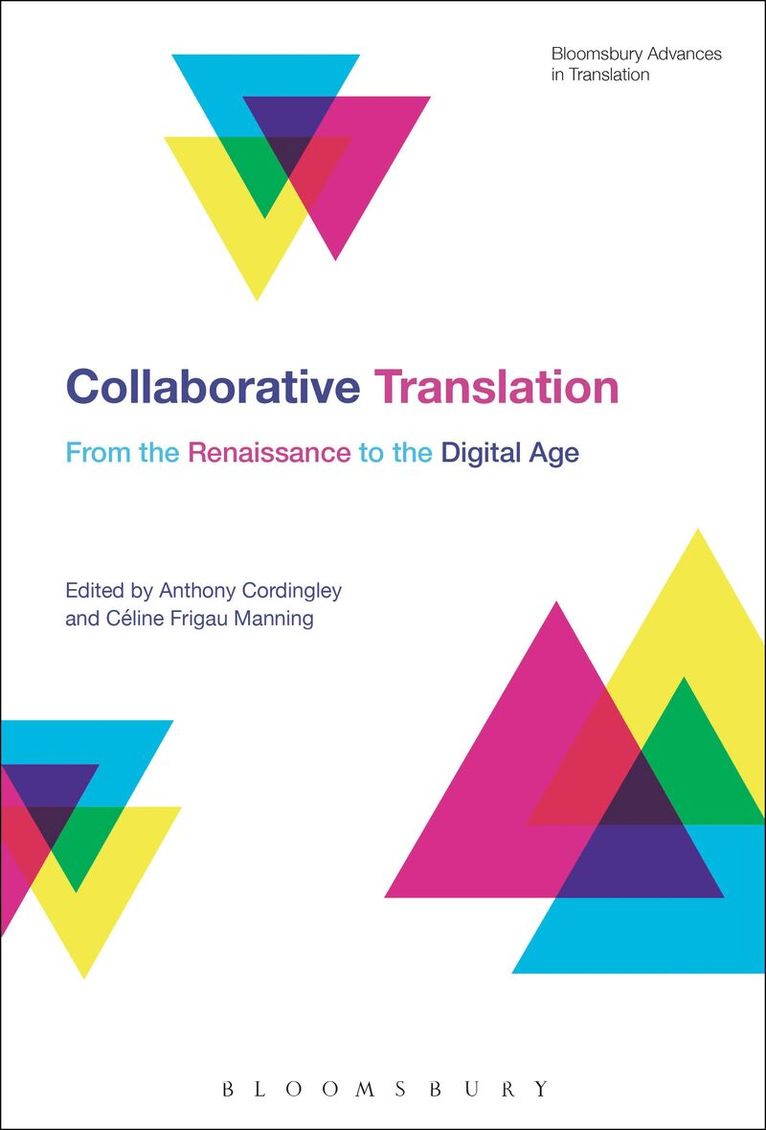
For centuries, the art of translation has been misconstrued as a solitary affair. Yet, from Antiquity to the Middle Ages, groups of translators comprised of specialists of different languages formed in order to transport texts from one language and culture to another. Collaborative Translation uncovers the collaborative practices occluded in Renaissance theorizing of translation to which our individualist notions of translation are indebted. Leading translation scholars as well as professional translators have been invited here to detail their experiences of collaborative translation, as well as the fruits of their research into this neglected form of translation.This volume offers in-depth analysis of rich, sometimes explosive, relationships between authors and their translators. Their negotiations of cooperation and control, assistance and interference, are shown here to shape the translation of prominent modern authors such as Günter Grass, Vladimir Nabokov and Haruki Murakami.The advent of printing, the cultural institutions and the legal and political environment that regulate the production of translated texts have each formalized many of the inherently social and communicative practices of translation. Yet this publishing regime has been profoundly disrupted by the technologies that are currently revolutionizing collaborative translation techniques. This volume details the impact that this technological and environmental evolution is having upon the translator, proliferating sites and communities of collaboration, transforming traditional relationships with authors and editors, revisers, stage directors, actors and readers.
E-bok
Engelska, 2016542 kr
Läs direkt efter köp
For centuries, the art of translation has been misconstrued as a solitary affair. Yet, from Antiquity to the Middle Ages, groups of translators comprised of specialists of different languages formed in order to transport texts from one language and culture to another. Collaborative Translation uncovers the collaborative practices occluded in Renaissance theorizing of translation to which our individualist notions of translation are indebted. Leading translation scholars as well as professional translators have been invited here to detail their experiences of collaborative translation, as well as the fruits of their research into this neglected form of translation.This volume offers in-depth analysis of rich, sometimes explosive, relationships between authors and their translators. Their negotiations of cooperation and control, assistance and interference, are shown here to shape the translation of prominent modern authors such as Günter Grass, Vladimir Nabokov and Haruki Murakami.The advent of printing, the cultural institutions and the legal and political environment that regulate the production of translated texts have each formalized many of the inherently social and communicative practices of translation. Yet this publishing regime has been profoundly disrupted by the technologies that are currently revolutionizing collaborative translation techniques. This volume details the impact that this technological and environmental evolution is having upon the translator, proliferating sites and communities of collaboration, transforming traditional relationships with authors and editors, revisers, stage directors, actors and readers.
E-bok
PDF, Engelska, 2016542 kr
Läs direkt efter köp
For centuries, the art of translation has been misconstrued as a solitary affair. Yet, from Antiquity to the Middle Ages, groups of translators comprised of specialists of different languages formed in order to transport texts from one language and culture to another. Collaborative Translation uncovers the collaborative practices occluded in Renaissance theorizing of translation to which our individualist notions of translation are indebted. Leading translation scholars as well as professional translators have been invited here to detail their experiences of collaborative translation, as well as the fruits of their research into this neglected form of translation.This volume offers in-depth analysis of rich, sometimes explosive, relationships between authors and their translators. Their negotiations of cooperation and control, assistance and interference, are shown here to shape the translation of prominent modern authors such as Günter Grass, Vladimir Nabokov and Haruki Murakami.The advent of printing, the cultural institutions and the legal and political environment that regulate the production of translated texts have each formalized many of the inherently social and communicative practices of translation. Yet this publishing regime has been profoundly disrupted by the technologies that are currently revolutionizing collaborative translation techniques. This volume details the impact that this technological and environmental evolution is having upon the translator, proliferating sites and communities of collaboration, transforming traditional relationships with authors and editors, revisers, stage directors, actors and readers.
Häftad, Engelska, 2018
518 kr
Skickas inom 10-15 vardagar
For centuries, the art of translation has been misconstrued as a solitary affair. Yet, from Antiquity to the Middle Ages, groups of translators comprised of specialists of different languages formed in order to transport texts from one language and culture to another. Collaborative Translation uncovers the collaborative practices occluded in Renaissance theorizing of translation to which our individualist notions of translation are indebted. Leading translation scholars as well as professional translators have been invited here to detail their experiences of collaborative translation, as well as the fruits of their research into this neglected form of translation.This volume offers in-depth analysis of rich, sometimes explosive, relationships between authors and their translators. Their negotiations of cooperation and control, assistance and interference, are shown here to shape the translation of prominent modern authors such as Günter Grass, Vladimir Nabokov and Haruki Murakami.The advent of printing, the cultural institutions and the legal and political environment that regulate the production of translated texts have each formalized many of the inherently social and communicative practices of translation. Yet this publishing regime has been profoundly disrupted by the technologies that are currently revolutionizing collaborative translation techniques. This volume details the impact that this technological and environmental evolution is having upon the translator, proliferating sites and communities of collaboration, transforming traditional relationships with authors and editors, revisers, stage directors, actors and readers.
E-bok
PDF, Franska, 2017217 kr
Läs direkt efter köp
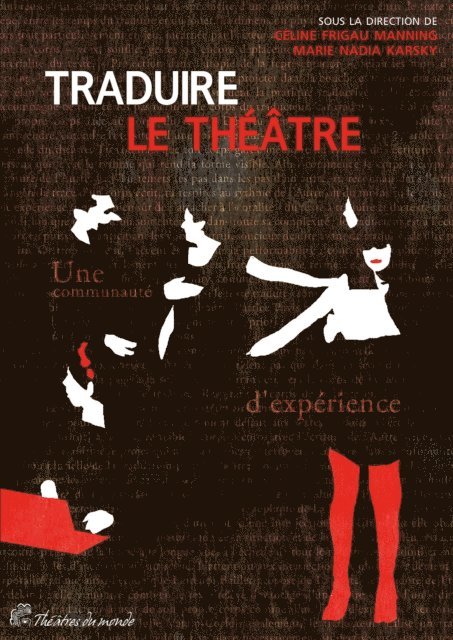
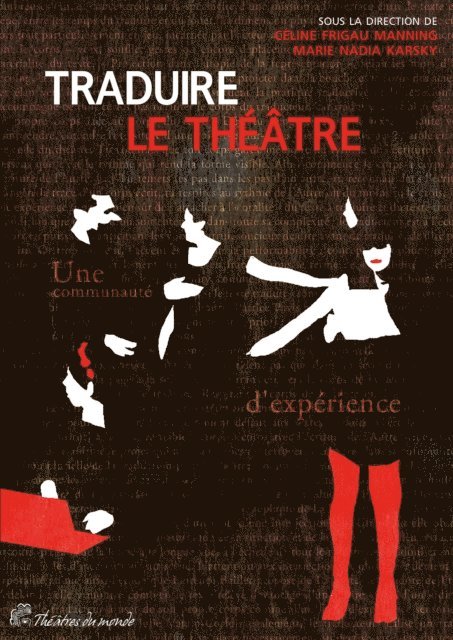
Traduire le théâtre, c’est se projeter sur une scène, dans le corps des acteurs. C’est aussi partir de son propre corps pour trouver les mots qui créeront du jeu, et faire l’expérience de sa place, parfois instable, dans une communauté.Au fil de témoignages, de réflexions théoriques et pratiques, cet ouvrage collectif s’attache aux rôles multiples des traducteurs au théâtre. Il analyse la mission de celles et ceux qui, par leur travail solitaire ou collaboratif, à la table ou en répétition, donnent sa première matérialité au texte ; il questionne les faisceaux de relations qu’ils entretiennent, tant avec des auteurs, metteurs en scène, acteurs, qu’avec des producteurs ou des éditeurs.Se trouve ainsi interrogée la place même du traducteur, au croisement de perceptions divergentes, voire conflictuelles, dans la communauté d’expérience que représente le théâtre.
E-bok
Franska, 2017217 kr
Läs direkt efter köp
Traduire le théâtre, c’est se projeter sur une scène, dans le corps des acteurs. C’est aussi partir de son propre corps pour trouver les mots qui créeront du jeu, et faire l’expérience de sa place, parfois instable, dans une communauté.Au fil de témoignages, de réflexions théoriques et pratiques, cet ouvrage collectif s’attache aux rôles multiples des traducteurs au théâtre. Il analyse la mission de celles et ceux qui, par leur travail solitaire ou collaboratif, à la table ou en répétition, donnent sa première matérialité au texte ; il questionne les faisceaux de relations qu’ils entretiennent, tant avec des auteurs, metteurs en scène, acteurs, qu’avec des producteurs ou des éditeurs.Se trouve ainsi interrogée la place même du traducteur, au croisement de perceptions divergentes, voire conflictuelles, dans la communauté d’expérience que représente le théâtre.