Cem Kara – författare
Visar alla böcker från författaren Cem Kara. Handla med fri frakt och snabb leverans.
4 produkter
4 produkter
E-bok
PDF, Engelska, 2026746 kr
Läs direkt efter köp
Sufism in Ottoman and Post Ottoman Europe: Entanglements in Past and Present offers the first in depth, regionally nuanced study of Sufi networks, legacies, and transformations across Southeastern Europe from the Ottoman period through the contemporary post socialist era.Spanning multiple centuries and cultural contexts, this volume explores the intricate interactions between Sufi communities and broader religious, political, and social landscapes. From the conceptual merging of Alevi Bektashism and the visual culture of ?Alid piety, to the impact of Western esotericism, Turkish soft power, and digital revivalism, contributors examine the dynamic and often contested role of Sufism in shaping memory, authority, and identity across diverse geographies. Through richly detailed case studies - from Bosnia and Macedonia to Germany and Turkey - the chapters interrogate how Sufi actors respond to shifting nationalist narratives, contested memory cultures, and local global entanglements. This book also traces how sacred spaces, pilgrimage practices, and charismatic leadership adapt over time, illuminating the multi layered negotiations between tradition, modernity, and political power.A vital contribution to the study of Sufism, Islamic history, and Balkan and Ottoman legacies, this book is essential reading for scholars of religious studies, anthropology, Middle East and Islamic studies, and European cultural history.
E-bok
Engelska, 2026746 kr
Läs direkt efter köp
Sufism in Ottoman and Post Ottoman Europe: Entanglements in Past and Present offers the first in depth, regionally nuanced study of Sufi networks, legacies, and transformations across Southeastern Europe from the Ottoman period through the contemporary post socialist era.Spanning multiple centuries and cultural contexts, this volume explores the intricate interactions between Sufi communities and broader religious, political, and social landscapes. From the conceptual merging of Alevi Bektashism and the visual culture of ?Alid piety, to the impact of Western esotericism, Turkish soft power, and digital revivalism, contributors examine the dynamic and often contested role of Sufism in shaping memory, authority, and identity across diverse geographies. Through richly detailed case studies - from Bosnia and Macedonia to Germany and Turkey - the chapters interrogate how Sufi actors respond to shifting nationalist narratives, contested memory cultures, and local global entanglements. This book also traces how sacred spaces, pilgrimage practices, and charismatic leadership adapt over time, illuminating the multi layered negotiations between tradition, modernity, and political power.A vital contribution to the study of Sufism, Islamic history, and Balkan and Ottoman legacies, this book is essential reading for scholars of religious studies, anthropology, Middle East and Islamic studies, and European cultural history.
Inbunden, Engelska, 2026
2 181 kr
Skickas inom 10-15 vardagar
Sufism in Ottoman and Post‑Ottoman Europe: Entanglements in Past and Present offers the first in‑depth, regionally nuanced study of Sufi networks, legacies, and transformations across Southeastern Europe from the Ottoman period through the contemporary post‑socialist era.Spanning multiple centuries and cultural contexts, this volume explores the intricate interactions between Sufi communities and broader religious, political, and social landscapes. From the conceptual merging of Alevi‑Bektashism and the visual culture of ʿAlid piety, to the impact of Western esotericism, Turkish soft power, and digital revivalism, contributors examine the dynamic and often contested role of Sufism in shaping memory, authority, and identity across diverse geographies. Through richly detailed case studies – from Bosnia and Macedonia to Germany and Turkey – the chapters interrogate how Sufi actors respond to shifting nationalist narratives, contested memory cultures, and local‑global entanglements. This book also traces how sacred spaces, pilgrimage practices, and charismatic leadership adapt over time, illuminating the multi‑layered negotiations between tradition, modernity, and political power.A vital contribution to the study of Sufism, Islamic history, and Balkan and Ottoman legacies, this book is essential reading for scholars of religious studies, anthropology, Middle East and Islamic studies, and European cultural history.
E-bok
PDF, Tyska, 2018860 kr
Läs direkt efter köp
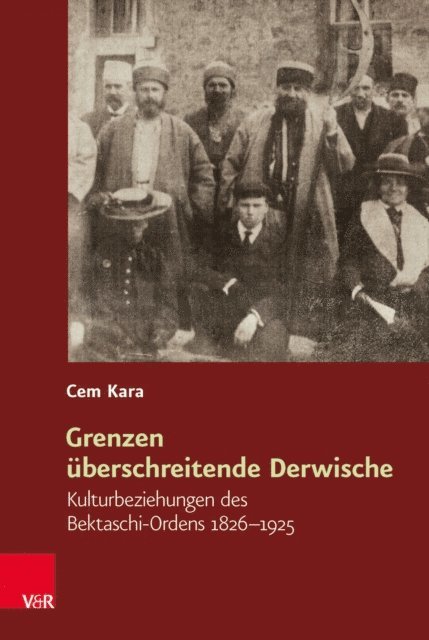
Das Osmanische Reich war über sein gesamtes Bestehen hinweg von kultureller Vielfalt geprägt, in der die verschiedenen Kulturen in wechselseitigem Austausch standen. Im Laufe des 19. Jahrhunderts wurde die kulturelle Diversität im Osmanischen Reich um eine weitere Facette ergänzt, als Verflechtungen mit ›westlichen‹ Staaten zunahmen und in weitere Kulturbeziehungen mündeten. Die vorliegende Studie beleuchtet anhand der Derwische des Bektaschi-Ordens zwischenkulturelle Beziehungen innerhalb wie außerhalb der Grenzen des Osmanischen Reiches.Der ›mystische‹ Derwischorden der Bektaschis zählte zu den einflussreichen religiösen Kulturen im Osmanischen Reich, hob sich aber zugleich durch abweichende Religionsansichten vom staatlich gestützten Mehrheitsislam ab. Diese Sonderrolle zeigte sich auch in den Kulturbeziehungen des 19. und frühen 20. Jahrhunderts.In der Arbeit werden verschiedene Formen des Kulturkontakts, Kulturtransfers und der gegenseitigen Wahrnehmung sowie deren jeweilige Transformationen im Laufe der Zeit diskutiert. Hierbei stellt sich auch stets die Frage, wie sich die religiöse Sinnstiftung und das Selbstverständnis der Bektaschis durch die Verflechtungen veränderten.