Charles Bradford Bow – författare
Visar alla böcker från författaren Charles Bradford Bow. Handla med fri frakt och snabb leverans.
5 produkter
5 produkter
E-bok
PDF, Engelska, 2022992 kr
Läs direkt efter köp
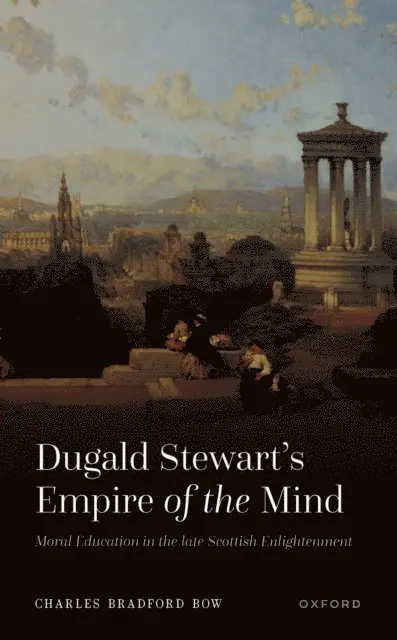
Dugald Stewart''s Empire of the Mind recasts the cultivation of a democratic intellect in the late Scottish Enlightenment. It comprises an intellectual history of what was at stake in moral education during a transitional period of revolutionary change between 1772 and 1828. Stewart was a child of the Scottish Enlightenment, who inherited the Scottish philosophical tradition of teaching metaphysics as moral philosophy from the tuition of Adam Ferguson and Thomas Reid. But the Scottish Enlightenment intellectual culture of his youth changed in the aftermath of the French Revolution. Stewart sustained the Scottish school of philosophy by transforming how it was taught as professor of moral philosophy at the University of Edinburgh. His elementary system of moral education fostered an empire of the mind in the universal pursuit of happiness. The democratization of Stewart''s didactic Enlightenment--the instruction of moral improvement--in a globalizing, interconnected nineteenth-century knowledge economy is examined in this book.
E-bok
Engelska, 2022992 kr
Läs direkt efter köp
Dugald Stewart''s Empire of the Mind recasts the cultivation of a democratic intellect in the late Scottish Enlightenment. It comprises an intellectual history of what was at stake in moral education during a transitional period of revolutionary change between 1772 and 1828. Stewart was a child of the Scottish Enlightenment, who inherited the Scottish philosophical tradition of teaching metaphysics as moral philosophy from the tuition of Adam Ferguson and Thomas Reid. But the Scottish Enlightenment intellectual culture of his youth changed in the aftermath of the French Revolution. Stewart sustained the Scottish school of philosophy by transforming how it was taught as professor of moral philosophy at the University of Edinburgh. His elementary system of moral education fostered an empire of the mind in the universal pursuit of happiness. The democratization of Stewart''s didactic Enlightenment--the instruction of moral improvement--in a globalizing, interconnected nineteenth-century knowledge economy is examined in this book.
Inbunden, Engelska, 2022
1 170 kr
Skickas inom 5-8 vardagar
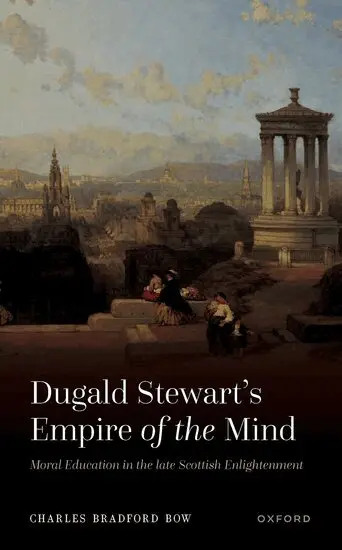
Dugald Stewart's Empire of the Mind recasts the cultivation of a democratic intellect in the late Scottish Enlightenment. It comprises an intellectual history of what was at stake in moral education during a transitional period of revolutionary change between 1772 and 1828. Stewart was a child of the Scottish Enlightenment, who inherited the Scottish philosophical tradition of teaching metaphysics as moral philosophy from the tuition of Adam Ferguson and Thomas Reid. But the Scottish Enlightenment intellectual culture of his youth changed in the aftermath of the French Revolution. Stewart sustained the Scottish school of philosophy by transforming how it was taught as professor of moral philosophy at the University of Edinburgh. His elementary system of moral education fostered an empire of the mind in the universal pursuit of happiness. The democratization of Stewart's didactic Enlightenment--the instruction of moral improvement--in a globalizing, interconnected nineteenth-century knowledge economy is examined in this book.
Inbunden, Engelska, 2026
769 kr
Kommande
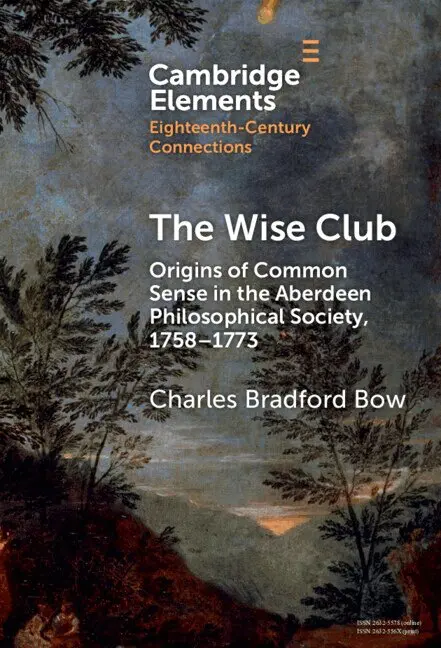
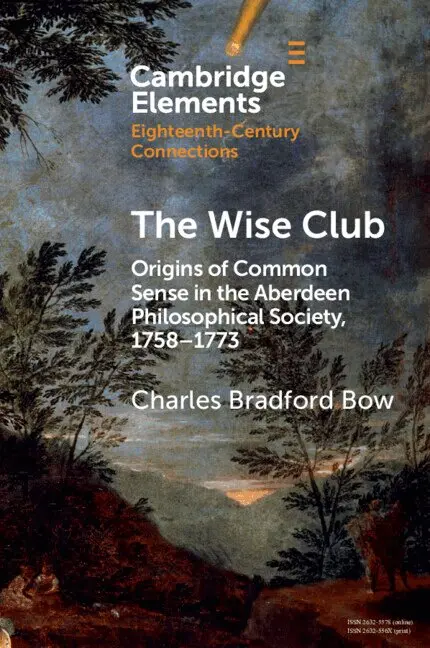
The Wise Club reconstructs the collaborative intellectual culture in which the Scottish philosophy of common sense first emerged in the Aberdeen Philosophical Society between 1758 and 1773. Rather than attributing this school of thought to a single founder, the study traces how David Skene, John Gregory, Thomas Reid, George Campbell, Alexander Gerard, and James Beattie developed distinct yet compatible inquiries across different branches of knowledge through a disciplined culture of inquiry. Their collective commitment to an inductive investigation of the original faculties of the human mind extended common sense beyond epistemology to natural history, medicine, rhetoric, aesthetics, moral philosophy, and imaginative literature. Drawing on unpublished discourses, abstracted discussions, lecture notes, and correspondence, this Element situates the Wise Club in a formative context that produced canonical works of the Scottish Enlightenment and reinterprets common sense philosophy as a characteristic method of inquiry rather than a unified doctrinal system.
Häftad, Engelska, 2026
239 kr
Kommande
The Wise Club reconstructs the collaborative intellectual culture in which the Scottish philosophy of common sense first emerged in the Aberdeen Philosophical Society between 1758 and 1773. Rather than attributing this school of thought to a single founder, the study traces how David Skene, John Gregory, Thomas Reid, George Campbell, Alexander Gerard, and James Beattie developed distinct yet compatible inquiries across different branches of knowledge through a disciplined culture of inquiry. Their collective commitment to an inductive investigation of the original faculties of the human mind extended common sense beyond epistemology to natural history, medicine, rhetoric, aesthetics, moral philosophy, and imaginative literature. Drawing on unpublished discourses, abstracted discussions, lecture notes, and correspondence, this Element situates the Wise Club in a formative context that produced canonical works of the Scottish Enlightenment and reinterprets common sense philosophy as a characteristic method of inquiry rather than a unified doctrinal system.