Charles Gati - Böcker
Visar alla böcker från författaren Charles Gati. Handla med fri frakt och snabb leverans.
6 produkter
6 produkter
382 kr
Skickas inom 10-15 vardagar
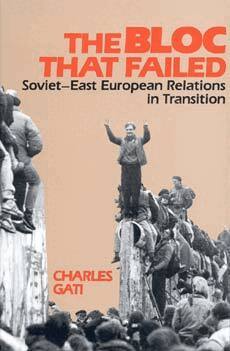
" . . . lucid and stimulating . . . " —The New York Times Book Review"Essential reading for anyone who wishes to understand the new Eastern Europe and the collapse of Soviet control over it—informative and incisive." —Zbigniew Brzezinski"Gati's book . . . is the most current and best-informed study of this rapidly changing world. . . . Professor Gati is uniquely qualified to understand and give perspective to the impact of perestroika and Soviet 'new thinking' on the events in Eastern Europe." —William H. Luers, Former U. S. Ambassador to Czechoslovakia" . . . a superb synthesis of the postwar evolution of Soviet-East European relations and the first up-to-date analysis of the revolutionary events in that part of the world in 1989." —Michael Mandelbaum, Council on Foreign Relations"An up-to-date and lucid overview of the troubled course of Soviet-East European relations at time of momentous change in the Soviet bloc." —Sarah M. Terry" . . . excellent analysis and synthesis . . . " —Foreign Affairs"this book is written in a lively style and is a good scholarly synthesis of the post-Second World War evolution of Soviet-East European relations ending in the revolutionary events of 1989." —Canadian Journal of Political Science" . . . a lively and perceptive account . . . " —Military Review"Clearly and simply written, this book is particularly useful as a compact introduction to the prehistory and transformation of East European politics." —Choice"It is well organized, readable, and sensitive to complexity; find the time to read it." —History
269 kr
Skickas inom 10-15 vardagar
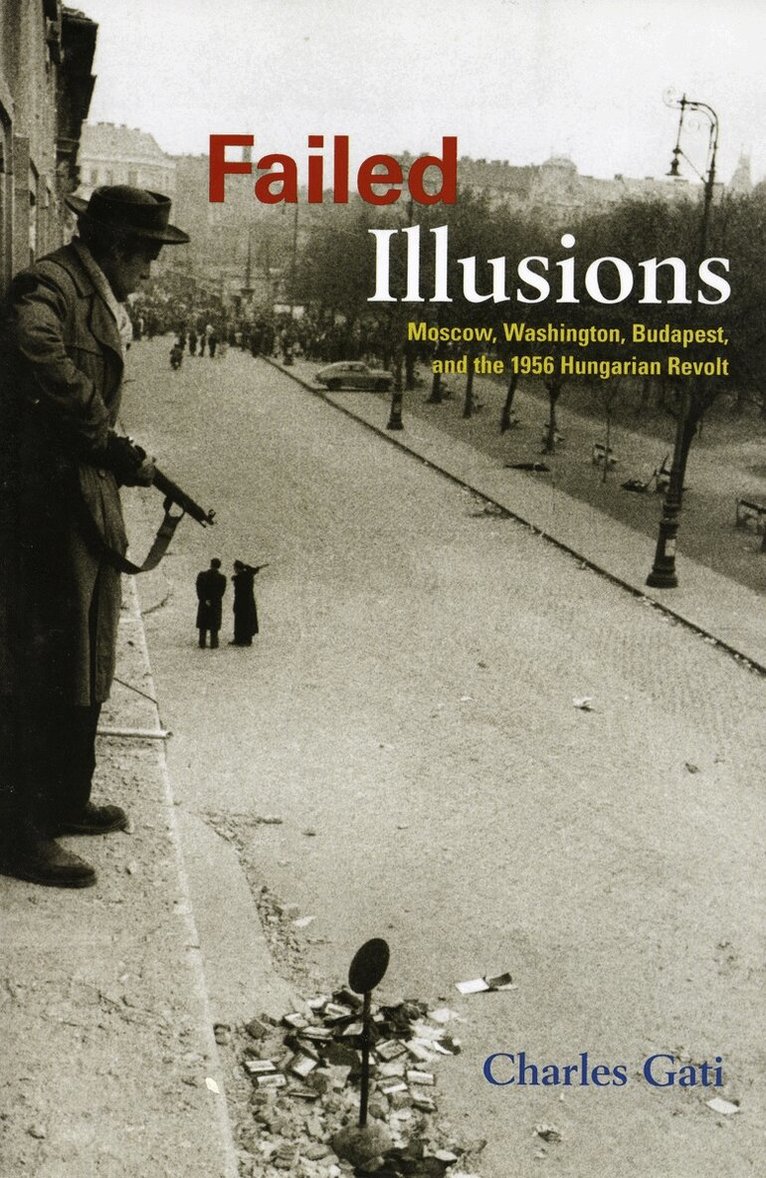
Winner of the 2007 Marshall Shulman PrizeThe 1956 Hungarian revolution, and its suppression by the U.S.S.R., was a key event in the cold war, demonstrating deep dissatisfaction with both the communist system and old-fashioned Soviet imperialism. But now, fifty years later, the simplicity of this David and Goliath story should be revisited, according to Charles Gati's new history of the revolt.Denying neither Hungarian heroism nor Soviet brutality, Failed Illusions nevertheless modifies our picture of what happened. Imre Nagy, a reform communist who headed the revolutionary government and turned into a genuine patriot, could not rise to the occasion by steering a realistic course between his people's demands and Soviet geopolitical and ideological interests. The United States was all talk, no action, while Radio Free Europe simultaneously backed the insurgents' unrealizable demands and opposed Nagy. In the end, the Soviet Union followed its imperial impulse instead of seeking a political solution to the crisis in the spirit of de-Stalinization.Failed Illusions is based on extensive archival research, including the CIA's operational files, and hundreds of interviews with participants in Budapest, Moscow, and Washington. Personal observations by the author, a young reporter in Budapest in 1956, bring the tragic story vividly to life.
1 558 kr
Skickas inom 10-15 vardagar
First published in 1981, Blue-Collar Workers in Eastern Europe deals with the attitudes and political disposition of the East European working class. In particular, it provides the first analysis of the growing assertiveness of the industrial proletariat from which East European governments claim to derive their legitimacy, and on whose behalf, they profess to rule. These governments are increasingly hesitant in the use of force, yet they lack the economic means of meeting their workers’ demands.The chapters that make up the book fall into three main categories. About one third are issue oriented and analytical, dealing with the role, economic condition, attitudes, social and demographic characteristics and political involvement of the workers. These are followed by case studies of workers in several countries. Finally, two chapters explore the policy implications of the workers’ new-found assertiveness and assess the international policy options and dilemmas of both the Soviet Union and the West. This book covers all the major issues which brought about the widely publicised workers’ rebellion in Poland in the summer of 1980 and includes an assessment of that crisis and its sequels. It will attract a wide readership among students of the history and politics of Eastern Europe especially those interested in labour unions, socialist management, and comparative communism.
486 kr
Kommande
First published in 1981, Blue-Collar Workers in Eastern Europe deals with the attitudes and political disposition of the East European working class. In particular, it provides the first analysis of the growing assertiveness of the industrial proletariat from which East European governments claim to derive their legitimacy, and on whose behalf, they profess to rule. These governments are increasingly hesitant in the use of force, yet they lack the economic means of meeting their workers’ demands.The chapters that make up the book fall into three main categories. About one third are issue oriented and analytical, dealing with the role, economic condition, attitudes, social and demographic characteristics and political involvement of the workers. These are followed by case studies of workers in several countries. Finally, two chapters explore the policy implications of the workers’ new-found assertiveness and assess the international policy options and dilemmas of both the Soviet Union and the West. This book covers all the major issues which brought about the widely publicised workers’ rebellion in Poland in the summer of 1980 and includes an assessment of that crisis and its sequels. It will attract a wide readership among students of the history and politics of Eastern Europe especially those interested in labour unions, socialist management, and comparative communism.
322 kr
Tillfälligt slut
Zbigniew Brzezinski's multifaceted career dealing with U.S. security and foreign policy has led him from the halls of academia to multiple terms in public service, including a stint as President Jimmy Carter's National Security Advisor from 1977 to 1981. He is a renowned policy analyst and author who frequently appears as a commentator on popular talk shows, and his strategic vision continues to carry a great deal of gravitas. in Zbig, Charles Gati has enlisted many of the top foreign policy players of the past thirty years to reflect on and analyze Brzezinski and his work. A senior scholar in Eastern European and Russian studies, Gati observed firsthand much of the history and politics surrounding Brzezinski's career. His vibrant introduction and concluding interview with Brzezinski frame this critical assessment of a major statesman's accomplishments. Contributors: Justin Vaisse, David C. Engerman, Mark Kramer, David J. Rothkopf, Warren I. Cohen and Nancy Bernkopf Tucker, Robert A. Pastor, William B. Quandt, Robert Hunter, James Thomson, Patrick Vaughan, Marin Strmecki, James Mann, David Ignatius, Adam Garfinkle, Stephen F. Szabo, Francis Fukuyama, Charles Gati
302 kr
Tillfälligt slut
Zbigniew Brzezinski's multifaceted career dealing with U.S. security and foreign policy has led him from the halls of academia to multiple terms in public service, including a stint as President Jimmy Carter's National Security Advisor from 1977 to 1981. He is a renowned policy analyst and author who frequently appears as a commentator on popular talk shows, and his strategic vision continues to carry a great deal of gravitas. in Zbig, Charles Gati has enlisted many of the top foreign policy players of the past thirty years to reflect on and analyze Brzezinski and his work. A senior scholar in Eastern European and Russian studies, Gati observed firsthand much of the history and politics surrounding Brzezinski's career. His vibrant introduction and concluding interview with Brzezinski frame this critical assessment of a major statesman's accomplishments. Contributors: Justin Vaisse, David C. Engerman, Mark Kramer, David J. Rothkopf, Warren I. Cohen and Nancy Bernkopf Tucker, Robert A. Pastor, William B. Quandt, Robert Hunter, James Thomson, Patrick Vaughan, Marin Strmecki, James Mann, David Ignatius, Adam Garfinkle, Stephen F. Szabo, Francis Fukuyama, Charles Gati