
Charles Jacobs – författare
Visar alla böcker från författaren . Handla med fri frakt och snabb leverans.
8 produkter
8 produkter
Inbunden, Engelska
653 kr
Skickas inom 3-6 vardagar

Häftad, Engelska, 2002
207 kr
Skickas inom 5-8 vardagar
E-bok
Engelska, 2023117 kr
Läs direkt efter köp
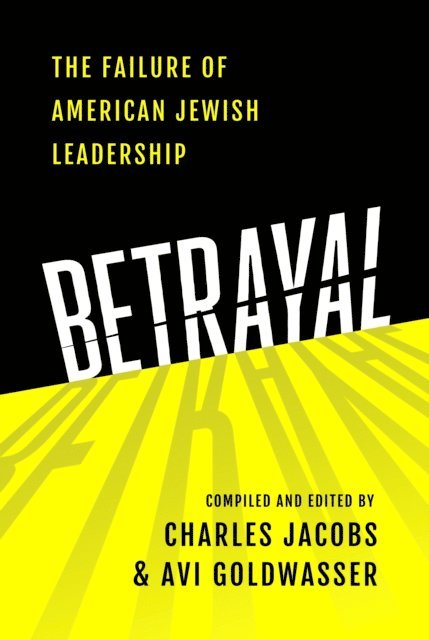
"e;Betrayal loudly rings the alarm for a somnolent American Jewry. Read it and wake others."e;—Daniel Pipes, President of the Middle East Forum"e;If you think it's time for the American Jewish community, its organizations, and its leadership, to have an honest, challenging, vigorous debate about where we are going—and what mistakes we have made—then read this important, illuminating, sometimes depressing, but ultimately inspiring, book."e;—Gil Troy, Distinguished Scholar of North American History at McGill University, and editor of the three-volume set Theodor Herzl: Zionist WritingsThis book—perhaps the first devoted to this topic—documents the devastating failure of the Jewish establishment, including its leaders and major donors, to defend and protect American Jews as anti-Semitism surges across the country. It is a collection of essays by writers who care about the welfare of the Jewish community. Some of the essayists are prominent, some are local activists engaged in ongoing battles to defend the community. Some essays offer analyses, others give disturbing, in-depth accounts of the failures themselves. All of them rebuke the Jewish leaders and institutions who have abandoned their responsibilities. While Jewish leaders cling to a utopian belief system which comports with their naïve political ideology, the ugly reality their mindset ignores only worsens. Betrayed by their leaders, the essayists argue, American Jews require new, strong leadership.The book itself is an expanded version of a collection published in the Spring 2022 issue of White Rose Magazine, a publication which promotes classical liberalism in the face of political extremism and is named in honor of the anti-Nazi White Rose resistance movement.Featuring Essays by:Jonathan S. TobinRichard A. LandesJoshua BlockRebecca SugarCaroline B. GlickNaya LekhtRichard KronenfeldBruce D. AbramsonThane RosenbaumMorton A. KleinAlan M. DershowitzRabbi Cary KozbergM. Zuhdi JasserWilliam A. JacobsonJohanna E. MarkindRebecca G. SchgallisKaren D. HurvitzJoanne BregmanLauri B. ReganDr. Amy RosenthalJosh RavitchHenry SrebrnikBen Poser
Del 1 - David Blum
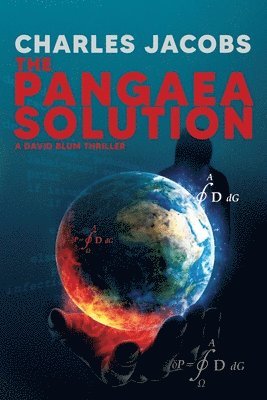
Pangaea Solution
Solve the Equation, Save the World
Häftad, Engelska, 2020
167 kr
Skickas inom 5-8 vardagar
Del 2 - David Blum
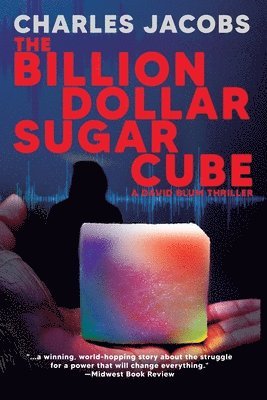
Billion Dollar Sugar Cube
Häftad, Engelska, 2023
211 kr
Skickas inom 5-8 vardagar

E-bok
Engelska55 kr
Läs direkt efter köp
Häftad, Engelska, 1973
561 kr
Skickas inom 10-15 vardagar
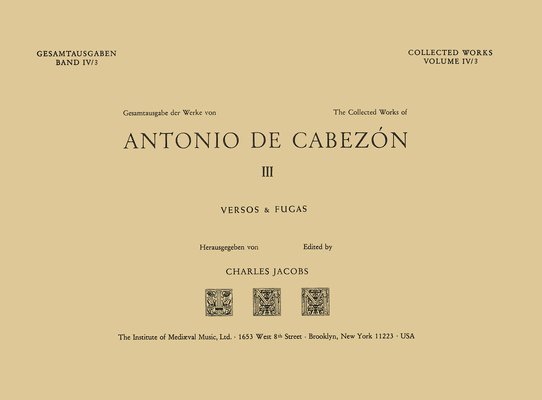
Francisco Correa de Arauxo: how little does the name evoke for most musicians? Yet, this composer wrote music equal in interest and beauty to that of such better-known composers of his time as Bull, Titelouze, Gibbons, Sweelinck, and Frescobaldi. Unfortunately, Correa's music was published in a notation which, though excellent, was little-known beyond Spain. Only within the last twenty years has a complete -though regrettably deficient - edition of Correa's music become available. Cabezon, Correa de Arauxo's most significant immediate predecessor on the Hispanic musical scene (at least among keyboard composers whose music survives to any extent), figures among the greatest and most influential Renaissance composers. In Cabezon's works, the ricer- car (known as tiento in Spain) and variations forms reached full de- velopment. Manuel Rodrigues Coelho, Correa's Portuguese contemporary, al- though working well into the seventeenth century, did not venture beyond the formal boundaries established by Cabezon.On the other hand, a number of late sixteenth-century Spanish composers - Francisco Peraza, and others whose works seem irretriev- ably lost - apparently were writing music that incorporated into the contrapuntal flow of the tiento toccata-like episodes. The result, for- mally, was similar in many respects to toccatas of late-Renaissance Italy. Formal sectionality also appears in the late sixteenth-century Italian ricercar, particularly in those known as canzone francese. This formal trait is present in music by composers of Naples, then under Spanish dominion, and Venice. Correa could not have been working in cultural semi-isolation.
E-bok
PDF, Engelska, 2012734 kr
Läs direkt efter köp