Charles Kunaka - Böcker
Visar alla böcker från författaren Charles Kunaka. Handla med fri frakt och snabb leverans.
5 produkter
5 produkter
172 kr
Skickas inom 10-15 vardagar
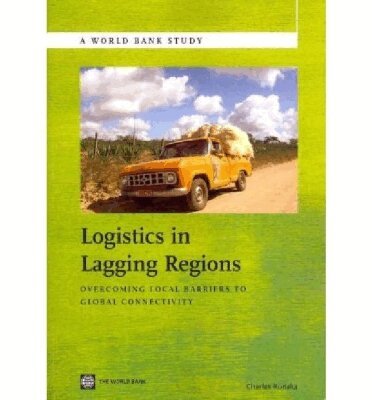
Small scale producers in developing countries lack easy access to efficient logistics services. They are faced with long distances from both domestic and international markets. Unless they consolidate their trade volumes they face high costs which diminish their ability to trade. However, the process of consolidation is not without cost nor does it occur on its own accord. As a result, the consolidation is typically handled by intermediaries.Using case studies of sisal and soybean supply chains in Brazil and India respectively, this study explores the role and impact of intermediaries in facilitating trade in lagging regions. The study assesses the horizontal relationships between the small scale producers in thin markets and the vertical connections between different tiers of the same supply chain. The study analyzes the traditional approach to linking producers namely through cooperatives and itinerant traders and the relatively newer innovations using ICT.The study finds that farmers linked through the different mechanisms are more integrated to international supply chains or are able to better manage supply chains longer than would otherwise be the case. Intermediaries play several roles including providing transport services and facilitating market exchanges, payments, risk sharing and quality improvements. Generally, information technology driven innovations make it easier to integrate adjacent steps in the value chain.This report on logistics performance at the sub-national level is an on-going endeavour. Similar analysis is being carried out in some countries in Africa to identify the evolving role of intermediaries in low income regions. The results will be developed into a major publication on this topic, with recommendations on how development agencies, civil society and the private sector can improve the design of strategies to reduce logistics costs in low income areas.
296 kr
Skickas inom 10-15 vardagar
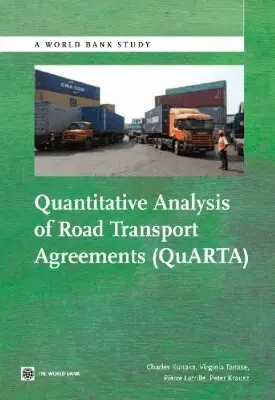
Road freight transport plays an indispensable role in international economic cooperation and foreign trade. For short and medium distances in particular, road freight transport constitutes a predominant share of overall traffic, but it also plays a significant role in long distance haulage, where time is more of an issue. Therefore, efforts should be made to minimize any physical or administrative barriers hampering international road freight transport, given the integral part it plays in the global trade logistics industry. This study was motivated by a realisation that, in the absence of full liberalisation of market access, bilateral agreements are the main instrument used to govern and regulate international road transport services. Depending on their scope and the rights they grant, bilateral agreements reflect the degree of market openness between countries. The study finds that: The texts of the bilateral agreements remain, for the most part, unknown to their intended users. Even bilateral agreements regulating the same area tend to be different in their content. There is no overarching international template for bilateral road transport agreements. Where model agreements have been used to fill the void, their objective and limitations are not clearly defined. There are several core elements that any bilateral road transport agreement should contain, including provisions on scope, permit management, transit rights, cabotage and other limitations, and routes. Agreements should limit the possibilities of interpretations, rent seeking behaviours and other inefficient practices. Assessing the extent to which bilateral agreements have been implemented is difficult, yet any agreement is only as good as the extent of its implementation and enforcement. More energy should be invested in supporting the proper implementation of trade facilitation measures. The report demonstrates that it is possible to follow a systematic methodology to assess bilateral agreements between countries, and the extent to which any agreement contributes to integrated and efficient international road transport services. The report’s main message is that reform should navigate a clearly defined path, which takes into account different technical, political and economic considerations.
Trade and Transport Corridor Management Toolkit
connecting smallholders to knowledge, networks, and institutions
Häftad, Engelska, 2014
327 kr
Skickas inom 10-15 vardagar
Global trade moves along a few select high-density routes or corridors. Such routes have existed for several millennia, of which the Silk Road is the most famous. In fact, all regions of the world, developed and developing, have several trade and transport corridor initiatives.Such initiatives take even more importance for landlocked countries which depend on them to provide access to seaports in neighbouring countries, and through them, to overseas markets. Any weaknesses or inefficiencies in the performance of international trade corridors increase trade costs and impact the competitiveness of the affected countries. As a result, trade and transport facilitation projects designed around regional trade corridors are increasing. In some instances the projects involve at least two countries and include infrastructure development, improvement to logistics services, regulatory reforms in customs and border management, and institutional strengthening. Corridor projects can therefore be quite complex.Yet there is currently little or no clear guidance on what is needed to design effective corridor projects or to improve the performance of existing trade and transport corridors. This toolkit is designed to fill this gap by providing a concise yet comprehensive compilation of tools and techniques for the design, analysis, and improvement of trade and transport corridor design. The Toolkit also includes guidance on the major approaches to evaluating the impact of trade and transport corridors. The main target audience for the Toolkit are the task managers leading the design of corridor projects, policy makers involved in developing logistics strategies, and corridor service providers and users.
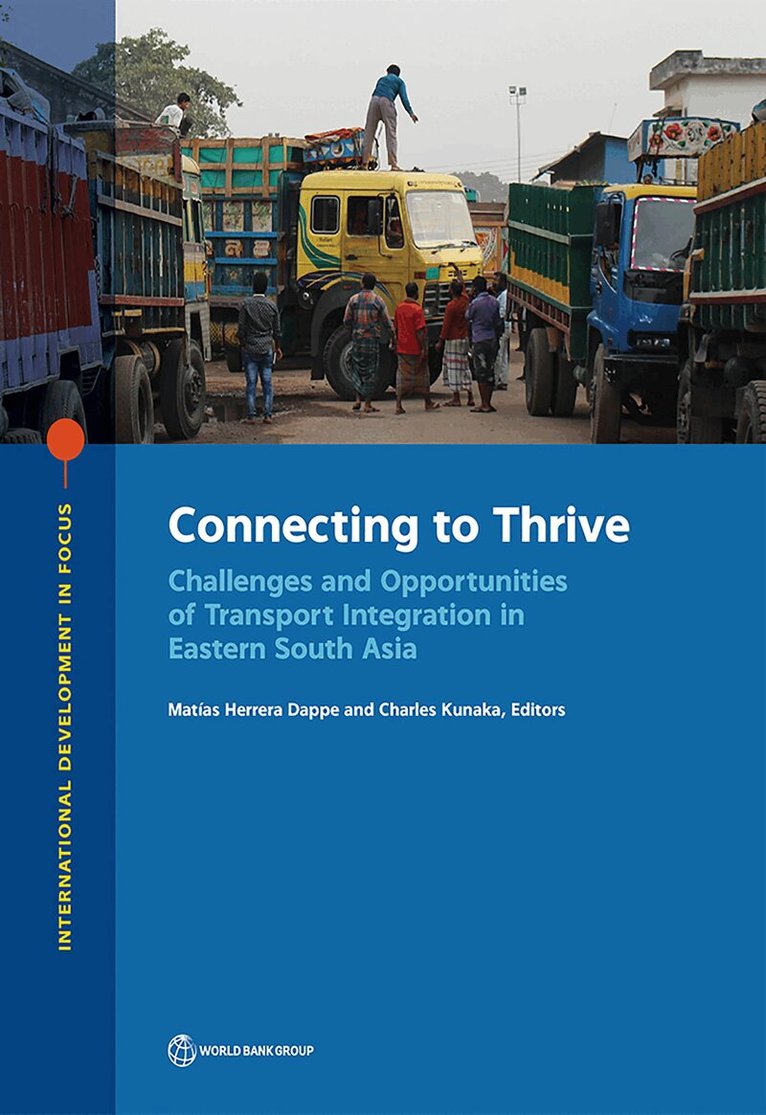
Connecting to Thrive
Challenges and Opportunities of Transport Integration in Eastern South Asia
Häftad, Engelska, 2021
399 kr
Skickas inom 10-15 vardagar
This book assess the Bangladesh-Bhutan-India-Nepal Motor Vehicle Agreement; analyzes how freight flows, wages, employment, and income are likely to change in Bangladesh and India once the agreement is adopted; and provides suggestions on enhancing the impact of regional connectivity on rural areas and women.
445 kr
Skickas inom 5-8 vardagar
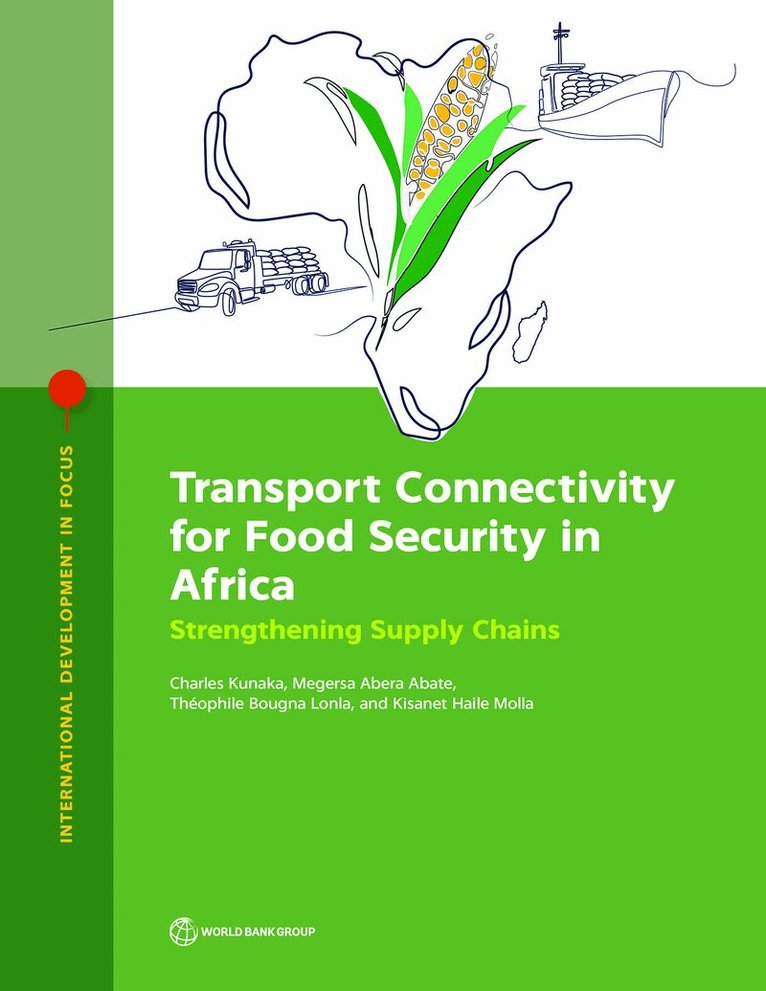
Food insecurity is proving to be an intransigent problem. This book examines how transport and logistics impact food security in Africa. Using a modeling approach, the report identifies weaknesses and opportunities for improvement along the entire food supply chain.