Charles M Lepkowsky – författare
Visar alla böcker från författaren Charles M Lepkowsky. Handla med fri frakt och snabb leverans.
4 produkter
4 produkter
E-bok
PDF, Engelska, 20201 548 kr
Läs direkt efter köp
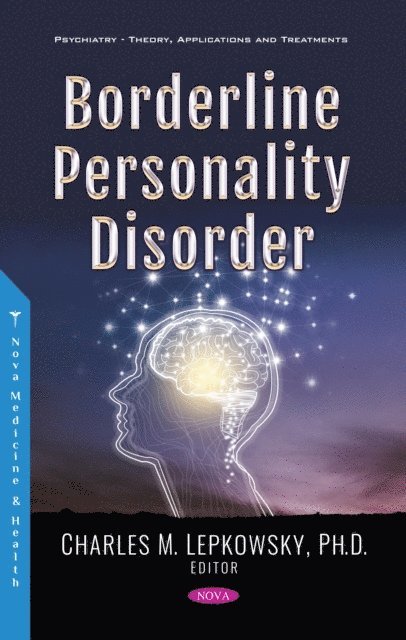
Borderline Personality Disorder is an up-to-date, comprehensive reference manual. Its authors include seasoned practicing mental health professionals and doctoral psychology program faculty with over a century of combined clinical experience assessing and treating Borderline Personality Disorder. The book provides a history of conceptual models contributing to the definition and diagnosis of Borderline Personality Disorder, and explains the development and evolution of current diagnostic criteria in the Diagnostic and Statistical Manual of the American Psychiatric Association, Fifth Edition (DSM 5). Various theoretical models for conceptualizing, assessing, and treating Borderline Personality Disorder are presented, including Psychoanalytic, Object Relations, Cognitive-Behavioral, Dialectical Behavior Therapy, Constructionist, Evidence-Based, and Biological perspectives. Differential diagnosis is discussed, with specific attention to trauma and its effects on personality functioning. The recent emergence of Borderline Personality Disorder into American mainstream media and culture is explored, including the stigma associated with the diagnosis and its potential effect on the person diagnosed, friends and family, and providers of care. Current conceptualizations of the Borderline Personality Disorder diagnosis are discussed, including the possibility that there might be more than one type of Borderline Personality Disorder. Future directions for research, conceptualization, assessment and treatment of Borderline Personality Disorder are explored, including potential DSM changes. Borderline Personality Disorder is a useful resource for practicing mental health professionals, and a powerful and concise source of information for doctoral level psychology students.

E-bok
PDF, Engelska, 20203 178 kr
Läs direkt efter köp
The Pharmacological Guide to Paroxetine is a comprehensive reference manual. Its authors include seasoned practicing mental health professionals and doctoral psychology program faculty with over a century of combined clinical experience. The book provides a history of paroxetine’s development, licensing, and application to a growing variety of diagnoses, including social anxiety disorder, generalized anxiety disorder, panic attacks, post-traumatic stress disorder, premenstrual dysphoric disorder, perimenopausal hot flashes, and obsessive-compulsive disorder. Paroxetine’s unlabeled uses are also discussed, including impulse control disorders, eating disorders, vasomotor symptoms of menopause, obsessive-compulsive disorder in children, mild dementia-associated agitation in nonpsychotic individuals, treatment of premature ejaculation and diabetic neuropathy. The pharmacology of paroxetine is explored in detail, with attention to its chemical and physical properties, absorption, metabolism, mechanism of action, interactions with enzymes, genes, proteins, and other medications, anticholinergic effects, potential adverse effects, and counter-indications for use. Paroxetine’s nonlinear pharmacokinetics are explained and discussed with application to specific populations and potential drug interactions. Special attention is given to considerations in the use of paroxetine with pediatric populations and older adults. There is detailed exploration of the use of human biological specimens to determine concentrations of paroxetine in bioanalytical applications, including forensic settings. Paroxetine’s potential for novel future applications is discussed, including improving cardiac function following myocardial infarction, and the treatment of allodynia, colorectal cancer, Alzheimer’s Disease, and Parkinson’s Disease.
Inbunden, Engelska, 2026
2 537 kr
Skickas
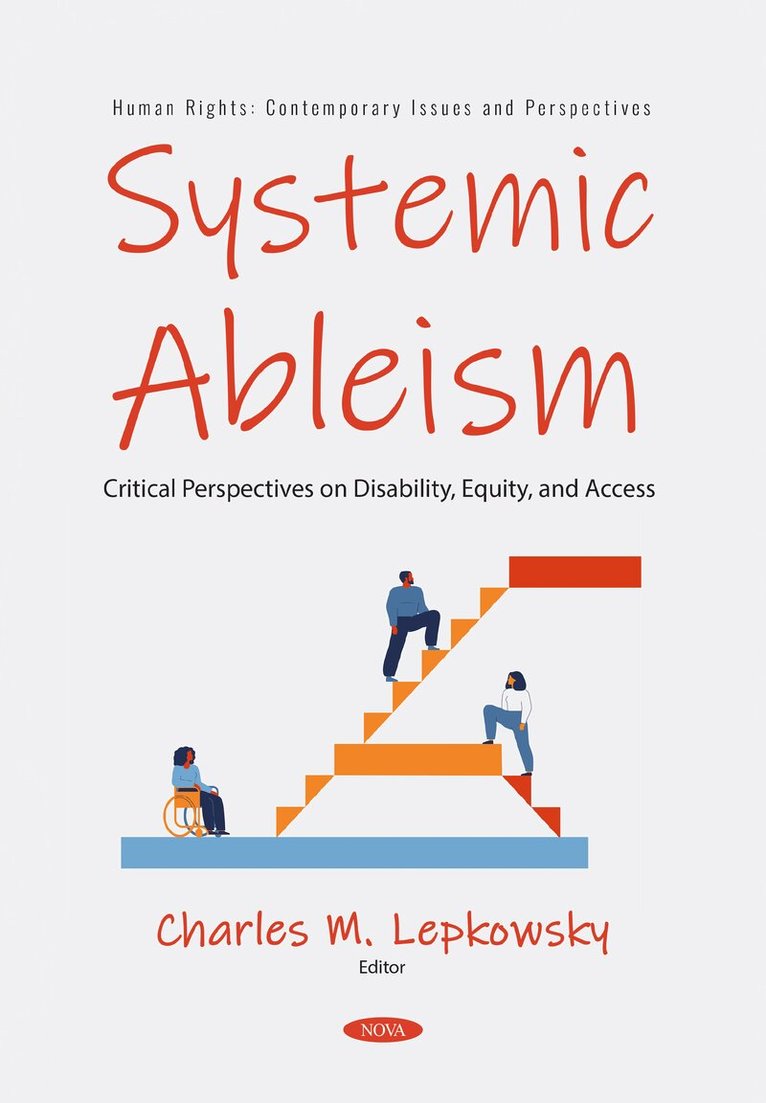
Ableism is an emerging area of interest and concern spanning numerous populations. Systemic Ableism: Critical Perspectives on Disability, Equity, and Access offers a rare, comprehensive view of ableism from multiple perspectives. The concept of ableism is defined and applied in a variety of contexts. These include developmental disabilities, autism spectrum disorders, physical disabilities, invisible disabilities (like TBI), HIV, serious mental illness, pathological demand avoidance (PDA), multiple sclerosis, aging, and systemic ableism in access to healthcare, higher education, employment and information technology. The book’s chapters describe overlaps between these contexts, and their intersections with race, gender, aging, and gender identity. The book’s diverse panel of authors includes academic content experts, early career and seasoned clinical healthcare professionals from a variety of backgrounds, many of whom have directly experienced ableism in the areas described above. Future directions for research, conceptualization, assessment, and treatment are explored. This book is a powerful resource for informing and raising awareness in the community, with special systemic application to higher education programs and healthcare settings.
E-bok
PDF, Engelska, 20263 639 kr
Läs direkt efter köp
Ableism is an emerging area of interest and concern spanning numerous populations. Systemic Ableism: Critical Perspectives on Disability, Equity, and Access offers a rare, comprehensive view of ableism from multiple perspectives. The concept of ableism is defined and applied in a variety of contexts. These include developmental disabilities, autism spectrum disorders, physical disabilities, invisible disabilities (like TBI), HIV, serious mental illness, pathological demand avoidance (PDA), multiple sclerosis, aging, and systemic ableism in access to healthcare, higher education, employment and information technology. The book's chapters describe overlaps between these contexts, and their intersections with race, gender, aging, and gender identity. The book's diverse panel of authors includes academic content experts, early career and seasoned clinical healthcare professionals from a variety of backgrounds, many of whom have directly experienced ableism in the areas described above. Future directions for research, conceptualization, assessment, and treatment are explored. This book is a powerful resource for informing and raising awareness in the community, with special systemic application to higher education programs and healthcare settings.