Charles Yoe - Böcker
Visar alla böcker från författaren Charles Yoe. Handla med fri frakt och snabb leverans.
9 produkter
9 produkter
2 150 kr
Skickas inom 10-15 vardagar
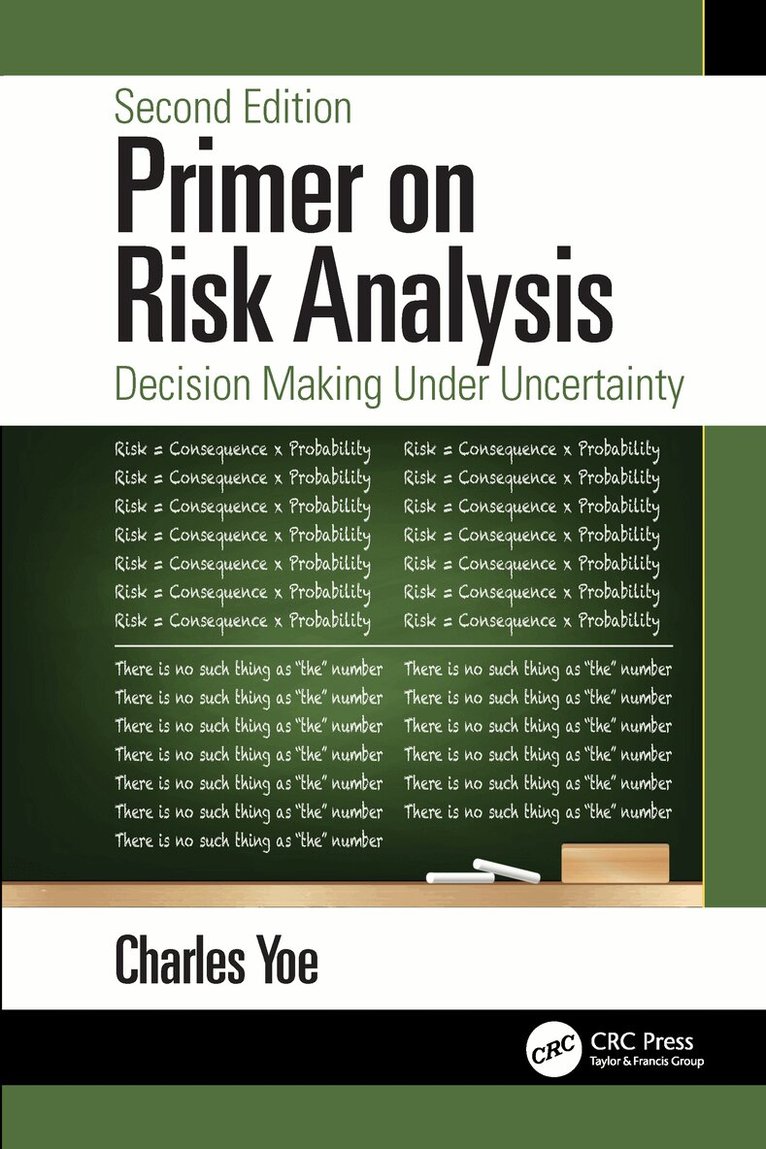
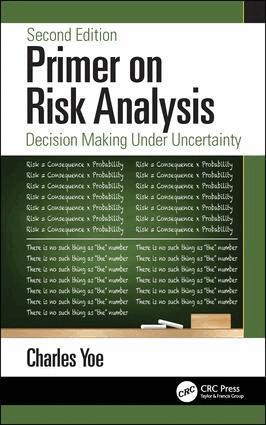
Primer on Risk Analysis: Decision Making Under Uncertainty, Second Edition lays out the tasks of risk analysis in a straightforward, conceptual manner, tackling the question, "What is risk analysis?" Distilling the common principles of many risk dialects into serviceable definitions, it provides a foundation for the practice of risk management and decision making under uncertainty for professionals from all disciplines. New in this edition is an expanded risk management emphasis that includes an overview chapter on enterprise risk management and a chapter on decision making under uncertainty designed to help decision makers use the results of risk analysis in practical ways to improve decisions and their outcomes. This book will empower you to enter the world of risk management in your own domain of expertise by providing you with practical, insightful, useful and adaptable knowledge of risk analysis science including risk management, risk assessment, and risk communication.Features: Answers the fundamental question, "What is Risk Analysis?" Presents the tasks of risk management, risk assessment, and risk communication in a straightforward, conceptual manner Responds to the continuing evolution of risk science and addresses the language of risk as it continues to evolve Expands the risk management emphasis with a new chapter to serve private industry and a growing public sector interest in the growing practice of enterprise risk management Includes a new chapter on decision making under uncertainty provides practical guidance and ideas for using risk science to improve decisions and their outcomes Features an expanded set of examples of the risk process that demonstrate the growing applications of risk analysisThis book is suitable for executives, professionals and students who seek a fundamental understanding of risk management, risk assessment, and risk communication.A more detailed examination of this topic, suitable for practitioners from any discipline as well as students and professionals who aspire to become experts in the practice of risk analysis science, is found in Principles of Risk Analysis: Decision Making Under Uncertainty, Second Edition, ISBN: 978-1-138-47820-6.
2 490 kr
Skickas inom 10-15 vardagar
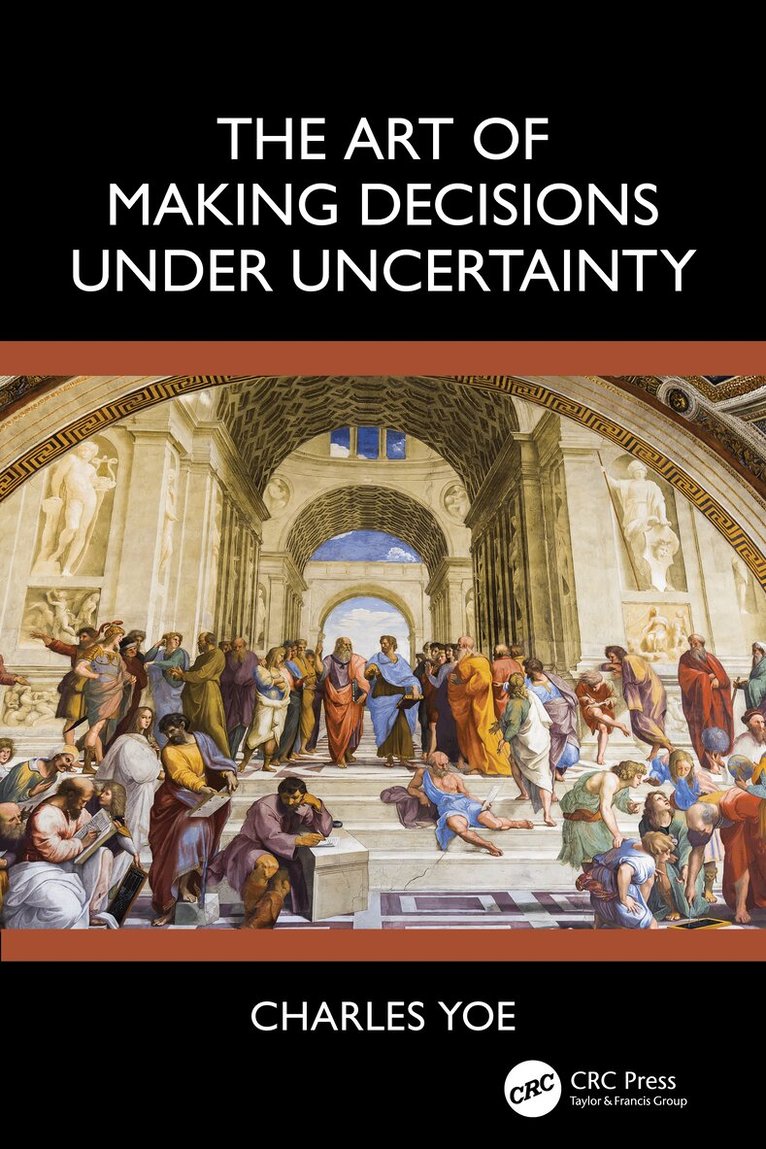
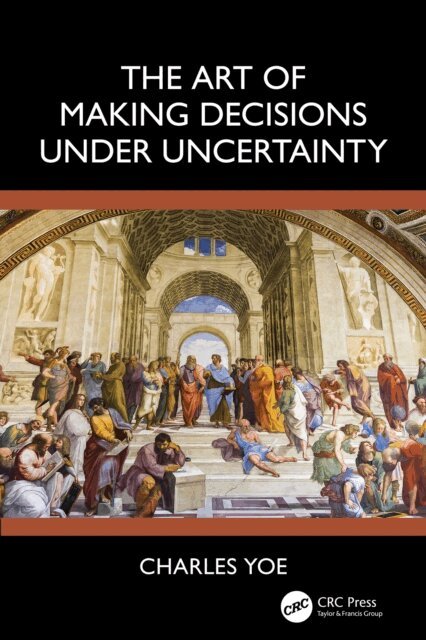
Uncertainty is a part of every decision we make, from the everyday to the high-stakes, from personal choices to professional strategy. The Art of Making Decisions Under Uncertainty offers a clear, practical approach to dealing with the unknown without getting stuck or overwhelmed.Rather than treating uncertainty as a barrier, this book invites readers to see it as a constant companion—something to work with, not work against. Drawing on proven tools, real-world examples, and a wealth of practical insight, it shows how to make thoughtful, informed decisions even when information is incomplete, priorities are competing, and the path forward feels anything but clear.This is not a theory-heavy treatise. It’s a textbook guide for real people facing real decisions. Grounded in decision science but written for a broad audience, it bridges the gap between technical complexity and everyday practicality. Whether you’re leading a team, managing risk, shaping policy, or simply trying to make better personal choices, this book meets you where you are—with tools that work, language that makes sense, and encouragement to move forward with clarity and confidence.Inside you’ll find:Straightforward frameworks to help you recognize and manage different types of uncertaintyPractical tools and techniques you can use right away to make sound decisions in fast-moving or high-pressure situationsCase studies and examples that bring the concepts to life and show how they apply in work, leadership, and daily lifeFresh perspectives on failure, bias, and risk, helping you not only avoid common pitfalls but turn setbacks into sources of insightIf you’ve ever hesitated at a crossroads, second-guessed a big decision, or wished for more clarity in a world that rarely offers it, this book is for you. The Art of Making Decisions Under Uncertainty is your companion in making better choices when certainty is out of reach but a good decision is still within your grasp.
996 kr
Skickas inom 10-15 vardagar
Uncertainty is a part of every decision we make, from the everyday to the high-stakes, from personal choices to professional strategy. The Art of Making Decisions Under Uncertainty offers a clear, practical approach to dealing with the unknown without getting stuck or overwhelmed.Rather than treating uncertainty as a barrier, this book invites readers to see it as a constant companion—something to work with, not work against. Drawing on proven tools, real-world examples, and a wealth of practical insight, it shows how to make thoughtful, informed decisions even when information is incomplete, priorities are competing, and the path forward feels anything but clear.This is not a theory-heavy treatise. It’s a textbook guide for real people facing real decisions. Grounded in decision science but written for a broad audience, it bridges the gap between technical complexity and everyday practicality. Whether you’re leading a team, managing risk, shaping policy, or simply trying to make better personal choices, this book meets you where you are—with tools that work, language that makes sense, and encouragement to move forward with clarity and confidence.Inside you’ll find:Straightforward frameworks to help you recognize and manage different types of uncertaintyPractical tools and techniques you can use right away to make sound decisions in fast-moving or high-pressure situationsCase studies and examples that bring the concepts to life and show how they apply in work, leadership, and daily lifeFresh perspectives on failure, bias, and risk, helping you not only avoid common pitfalls but turn setbacks into sources of insightIf you’ve ever hesitated at a crossroads, second-guessed a big decision, or wished for more clarity in a world that rarely offers it, this book is for you. The Art of Making Decisions Under Uncertainty is your companion in making better choices when certainty is out of reach but a good decision is still within your grasp.
956 kr
Skickas inom 10-15 vardagar
Primer on Risk Analysis: Decision Making Under Uncertainty, Second Edition lays out the tasks of risk analysis in a straightforward, conceptual manner, tackling the question, "What is risk analysis?" Distilling the common principles of many risk dialects into serviceable definitions, it provides a foundation for the practice of risk management and decision making under uncertainty for professionals from all disciplines. New in this edition is an expanded risk management emphasis that includes an overview chapter on enterprise risk management and a chapter on decision making under uncertainty designed to help decision makers use the results of risk analysis in practical ways to improve decisions and their outcomes. This book will empower you to enter the world of risk management in your own domain of expertise by providing you with practical, insightful, useful and adaptable knowledge of risk analysis science including risk management, risk assessment, and risk communication.Features: Answers the fundamental question, "What is Risk Analysis?" Presents the tasks of risk management, risk assessment, and risk communication in a straightforward, conceptual manner Responds to the continuing evolution of risk science and addresses the language of risk as it continues to evolve Expands the risk management emphasis with a new chapter to serve private industry and a growing public sector interest in the growing practice of enterprise risk management Includes a new chapter on decision making under uncertainty provides practical guidance and ideas for using risk science to improve decisions and their outcomes Features an expanded set of examples of the risk process that demonstrate the growing applications of risk analysisThis book is suitable for executives, professionals and students who seek a fundamental understanding of risk management, risk assessment, and risk communication.A more detailed examination of this topic, suitable for practitioners from any discipline as well as students and professionals who aspire to become experts in the practice of risk analysis science, is found in Principles of Risk Analysis: Decision Making Under Uncertainty, Second Edition, ISBN: 978-1-138-47820-6.
2 692 kr
Skickas inom 10-15 vardagar
This is an exciting time for natural resources planning. There are amazing technologies available to planners and a wide and growing array of resources, problems, and opportunities that need attention. Private and public interests are taking up these issues all over the world and at all levels of involvement. At the same time, inefficient planning policies and procedures can threaten the art of successful planning.Demonstrating how to put effective planning theory into practice, Introduction to Natural Resource Planning introduces an iterative planning process with five steps and two ongoing processes. Suitable for any type of planning setting, the book describes each step of the planning process in extensive practical detail. Comprising field-tested strategies woven into a comprehensive and complete protocol, the book explores:Planners and the planning process Establishing the decision context, gathering evidence, plan formulation, and evaluating, comparing, and selecting plans The importance of public involvement Telling your story so that people understand and care about it Dealing effectively with uncertainty as part of the planning process Scenario planning when uncertainty obscures the future Economics for planners: cost estimates and economic analysis Fast planning and getting the most out of your planning process Practical tips from experienced natural resource plannersNatural resources planning involves solving complex problems. Fascinating new issues continue to emerge as we seek to identify and preserve natural DNA, struggle with invasive and nonindigenous species, and worry about the well-being of native and managed pollinators. Meanwhile, we continue to struggle with familiar problems like water quality, developing resources for wise uses, loss of habitat, and floods
1 987 kr
Tillfälligt slut
In every decision context there are things we know and things we do not know. Risk analysis uses science and the best available evidence to assess what we know�and it is intentional in the way it addresses the importance of the things we don�t know. Primer on Risk Analysis: Decision Making Under Uncertainty lays out the tasks of risk analysis in a straightforward, conceptual manner that is consistent with the risk models of all communities of practice. This primer tackles the question, "what is risk analysis?" Distilling the common principles of the many risk tribes and dialects into serviceable definitions and narratives, it provides a foundation for the practice of risk analysis and decision making under uncertainty for professionals from all walks of life. Readers learn the language, models, and concepts of risk analysis and its three component tasks�risk management, assessment, and communication. Making a distinction between knowledge uncertainty and natural variability, the book also introduces a down-to-earth approach to decision making under uncertainty. Extensive examples illustrate the applicability of the risk analysis principles.The book�s simple and straightforward style�based on the author�s decades of experience as a risk analyst, trainer, and educator�strips away the mysterious aura that often accompanies risk analysis. It describes the principles of risk analysis in a manner that enables readers to better understand and use the models and practice of their individual fields, and to gain access to the rich and sophisticated professional literature on risk analysis.A companion volume, Principles of Risk Analysis: Decision Making Under Uncertainty, supplies the tools, techniques, and methodologies to help readers apply the principles of risk analysis�the "how to."Additional exercises, as well as a free student version of the Palisade Corporation Decision
3 256 kr
Skickas inom 10-15 vardagar
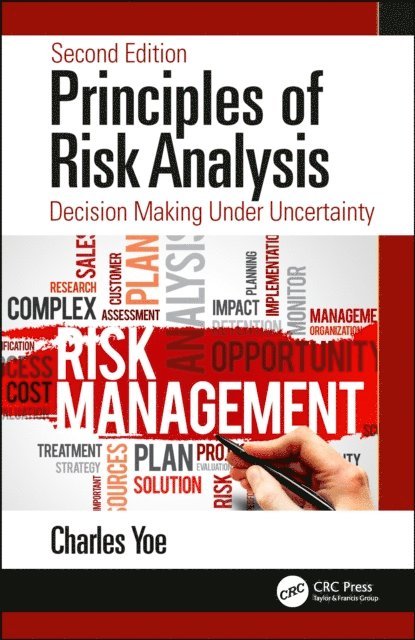
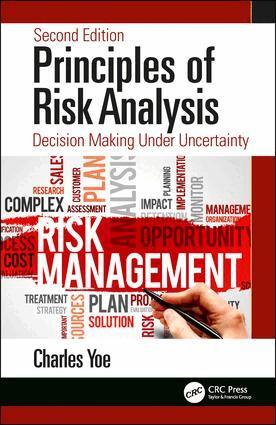
In every decision problem there are things we know and things we do not know. Risk analysis science uses the best available evidence to assess what we know while it is carefully intentional in the way it addresses the importance of the things we do not know in the evaluation of decision choices and decision outcomes. The field of risk analysis science continues to expand and grow and the second edition of Principles of Risk Analysis: Decision Making Under Uncertainty responds to this evolution with several significant changes. The language has been updated and expanded throughout the text and the book features several new areas of expansion including five new chapters. The book’s simple and straightforward style—based on the author’s decades of experience as a risk analyst, trainer, and educator—strips away the mysterious aura that often accompanies risk analysis.Features: Details the tasks of risk management, risk assessment, and risk communication in a straightforward, conceptual manner Provides sufficient detail to empower professionals in any discipline to become risk practitioners Expands the risk management emphasis with a new chapter to serve private industry and a growing public sector interest in the growing practice of enterprise risk management Describes dozens of quantitative and qualitative risk assessment tools in a new chapter Practical guidance and ideas for using risk science to improve decisions and their outcomes is found in a new chapter on decision making under uncertainty Practical methods for helping risk professionals to tell their risk story are the focus of a new chapter Features an expanded set of examples of the risk process that demonstrate the growing applications of risk analysisAs before, this book continues to appeal to professionals who want to learn and apply risk science in their own professions as well as students preparing for professional careers. This book remains a discipline free guide to the principles of risk analysis that is accessible to all interested practitioners.Files used in the creation of this book and additional exercises as well as a free student version of Palisade Corporation’s Decision Tools Suite software are available with the purchase of this book.A less detailed introduction to the risk analysis science tasks of risk management, risk assessment, and risk communication is found in Primer of Risk Analysis: Decision Making Under Uncertainty, Second Edition, ISBN: 978-1-138-31228-9.
1 145 kr
Skickas inom 10-15 vardagar
This is an exciting time for natural resources planning. There are amazing technologies available to planners and a wide and growing array of resources, problems, and opportunities that need attention. Private and public interests are taking up these issues all over the world and at all levels of involvement. At the same time, inefficient planning policies and procedures can threaten the art of successful planning.Demonstrating how to put effective planning theory into practice, Introduction to Natural Resource Planning introduces an iterative planning process with five steps and two ongoing processes. Suitable for any type of planning setting, the book describes each step of the planning process in extensive practical detail. Comprising field-tested strategies woven into a comprehensive and complete protocol, the book explores: Planners and the planning processEstablishing the decision context, gathering evidence, plan formulation, and evaluating, comparing, and selecting plansThe importance of public involvementTelling your story so that people understand and care about itDealing effectively with uncertainty as part of the planning processScenario planning when uncertainty obscures the futureEconomics for planners: cost estimates and economic analysisFast planning and getting the most out of your planning processPractical tips from experienced natural resource plannersNatural resources planning involves solving complex problems. Fascinating new issues continue to emerge as we seek to identify and preserve natural DNA, struggle with invasive and nonindigenous species, and worry about the well-being of native and managed pollinators. Meanwhile, we continue to struggle with familiar problems like water quality, developing resources for wise uses, loss of habitat, and floods, hurricanes, and other natural disasters. This volume will empower both experienced and new planners to plan more effectively for solutions to preserve and manage our natural resources.
2 373 kr
Skickas inom 7-10 vardagar
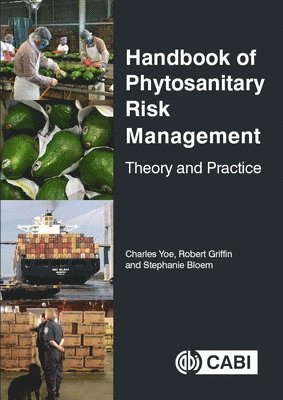
Phytosanitary risk management is essential to the global economy as well as the world's ability to feed itself. This book is about understanding the fundamentals of phytosanitary risk management for trade and non-trade issues, and how to manage those risks in an effective and efficient manner that is consistent with the international regulatory framework. Its purpose is to provide the international phytosanitary community and its principal stakeholders with a strong foundation in risk management concepts and a thorough guide to best practices. Starting with the conceptual background necessary for understanding risk management, this book then covers a risk management model with a detailed description of the structure and processes necessary for best practice risk management in the global economy. This is followed by an in-depth look at the continuum of phytosanitary measures with a laser-like focus on key risk management issues, and the book concludes with a final section devoted to an examination of the most compelling risk management issues of the day. This book is: - A comprehensive exposition of phytosanitary risk management. - Valuable both to the experienced risk manager and to those getting started in the field. - Written by a team of experts with extensive professional phytosanitary work experience and knowledge of plant health. Written for professionals, practitioners and policy makers who work in the international trade of plants and plant products and allied fields, this book provides the global phytosanitary community and its principal stakeholders with a practical guide to best risk management practices.