Charlotte Sussman – författare
Visar alla böcker från författaren Charlotte Sussman. Handla med fri frakt och snabb leverans.
7 produkter
7 produkter
Del 17 - Cultural History of Literature
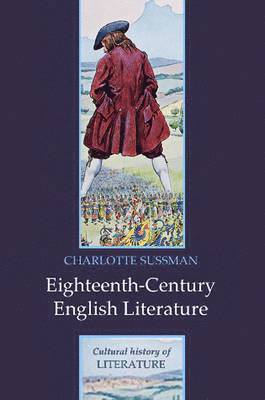
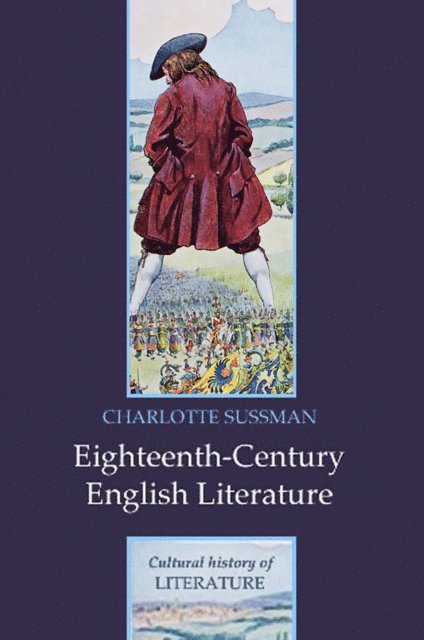
Eighteenth Century English Literature
Inbunden, Engelska, 2011
997 kr
Skickas inom 5-8 vardagar
This engaging book introduces new readers of eighteenth-century texts to some of the major works, authors, and debates of a key period of literary history. Rather than simply providing a chronological survey of the era, this book analyzes the impact of significant cultural developments on literary themes and forms - including urbanization, colonial, and mercantile expansion, the emergence of the "public sphere," and changes in sex and gender roles. In eighteenth-century Britain, many of the things we take for granted about modern life were shockingly new: women appeared for the first time on stage; the novel began to dominate the literary marketplace; people entertained the possibility that all human beings were created equal, and tentatively proposed that reason could triumph over superstition; ministers became more powerful than kings, and the consumer emerged as a political force. Eighteenth-Century English Literature: 1660-1789 explores these issues in relation to well-known works by such authors as Defoe, Swift, Pope, Richardson, Gray, and Sterne, while also bringing attention to less familiar figures, such as Charlotte Smith, Mary Leapor, and Olaudah Equiano. It offers both an ideal introduction for students and a fresh approach for those with research interests in the period.
311 kr
Skickas inom 7-10 vardagar
This engaging book introduces new readers of eighteenth-century texts to some of the major works, authors, and debates of a key period of literary history. Rather than simply providing a chronological survey of the era, this book analyzes the impact of significant cultural developments on literary themes and forms - including urbanization, colonial, and mercantile expansion, the emergence of the "public sphere," and changes in sex and gender roles. In eighteenth-century Britain, many of the things we take for granted about modern life were shockingly new: women appeared for the first time on stage; the novel began to dominate the literary marketplace; people entertained the possibility that all human beings were created equal, and tentatively proposed that reason could triumph over superstition; ministers became more powerful than kings, and the consumer emerged as a political force. Eighteenth-Century English Literature: 1660-1789 explores these issues in relation to well-known works by such authors as Defoe, Swift, Pope, Richardson, Gray, and Sterne, while also bringing attention to less familiar figures, such as Charlotte Smith, Mary Leapor, and Olaudah Equiano. It offers both an ideal introduction for students and a fresh approach for those with research interests in the period.
857 kr
Skickas inom 7-10 vardagar
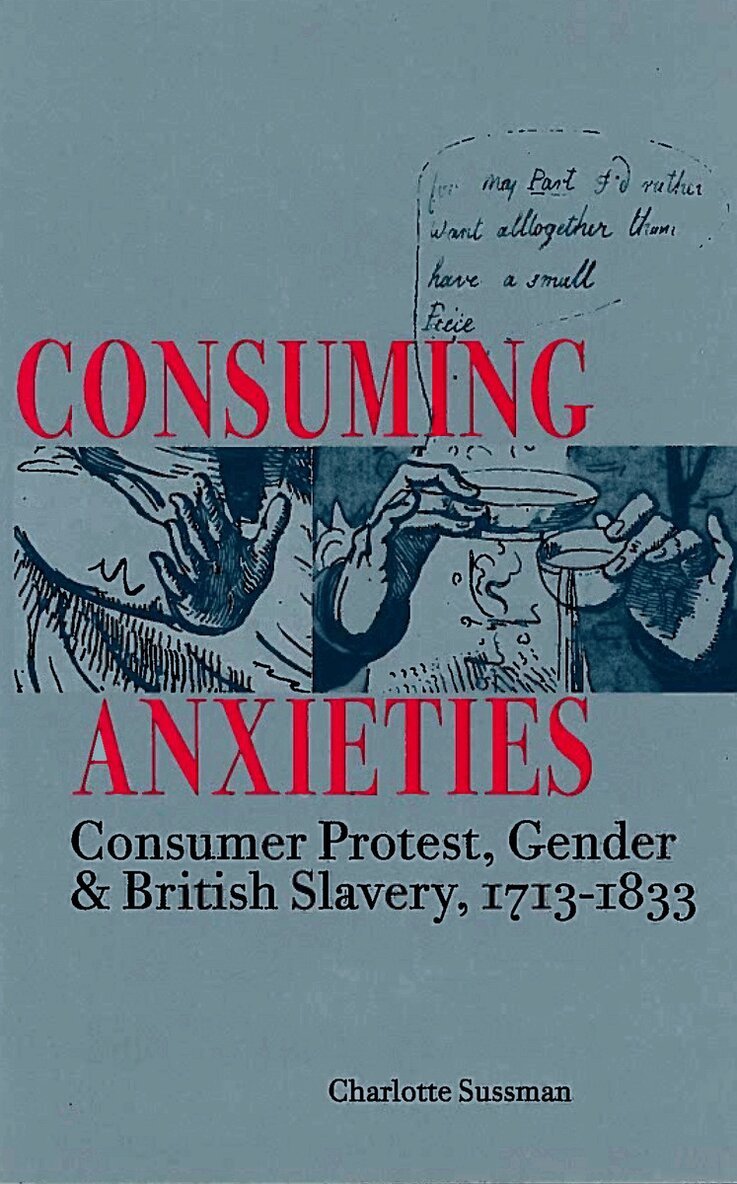
Boycotts are so commonplace these days that one hardly notices them, and yet they have a fascinating history, one closely connected to the growth of the British Empire and the birth of a consumer society. Consuming Anxieties asks why this mode of political protest has proved so influential over the past two hundred years, and why it was particularly useful in anticolonial struggles. It answers these questions through new readings of literary works by Jonathan Swift, Tobias Smollett, and others, as well as through investigations of eighteenth-century political and economic discourses connected with consumer culture and colonialism.The book examines the history of consumer protests against colonialism from 1713 to 1833—from the Treaty of Utrecht to the abolition of slavery in the British Caribbean. Recognizing the impact of consumerism on perceptions of the colonial periphery during this period reveals the crucial role of commodity fetishism in colonialist ideology. At the same time, acknowledging the effects of colonial and mercantile expansion on domestic consumer practices explains some of the anxiety surrounding colonial commodities. Women played a crucial role in these dynamics, and this book's analysis of gender illuminates the ways in which colonialism permeated not only the public sphere of politics and trade, but also the seemingly private realms of domesticity and sentiment.The book is in two parts. The first three chapters deal with the history of consumer protests against colonialism and imperialism, notably the uses of the tactic in Ireland early in the eighteenth century and the mid-century anxiety over colonial products in English domestic life. The last three chapters concentrate on the role of commodity culture and consumer protest in the British debates over Caribbean slavery. Although its roots in earlier anticolonial protests are not always recognized, antislavery activists inherited and expertly manipulated a set of tactics developed in previous contests.
1 054 kr
Skickas inom 10-15 vardagar
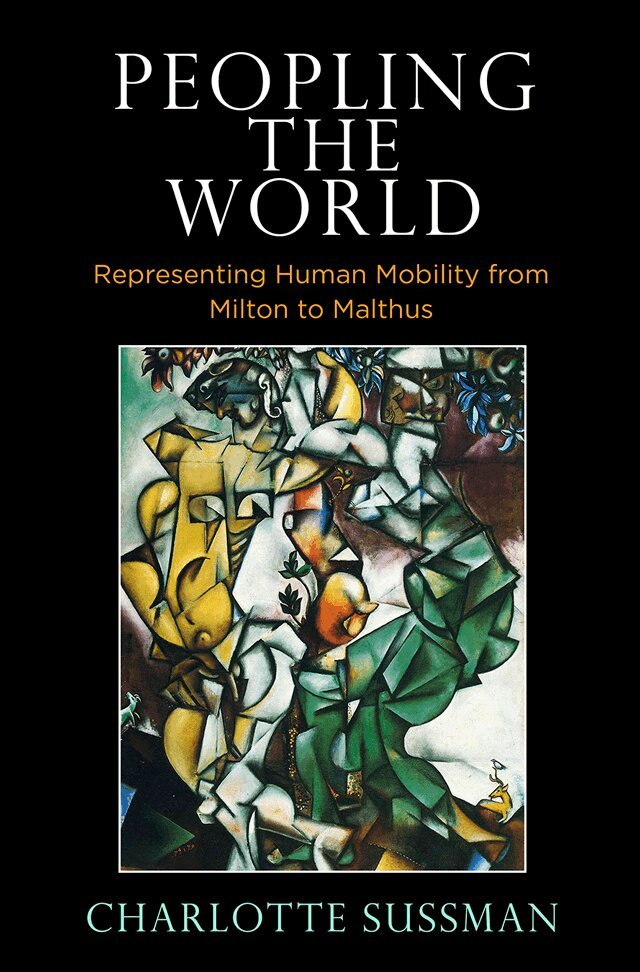
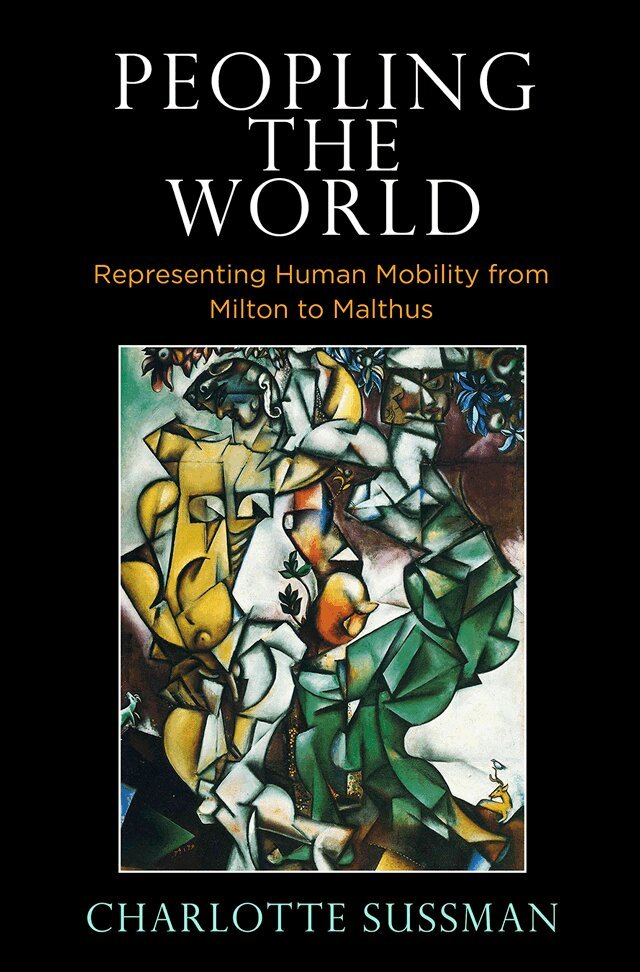
A compelling study of views about population and demographic mobility in the British long eighteenth centuryIn John Milton's Paradise Lost of 1667, Adam and Eve are promised they will produce a "race to fill the world," a thought that consoles them even after the trauma of the fall. By 1798, the idea that the world would one day be entirely filled by people had become, in Thomas Malthus's hands, a nightmarish vision. In Peopling the World, Charlotte Sussman asks how and why this shift took place. How did Britain's understanding of the value of reproduction, the vacancy of the planet, and the necessity of moving people around to fill its empty spaces change? Sussman addresses these questions through readings of texts by Malthus, Milton, Swift, Defoe, Goldsmith, Sir Walter Scott, Mary Shelley, and others, and by placing these authors in the context of debates about scientific innovation, emigration, cultural memory, and colonial settlement.Sussman argues that a shift in thinking about population and mobility occurred in the third quarter of the eighteenth century. Before that point, both political and literary texts were preoccupied with "useless" populations that could be made useful by being dispersed over Britain's domestic and colonial territories; after 1760, a concern with the depopulation caused by emigration began to take hold. She explains this change in terms of the interrelated developments of a labor theory of value, a new idea of national identity after the collapse of Britain's American empire, and a move from thinking of reproduction as a national resource to thinking of it as an individual choice. She places Malthus at the end of this history because he so decisively moved thinking about population away from a worldview in which there was always more space to be filled and toward the temporal inevitability of the whole world filling up with people.
Del 53 - Liverpool English Texts and Studies
Recognizing the Romantic Novel
New Histories of British Fiction, 1780-1830
Häftad, Engelska, 2010
413 kr
Skickas inom 7-10 vardagar
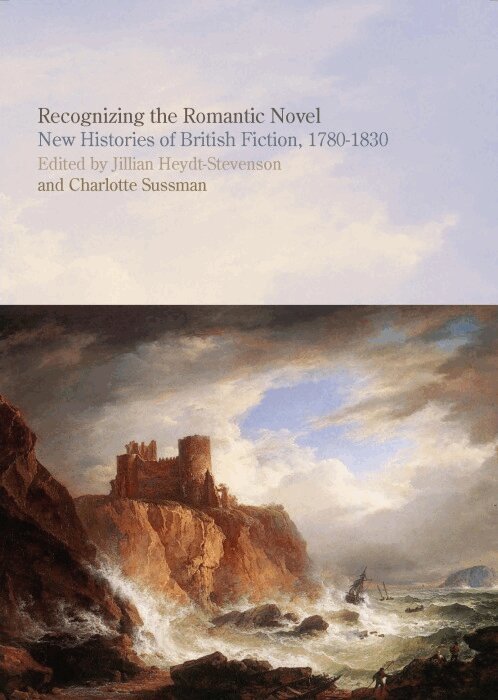
The British Romantic era was a vibrant and exciting time in the history of the novel. Yet, aside from a few iconic books —Pride and Prejudice, Frankenstein—it has been ignored or dismissed by later readers and critics. Bringing this rich but neglected body of works to the fore, Recognizing the Romantic Novel: New Histories of British Fiction, 1780-1830 challenges us to rethink our ideas of the novel as a genre, as well as our long-held assumptions about the literary movement of Romanticism. Ranging from pre-Revolution to post-Waterloo, this volume celebrates the experimental drive and revisionary spirit of the Romantic novel. With essays on authors ranging from Burney to Austen to Hogg, it argues that the Romantic-era novel can be understood as a field, not simply a heterogeneous mass of fictional forms—a field, furthermore, that can hold its own against more widely read eighteenth-century and Victorian novels. Eleven essays by prominent scholars in the field demonstrate that previously unexplored contexts can help us recognize even familiar Romantic-era novels in new and fuller ways. These essays thoughtfully explore such varied concerns as the critique of Enlightenment ideals, the close affiliation between poetry and prose, a fraught engagement with politico-ethical issues, the limits of our access to and understanding of the past, and a rethinking of communities outside the conventions of the marriage plot.
2 537 kr
Skickas inom 7-10 vardagar
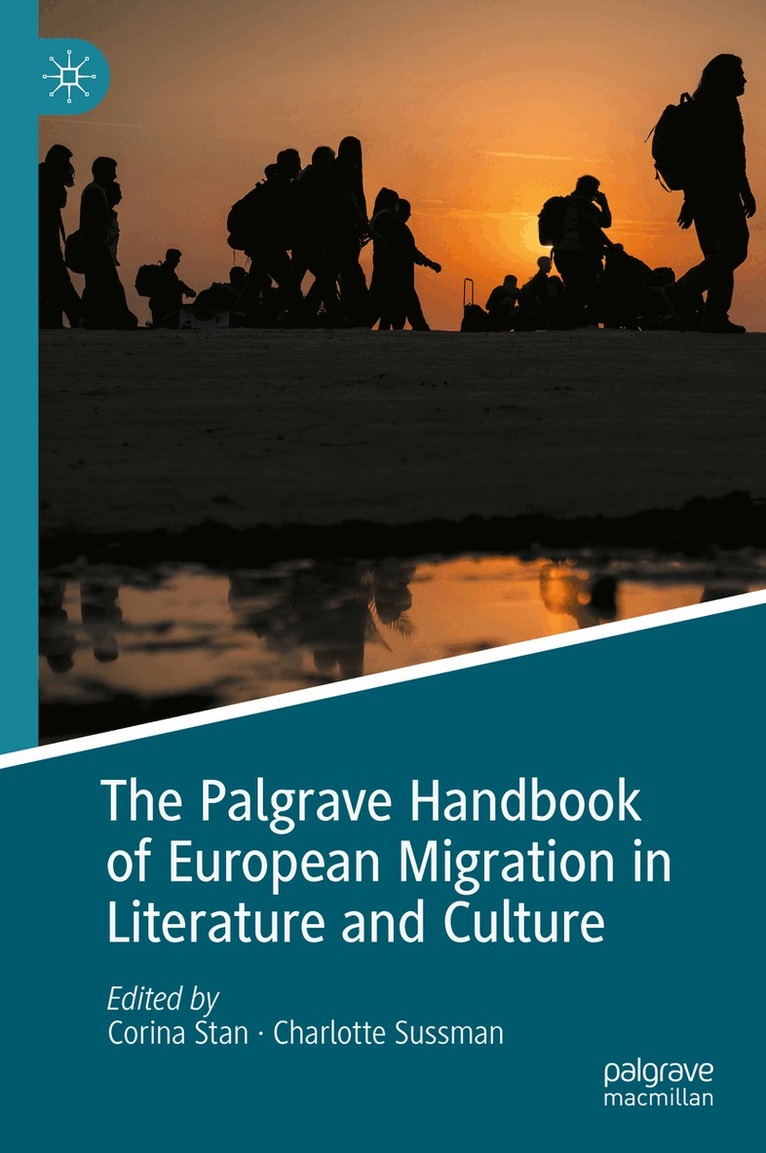
The Palgrave Handbook of European Migration in Literature and Culture engages with migration to, within, and from Europe, foregrounding migration through the lenses of historical migratory movement and flows associated with colonialism and postcolonialism.
2 549 kr
Skickas inom 10-15 vardagar
The Palgrave Handbook of European Migration in Literature and Culture engages with migration to, within, and from Europe, foregrounding migration through the lenses of historical migratory movement and flows associated with colonialism and postcolonialism.