Chengzhi Zhang – författare
Visar alla böcker från författaren Chengzhi Zhang. Handla med fri frakt och snabb leverans.
2 produkter
2 produkter
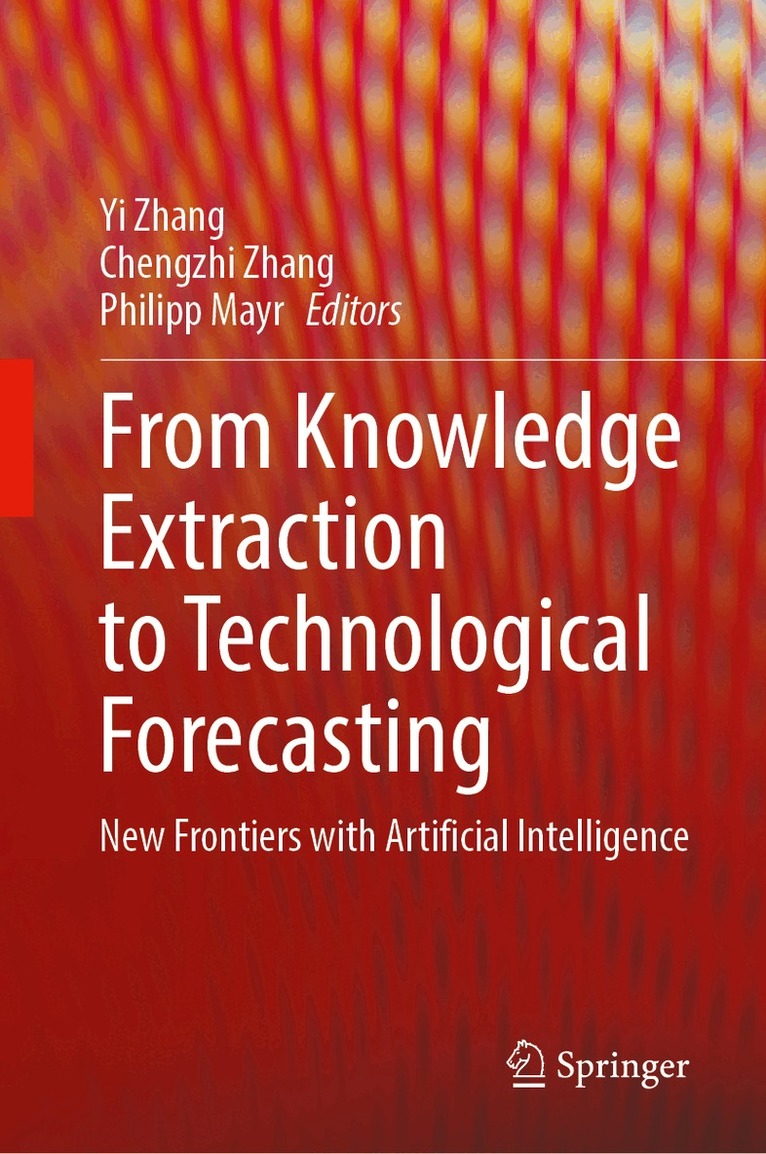
From Knowledge Extraction to Technological Forecasting
New Frontiers with Artificial Intelligence
Inbunden, Engelska, 2026
1 932 kr
Kommande
This collection features innovative, interdisciplinary studies in information science, technology and innovation management, and artificial intelligence (AI). It presents new methodological developments and empirical research, highlighting how advanced AI techniques are transforming our methods of scientific knowledge extraction and technological forecasting. The book explores a wide range of AI-driven informetric approaches, including large language model (LLM)-enhanced topic modeling, interdisciplinary analysis, reference extraction, machine learning-based diffusion measurement, and self-prompted technological forecasting. It addresses how AI can be integrated into the informetric context to convert data into valuable insights, fostering a deeper understanding of science, technology, and innovation (ST&I).From Knowledge Extraction to Technological Forecasting: New Frontiers with Artificial Intelligence is designed for researchers, analysts, practitioners, and policymakers interested in AI for information and ST&I studies. It synthesizes methodological advances and real-world applications, showcasing AI's analytical power for knowledge discovery and exploring new directions in AI + Informetrics, with a focus on extracting and evaluating knowledge entities from scientific documents.
436 kr
Skickas
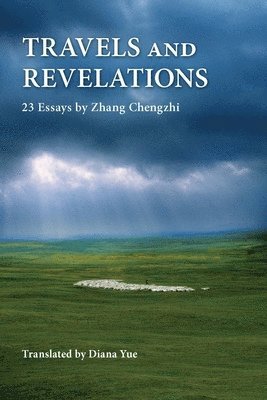
Travels and Revelations: 23 Essays by Zhang Chengzhi is about cultures which the author knows intimately. With sophisticated sensibility, he describes the tangible cultures of Beijing, Inner Mongolia, Gansu, Ningxia and Xinjiang in recent decades – the landscapes and cityscapes, the roads and waterways, the rural and urban dwellings, the working and living habits, and the outstanding symbols and totems. Like a traveller pausing before stunning scenery – the Mongolian grasslands, the yellow-earth plateaus, the Yellow River’s mighty gorges – he reflects on the intangible cultures that have made the Han, the Hui, the Mongolian and the Uyghur peoples who they are, and contemplates on their language usages, socio-political dilemmas, philosophical traditions, beliefs and biases and their religious aspirations.These essays show how deeply Zhang Chengzhi understands modern China’s painful evolution through war and revolution and how deeply he is attached to his Hui–Muslim roots. They also show his broad knowledge of cultures transmitted across Eurasia, manifested in the muqam, the flamenco, and the Madâyah. Above all, by addressing the issue about Japan and by denouncing unrighteous hegemonism and voicing sympathy for the weak and oppressed in occupied Palestine, they reflect his intellectual integrity which Chinese readers highly value.